
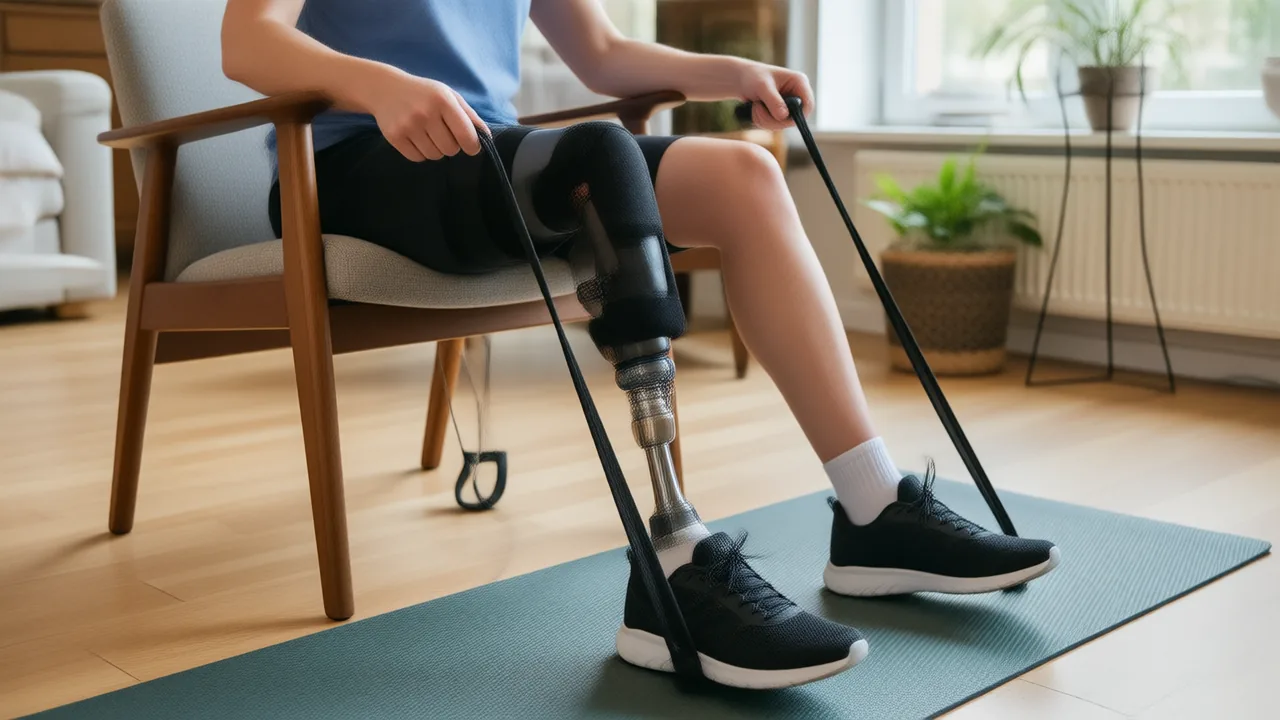
Short answer: A good amputee workout covers three things every week: strength for your hips, core, upper body and sound leg; cardio you can do safely, with or without your prosthesis; and flexibility and balance work. The CDC suggests adults with disabilities who are able aim for 150 minutes of moderate aerobic activity a week plus strength work on 2 days. Get your doctor’s and physical therapist’s OK first.
This guide is mostly for people with leg amputations who want a simple, balanced weekly routine they can do at home or in a regular gym, whether you are a few months past rehab or years in and restarting. It is not a replacement for your physical therapy program. Think of it as the structure that sits around it, with room for your PT to set the details.
If you are looking for sports rather than workouts, our guide to adaptive sports for amputees covers what is open to you and how to find a program.
Why an amputee workout is worth the effort
Exercise helps everyone, but for amputees a few reasons stand out.
- Walking takes more energy. A 2021 systematic review and meta-analysis found that people with lower-limb amputation use significantly more energy to walk than people without one. The gap ranged from about 12% for people with non-vascular below-knee amputations to about 102% for people with vascular above-knee amputations. Better fitness makes that extra cost easier to carry.
- Other joints pick up the slack. The Amputee Coalition’s guide to avoiding secondary pain explains that after amputation, other muscles and joints carry extra stresses and loads. In a survey it describes, nearly 50% of people with limb loss reported pain in the non-amputated limb and 62% reported low back pain. It names back extension strengthening and balance exercises as ways to reduce stress on the low back and hips.
- Falls are common. In a study of 435 community-living lower-limb amputees, 52.4% had fallen in the past year and 49.2% reported a fear of falling. Strength and balance training are the parts of a routine that work directly on that.
Before you start: clearance and ground rules
The CDC’s activity guidance for adults with disabilities recommends talking with a health care professional or physical activity specialist about the types and amounts of activity that suit you. For amputees, that means your doctor for overall clearance, especially if you have heart disease, diabetes or circulation problems, and your physical therapist for which exercises fit your level, strength and balance.
A few ground rules make home workouts safer:
- Decide leg on or leg off for each exercise. Many strength moves are easier and safer without the prosthesis. Standing work usually needs it. Ask your PT which is which for you.
- Use something stable. A sturdy chair, a kitchen counter or a wall for balance, and a firm mat on a non-slip floor.
- Build up slowly. Start with fewer sets and shorter sessions than you think you can handle, and add a little each week.
- Look after your skin. More activity means more sweat and friction in the socket. Check your residual limb after workouts.
- Check your sound foot too. If you have diabetes or circulation problems, the Amputee Coalition’s foot check guide advises checking the tops and bottoms of your feet, between your toes and your toenails every day. More exercise is a good reason to be strict about it.
A balanced weekly amputee workout plan
The CDC guidance gives a useful frame: at least 150 minutes a week of moderate aerobic activity, for example 30 minutes on 5 days, plus muscle-strengthening activities for all major muscle groups on at least 2 days a week. It also says some activity is better than none. If you are starting from zero, begin well below those targets and build toward them.
Here is one way to lay out a week. Swap days around to fit your life.
| Day | Focus | Example |
|---|---|---|
| Monday | Strength, lower body and core | Bridges, side-lying leg lifts, sit-to-stands, back extensions |
| Tuesday | Cardio | Stationary bike, arm cycle or seated cardio |
| Wednesday | Balance and flexibility | Supported balance work, stretches, tai chi |
| Thursday | Strength, upper body and core | Wall or counter push-ups, band rows, core holds |
| Friday | Cardio | Swimming, rowing or a walk at a comfortable pace |
| Saturday | Something fun | A sport, a hike, a class, time on the water |
| Sunday | Rest | Skin check, gentle stretching |
How to progress
Change one thing at a time: a few more minutes, then a little more resistance, then a harder version of the exercise. If you add everything at once and something hurts, you will not know what caused it. Your residual limb can change volume with activity, so a harder week may also mean adjusting your socks more often. If you are sore for days, drop back to the previous week’s level.
Above-knee and below-knee differences
The plan works at both levels, but the details change. Above-knee amputees often put more emphasis on hip strength and on standing balance with a prosthetic knee, and some exercises that are easy on a below-knee leg need extra support or a seated version. Bilateral amputees may do more of their strength and cardio work seated. Your PT can adapt each exercise to your level.
Strength: home exercises for leg amputees
Strength work for leg amputees focuses on the muscles that control your hips and trunk, because those are what steer the prosthesis, plus your sound leg and upper body, which do extra work every day. Ask your PT to check your form and set how many repetitions and sets you do.
Hips and glutes
- Bridges: lying on your back, press through your sound foot, or both legs if your PT approves, and lift your hips.
- Side-lying leg lifts: lying on your side, lift the top leg, residual limb or sound leg, straight up. These work the muscles that keep your pelvis level when you walk.
- Lying hip extension: face down, lift one leg a few inches off the floor, keeping your hips down.
Core and back
- Back extensions: face down, lift your chest slightly off the floor. The secondary pain guide names back extension strengthening as one way to reduce stress on the low back and hips.
- Dead bugs and planks, adapted by your PT to your level and balance.
Upper body and sound leg
- Wall or counter push-ups and band rows for the arms you use for crutches, transfers and getting up off the floor.
- Sit-to-stands from a sturdy chair, with your prosthesis on, to build the strength you use many times a day.
If standing work is not realistic yet, our guide to chair exercises for amputees has a full seated routine.
Cardio with or without your leg
Cardio does not have to mean running. The best choice is the one you can do safely and will actually repeat. Options that work for many leg amputees include a stationary or recumbent bike, an arm cycle, a rowing machine set up with your PT, swimming and water walking, and seated cardio routines at home.
A common rule of thumb for moderate effort is that you can still talk, but not sing. Our guide to cardio exercises for amputees compares the options and how to build up.
Flexibility and balance
Flexibility keeps your joints moving through their full range, which matters for how well the prosthesis fits your gait. Ask your PT which stretches matter most for your level, and do them after your muscles are warm.
Balance work is where falls get prevented. Start with support: stand at a counter with your prosthesis on and practice shifting your weight from side to side and front to back, then holding still with lighter hand support. Progress only as your PT suggests, and always with something solid within reach.
Slow, controlled movement practices can help too. Our guide to tai chi for amputees (coming soon) explains how to adapt it, seated or standing.
When to stop and call your prosthetist, PT or doctor
A workout should leave you tired, not hurt. Stop the session and call:
- Your prosthetist if the socket starts rubbing, slipping or pinching during exercise, or if you need more socks than usual to keep it snug.
- Your physical therapist if an exercise causes joint pain in your back, hips or sound leg, or you are not sure your form is right.
- Your doctor, the same day, if you notice an open sore, a blister, redness that spreads or does not fade, warmth or swelling on your residual limb or sound foot, or a fever.
Get emergency help for chest pain, severe shortness of breath, fainting, or sudden weakness or numbness.
Gear and making it stick
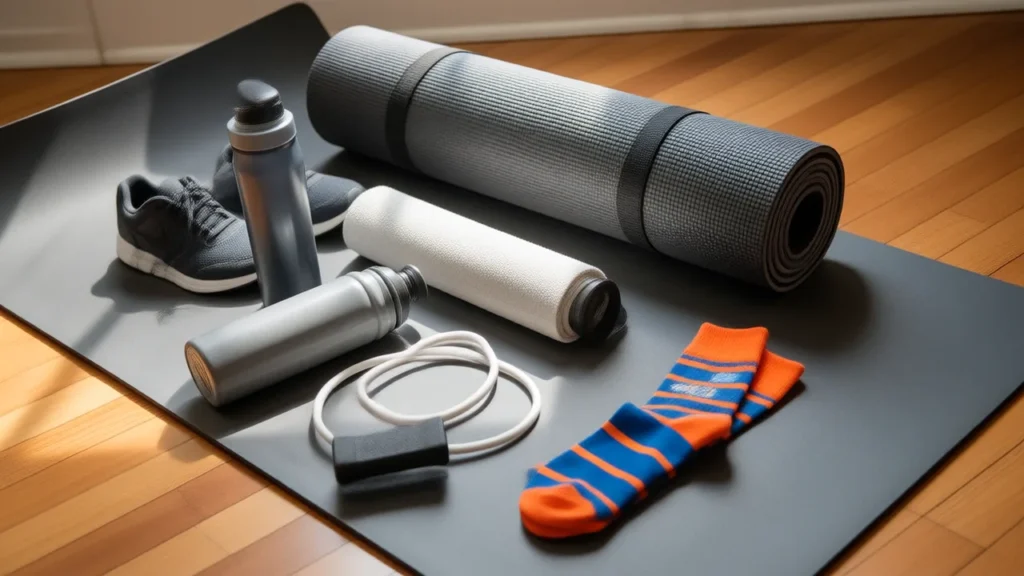
You do not need a gym to do any of this. A sturdy chair, a mat, a resistance band and a counter cover most of it. Wear supportive shoes on your sound foot and on your prosthetic foot for standing work, and swap your socks often. The foot check guide advises not wearing the same shoes or socks every day, which is a fine excuse to own more printed crew socks.
To make it stick, put the sessions in your calendar, track them somewhere you will see, and keep one day a week for something you do for fun. Once the base fitness is there, motivation often lives outdoors, in things like hiking or sailing (coming soon).
Sources
- CDC — Chronic Conditions & Disabilities Activity (Physical Activity Basics)
- Amputee Coalition — Avoiding Secondary Pain
- Prosthetics and Orthotics International (2021) via PubMed — General estimates of the energy cost of walking in people with lower-limb amputation
- Archives of Physical Medicine and Rehabilitation (Miller et al., 2001) via PubMed — The prevalence and risk factors of falling and fear of falling among lower extremity amputees
- Amputee Coalition — Take A Seat & Check Your Feet
From the Loud Limb shop: printed athletic shorts and prosthetic leg covers in loud prints. Our covers go on the outside of a below-knee prosthesis; measure yours first with the size guide.
Published by Loud Limb, a shop for printed prosthetic leg covers, socks and clothing.