
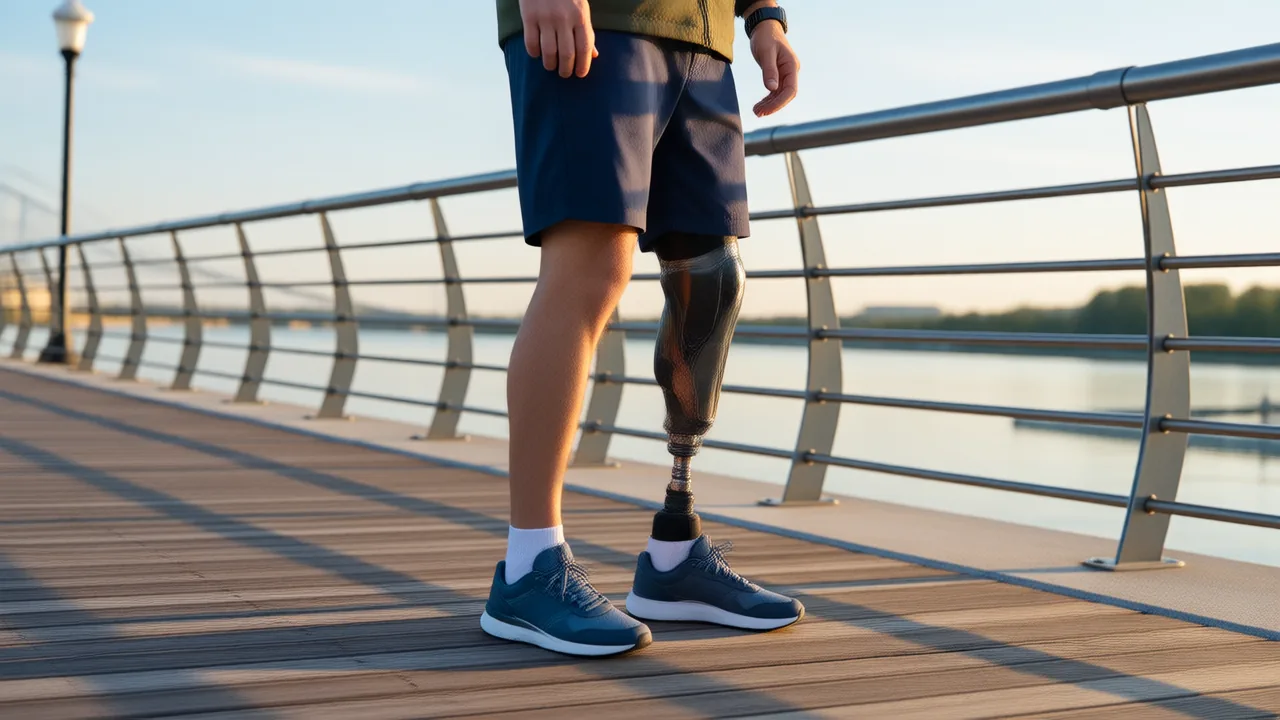
Short answer: Amputee veterans have a lot of support to draw on. The VA’s Amputation System of Care offers specialist rehab teams and prosthetists, and can connect you with mentoring and peer programs. Peer groups and mentors link you with others who have been there, adaptive sports groups operate across the country, and the Veterans Crisis Line (dial 988, then press 1) is free and open around the clock.
This guide is for veterans and service members living with limb loss, whether it came from combat, a training accident, illness or diabetes years after discharge, and for the families backing them up. It covers where to start inside the VA system, how to find peer support and mentors, how to get into adaptive sports, and what to do on the hard days. It focuses on people and programs; VA benefits and payments are a separate topic best handled with a VA benefits counselor. For the wider world of peer groups open to everyone, see our guide to finding an amputee support group.
Who amputee veterans are today
The picture many people have is a young service member injured in combat. That is part of it. But veterans also lose limbs to vehicle and training accidents, cancer, infections, and to diabetes and circulation problems later in life.
The VA plans for all of these groups. Its Amputation System of Care (ASoC) serves veterans and service members with limb loss or at-risk limbs. The same system runs a program called PAVE that aims to prevent or delay amputation in at-risk veterans, especially those with diabetes, peripheral artery disease or chronic kidney disease.
So a young service member recovering from a blast injury and a retiree with a diabetes-related below-knee amputation may be seen in the same clinic. Their goals differ, and good support meets each of them where they are.
Start with the VA’s amputation care team
If you are eligible for VA health care, the amputation specialty team is the hub everything else connects to. According to the VA’s Amputation Specialty Care orientation packet, your core team includes a rehabilitation physician, a therapist and/or a prosthetist, and the team helps match you with a prosthetist suited to your recovery goals. Pain management support covers residual limb pain, phantom limb pain and phantom limb sensation.
The ASoC also says it educates veterans and their families on self-care, prosthetic use and maintenance, and coping strategies. That family piece matters: your spouse or adult kid can often come to appointments and learn alongside you.
Questions worth asking at your first visit
- Who is my main point of contact between appointments?
- Which prosthetists work with this clinic, and how do we choose one?
- What mentorship or peer connection programs can you refer me to?
- Is there a recreation therapist or adaptive sports contact here?
- Who can my family talk to?
Still in uniform, or just getting out?
The ASoC covers service members as well as veterans, which helps if you are moving from military care into the VA. A military amputee in transition has a lot of paperwork in motion, so keep your own copies of prosthetic prescriptions, device details, therapy notes and the name of every prosthetist who has worked on your leg. Ask both your current team and your new VA team how the handoff works, and whether you can keep seeing a prosthetist you already trust. A leg that fits is not something to start over on because a file got lost.
Veteran amputee support: peer groups and mentors
The VA’s own orientation packet tells veterans to ask about mentorship and peer connection programs, and for good reason. A clinician can teach you how a prosthesis works. Another amputee can tell you how they got through the first time a kid stared at them in the grocery store, or how they handle airport security.
Peer support is common, and it may help. In a US survey of people with major lower limb amputation, two out of three respondents had received some form of peer support, and those who had showed a trend toward greater mobility. The researchers noted that peer-support groups are seen as a helpful source of both information and emotional support. A trend is not proof, but it is a good reason to try.
Places to look:
- Your VA amputation team, for veteran-specific mentoring and peer programs in your area.
- The Amputee Coalition, a national nonprofit for people with limb loss and their families. Our overview of what the Amputee Coalition offers (coming soon) explains its programs and how to use them.
- One-to-one mentoring, where you are matched with someone who has a similar amputation or background. Our guide to how amputee mentor programs work covers what to expect.
- Veteran service organizations and unit associations, which may have members living with limb loss even if they do not run formal amputee programs.
You might prefer a group of other vets, or a mixed group that widens your circle. Both are fine. If the first group you try is not your crowd, try another.
Adaptive sports for veterans
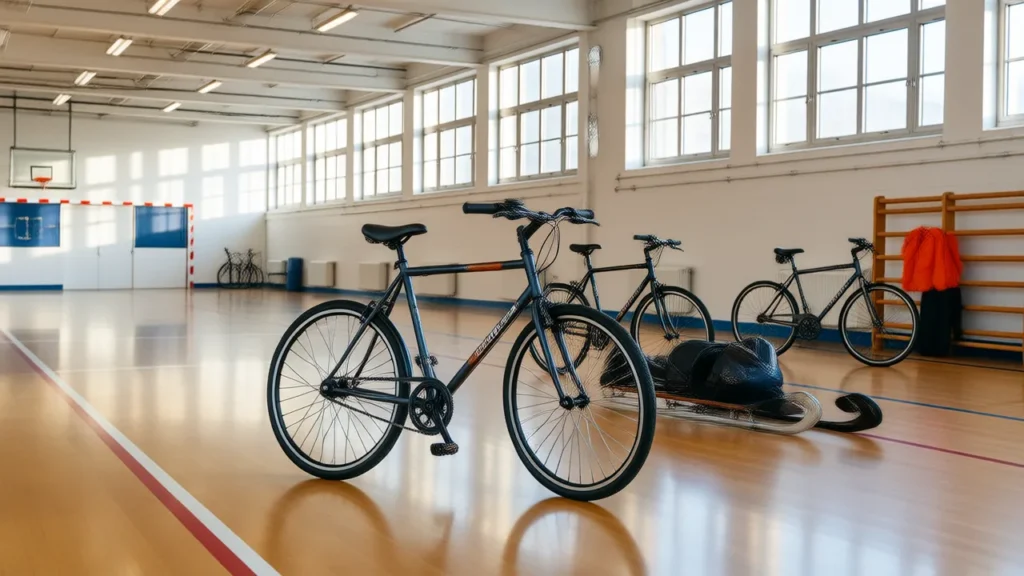
For many people who served, physical challenge and teamwork were part of the job. Adaptive sports can bring both back. Move United, a national adaptive sports nonprofit, says it offers more than 70 adaptive sports year-round through more than 245 member organizations across the country, so there is a decent chance something runs near you.
How to get started:
- Ask your VA team whether a recreation therapist can help you try sports and connect you with local programs.
- Find a local member organization and go to a come-and-try day. Ask whether they have loaner equipment, so you can test a sport before investing in it.
- Talk to your prosthetist before starting anything high-impact. Some sports need an activity-specific foot or leg, and some are done without a prosthesis at all.
- Look into funding. Sports prostheses and adaptive gear can be expensive. Our guide to grants for adaptive sports equipment (coming soon) lists where to apply.
You do not need to be training for anything. A weekly handcycle ride or a season of sled hockey counts.
Mental health and the hard days
Limb loss can land on top of other things veterans carry: service-related trauma, chronic pain, the loss of a career or a unit. Adjusting takes time, and asking for help is a practical move, not a weakness.
Your VA team can refer you to mental health care, and peer groups help with the day-to-day. If things get dark, use the Veterans Crisis Line:
- Dial 988, then press 1.
- Text 838255.
- Or chat online through the Veterans Crisis Line website.
It is free, confidential and available 24/7, 365 days a year, and you do not have to be enrolled in VA benefits or health care to connect.
For families and caregivers
Spouses, partners, parents and adult children often carry a lot quietly. A few things that help:
- Go to appointments when you can. The VA amputation program includes families in its education on self-care and coping.
- Look for caregiver groups alongside amputee groups; your needs count too.
- Let your veteran lead on how much they want to talk about the injury, and follow their words for it.
- Resist doing everything for them. Independence is part of recovery.
If you are shopping for someone, our gift ideas for amputees page has options that go beyond another pair of socks.
Where to go next
- Browse our directory of amputee resources (coming soon) for national organizations, funding and practical help.
- Browse our roundup of well-known people living with limb loss (coming soon) if you want role models who have done it in public.
- Put one call on your calendar this week: your VA amputation team, a peer group, or a local adaptive sports program.
And if your sense of humor survived basic training, it will probably survive this too. Our amputee humor tees and slogan hoodies were made for people who would rather crack the joke first.
Sources
- U.S. Department of Veterans Affairs — Amputation System of Care (ASoC)
- U.S. Department of Veterans Affairs — Amputation Specialty Care orientation packet
- Archives of Physical Medicine and Rehabilitation — Utilization and Perception of Peer-Support After Lower Limb Loss in the United States
- Move United — Our Mission & Impact
- Veterans Crisis Line — U.S. Department of Veterans Affairs
From the Loud Limb shop: Stars & Stripes prints. Our covers go on the outside of a below-knee prosthesis; measure yours first with the size guide.
Published by Loud Limb, a shop for printed prosthetic leg covers, socks and clothing.