

Short answer: Famous amputees include Def Leppard drummer Rick Allen, Senator Tammy Duckworth, snowboarder Amy Purdy, surfer Bethany Hamilton, Paralympic sprinter Hunter Woodhall, model and actor Aimee Mullins, CSI actor Robert David Hall, Black Sabbath guitarist Tony Iommi and painter Frida Kahlo. They are known for their work in sports, music, film, the military and politics, and each lives or lived with limb loss or limb difference.
This isn’t a hero list, and nobody here is a lesson. It’s a list of people who are well known for what they do and who happen to be amputees, grouped by field, with the facts kept to what is widely on the public record. No invented quotes, no guesses about how anyone feels. If you are newer to limb loss and looking for real people to talk to rather than read about, our guide to finding an amputee support group is the better next stop.
Famous amputees in sports
Sport is where limb loss is most visible, because cameras follow athletes and running blades are hard to miss. These are some of the best-known names, in Paralympic sport and outside it.
- Amy Purdy. Lost both legs below the knee to bacterial meningitis as a young adult. She went on to win Paralympic medals in snowboarding, co-founded the nonprofit Adaptive Action Sports, and finished as runner-up on Dancing with the Stars.
- Hunter Woodhall. Had both legs amputated below the knee as a baby. He ran NCAA Division I track at the University of Arkansas and won Paralympic gold in the 400 meters in Paris.
- Blake Leeper. Born without legs below the knee, he won Paralympic medals for Team USA as a sprinter, then took a high-profile case over his running prostheses to sport’s top court as he tried to race in non-disabled events.
- Bethany Hamilton. Lost her left arm in a shark attack as a teenager and went back to competitive surfing. Her story became the film Soul Surfer.
- Jim Abbott. Born without a right hand, he pitched in Major League Baseball, including a no-hitter for the New York Yankees.
- Shaquem Griffin. His left hand was amputated when he was a young child because of a congenital condition. He played linebacker in the NFL for the Seattle Seahawks, on the same team as his twin brother.
- Josh Sundquist. Lost a leg to cancer as a child, skied for the US Paralympic team, and later became an author and comedian best known online for Halloween costumes built around having one leg.
For the gear side of this, including running blades and sport-specific feet, see our guide to athletes who compete on prosthetic legs (coming soon).
Famous people with prosthetic legs on stage and screen
- Aimee Mullins. Born without fibulas, she had both legs amputated below the knee as a baby. She ran Division I track at Georgetown, competed in the Paralympics, walked the runway for Alexander McQueen, and later acted on screen, including a role in Stranger Things.
- Robert David Hall. Lost both legs after a truck hit his car. He is best known as the coroner, Dr. Al Robbins, on CSI: Crime Scene Investigation.
- Harold Russell. A World War II Army veteran who lost both hands in a training accident and used hook prostheses. Cast as a returning veteran in The Best Years of Our Lives, he won two Academy Awards for that one role.
- Frida Kahlo. The Mexican painter had her right leg amputated below the knee late in her life. Her prosthetic leg, fitted with a red leather boot, has been shown in exhibitions of her clothes and belongings.
Musicians with limb loss
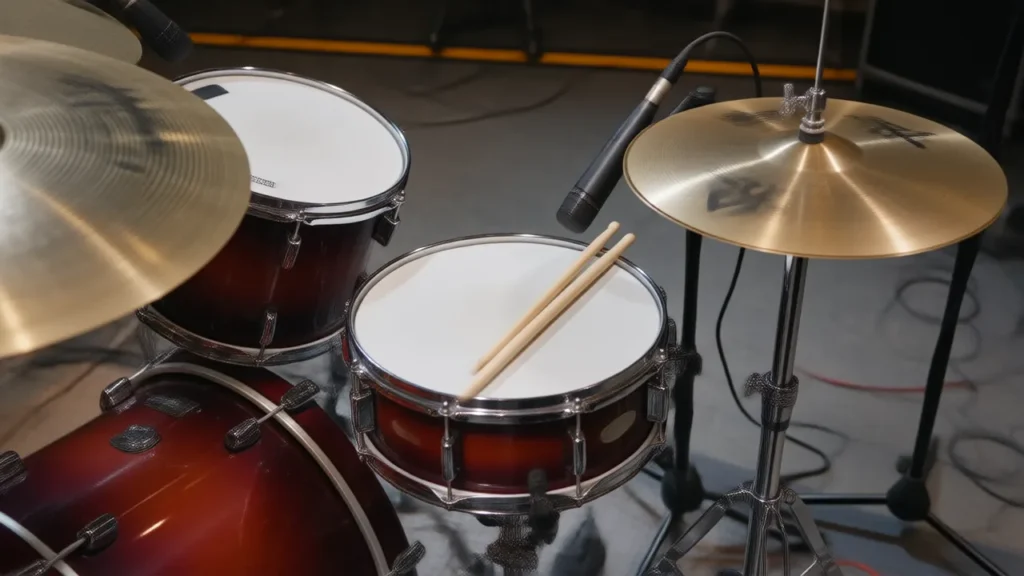
- Rick Allen. The Def Leppard drummer lost his left arm in a car crash while the band was on the rise. He stayed in the band, playing a custom electronic kit that uses foot pedals for the parts his left arm used to play.
- Tony Iommi. The Black Sabbath guitarist lost the tips of two fingers on his fretting hand in a sheet-metal factory accident as a teenager. He made his own prosthetic fingertips and adjusted his strings to make playing easier, and Black Sabbath’s sound went on to shape heavy metal.
Both are good reminders that “amputee” covers far more than legs. Partial hand and finger loss is limb loss too.
It’s also worth noticing how many people on this page never lost a limb at all. Jim Abbott, Aimee Mullins, Blake Leeper and Shaquem Griffin were all born with a limb difference, and they sit on famous-amputee lists because the public doesn’t separate the two. The community counts both: the Amputee Coalition estimates that more than 5.6 million people in the US live with limb loss or limb difference, about 2.3 million with limb loss and 3.4 million with limb difference.
Famous amputee veterans and public servants
A lot of famous American amputees came home from war and went into public life. Our guide to amputee veterans covers VA care and benefits; these are some of the names.
- Daniel Inouye. Lost his right arm fighting in Italy in World War II, received the Medal of Honor, and served for decades as a US senator from Hawaii.
- Max Cleland. Lost both legs and his right arm in Vietnam. He later led the Veterans Administration and served as a US senator from Georgia.
- Tammy Duckworth. An Army helicopter pilot who lost both legs when her helicopter was hit in Iraq. She served as an assistant secretary at the Department of Veterans Affairs, then in the House, and then as a US senator from Illinois.
- Brian Mast. An Army bomb-disposal specialist who lost both legs in Afghanistan, later elected to Congress from Florida.
- Noah Galloway. An Army veteran who lost his left arm above the elbow and his left leg above the knee in Iraq. He became a fitness personality and reached the finals of Dancing with the Stars.
Famous leg amputees from history
Amputees have been around, and making do with clever hardware, for a very long time. According to a review of lower-limb prosthetic rehabilitation published in 2019, the first established prosthesis is an Egyptian noblewoman’s wooden toe dating to 950 to 710 BC. Her name isn’t on it, but her toe is famous.
- Peter Stuyvesant. The Dutch director-general of New Netherland, the colony that became New York, lost his right leg to a cannonball in a Caribbean battle and governed on a wooden leg.
- Daniel Sickles. A Union general who lost his right leg at Gettysburg. He donated the leg to the Army Medical Museum, and it can still be seen at that museum’s successor today.
Sickles had plenty of company. A 2023 history of the A. A. Marks artificial limb company notes that improved amputation techniques in the Civil War meant many wounded soldiers survived with limb loss, and that both Union and Confederate states approved providing artificial limbs to veterans at public expense. That demand helped build the American prosthetics industry.
What a famous-amputees list leaves out
Lists like this lean heavily toward athletes, soldiers and performers, and toward dramatic causes: war, crashes, shark attacks, cancer. Real life looks different. In a 2024 analysis of US insurance claims commissioned by the Amputee Coalition, only 12.9% of amputations had a precipitating trauma event, and 57.6% of people had diabetes before their amputation. Adults 65 and older made up the largest share, at 44.7%.
So the typical American amputee is not a Paralympian or a senator. It’s more likely someone’s grandparent with diabetes who had a toe or part of a foot amputated, the most common procedure in that same analysis. Their stories rarely make the news, and they are every bit as worth hearing.
If famous names are how you found your way here, the people who will actually help are closer to home. In a 2024 US survey of people with major lower-limb amputation, two out of three had received some form of peer support, and peer-support groups were seen as helpful for both information and emotional support. An amputee mentor program can pair you with someone who has been where you are. And for the small, specific stuff no celebrity profile covers, try our list of things only amputees understand.
Where to go next
- Want people, not profiles? Start with a local or online support group, or ask your prosthetist’s office about peer visitors.
- Want the practical stuff: benefits, organizations, grants and hotlines? Our roundup of amputee resources (coming soon) collects them in one place.
- Want to be a little famous at the grocery store? A loud shirt does the job. Our slogan tees and hoodies carry original lines for exactly that.
Sources
- Indian Journal of Plastic Surgery (2019) — Prosthetic Rehabilitation in the Lower Limb
- Korean Journal of Medical History (2023) — Prosthetics, Medicine, and Disability in Modern America: The Case of the A. A. Marks Artificial Limb Company
- Amputee Coalition — 5.6 Million++ Americans are Living with Limb Loss and Limb Difference
- Avalere Health for the Amputee Coalition (2024) — Prevalence of Limb Loss and Limb Difference in the United States: Implications for Public Policy
- Archives of Physical Medicine and Rehabilitation (2024) — Utilization and Perception of Peer-Support After Lower Limb Loss in the United States
From the Loud Limb shop: gift ideas for amputees.
Published by Loud Limb, a shop for printed prosthetic leg covers, socks and clothing.
Leave a Reply