
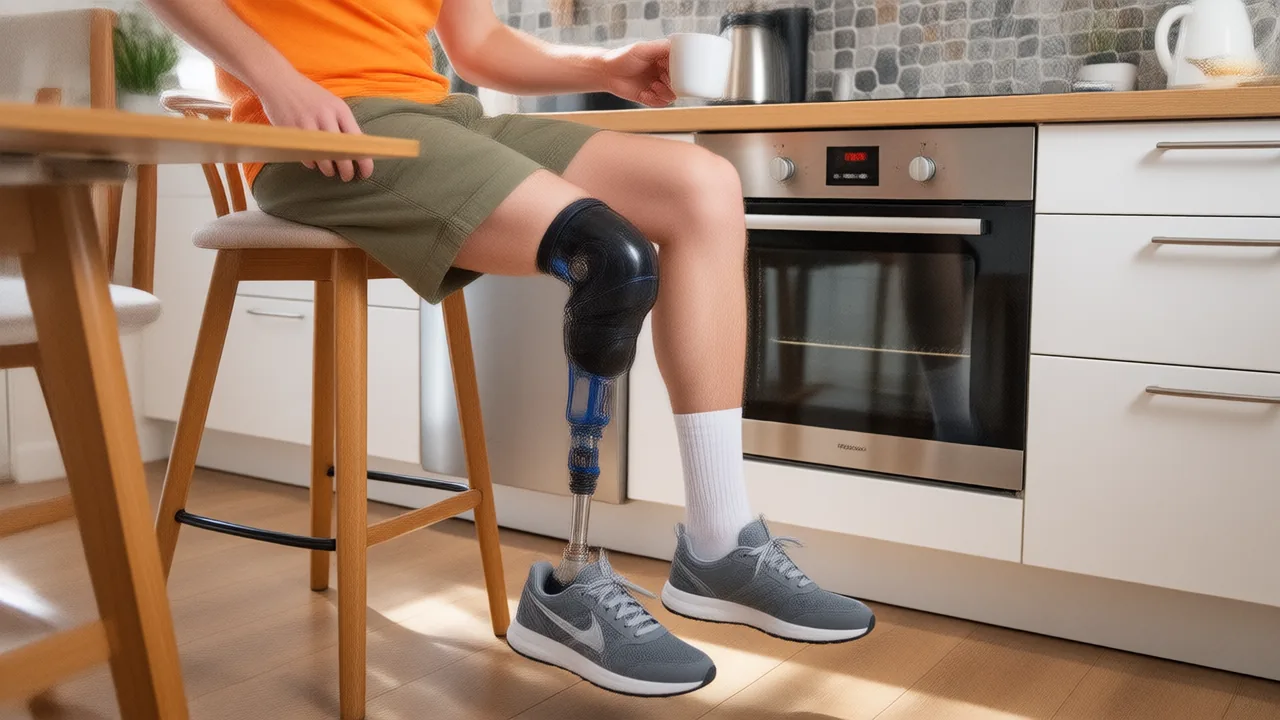
Short answer: Living with a prosthetic leg is mostly about routines: putting the leg on and checking your skin every day, adjusting socks as your limb changes, setting up your bathroom and home to prevent falls, asking for what you need at work, planning for heat and cold, and keeping the leg maintained. The leg becomes part of your day, and the routines are what keep it comfortable.
This guide is for people settling into life with a leg after rehab, people a few years in who want to make daily life easier, and the partners and family who share the house. It covers a normal day, the bathroom and home, sleep, work, weather, maintenance, style, and when to call your prosthetist or doctor. Each section links to a deeper guide. If you are still in the first months after surgery, start with the amputation recovery timeline.
No two people live with a prosthesis the same way. Some wear the leg from breakfast to bedtime; some switch between a leg, crutches and a wheelchair depending on the day. Both are normal. The aim is a life that works for you, not a perfect score on wearing time.
What living with a prosthetic leg looks like day to day
For most regular users, the leg is on for most of the waking day. In a 2014 survey of people with below-knee amputations, participants wore their prostheses about 14 to 15 hours a day. The same survey found that daily changes in the shape and size of the residual limb affect socket fit, and that people manage it by adding or removing socks, with average sock ply rising over the day from 4.8 to 5.5.
That shapes a typical day. It helps to think of it in three parts:
Morning
- Check that your limb is clean and completely dry.
- Put on the liner by rolling it, not pulling it, then the socks you need, then the leg.
- Take a few steps before you leave the house. If something feels off, fix it now, not halfway through a shopping trip.
During the day
- Carry spare socks in the plies you use, because your limb will probably shrink as the day goes on.
- If the leg starts to feel loose, or you feel the end of your limb bottoming out, add a ply.
- Take the leg off for a few minutes when you reasonably can, to dry your limb and liner.
Evening
- Take the leg off, wash your limb gently, dry it, and look at every side of it.
- Clean the liner the way its manufacturer says; care rules differ between brands.
- Moisturize at bedtime if your skin needs it, so it has all night to soak in.
Pacing your energy
Walking with a prosthesis takes more effort than walking without one, especially with an above-knee leg, so a day that used to be easy can leave you tired. Plan the big walking tasks for when you have the most energy, group errands so you are not crossing the same parking lot three times, and sit when a chair is available. Pacing is not giving in; it is how you still have something left for the evening.
After a few weeks this takes about as much thought as brushing your teeth. Until then, a note on the bathroom mirror helps.
Showers, bathrooms and setting up your home
The bathroom is where the leg usually comes off, the floor is wet, and you are standing on one foot, which makes it the riskiest room in the house. The Amputee Coalition’s bathroom guide cites the Consumer Product Safety Commission’s count of more than 110,000 accidents a year in bathtubs and showers. It recommends grab bars to support you getting in and out of the tub, and a suction-cup rubber mat or nonslip adhesive strips on the tub floor.
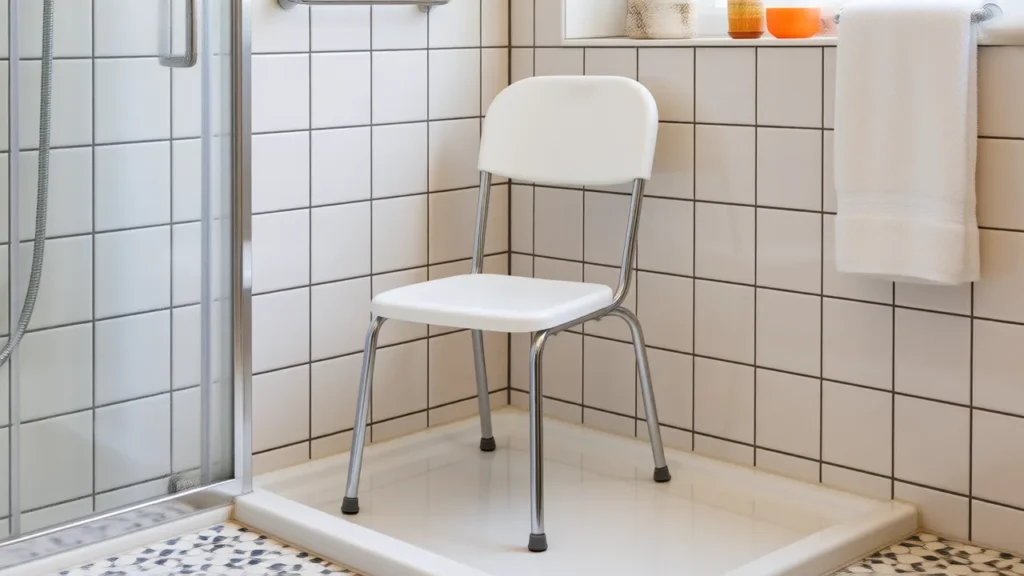
Most people shower without their everyday leg, because most everyday legs are not built to get wet. Whether yours can is a question for your prosthetist, and our guide to whether you can shower with a prosthetic leg covers the options, including water-rated legs. For showering without the leg, a seat makes a big difference: choosing a shower chair for an amputee compares chairs, tub transfer benches and what to look for.
Beyond the bathroom, small changes around the house prevent a lot of falls: clear walkways, no loose rugs or cords, good lighting on the route from the bed to the bathroom, and things you use every day at a reachable height. If you have stairs, handrails on both sides let you always hold on with the hand that suits the direction you are going. Our guide to home modifications for amputees (coming soon) goes room by room, from quick fixes to bigger projects like ramps and wider doorways.
Sleep, rest and taking the leg off
Most people take the leg off to sleep, and giving your skin a break from the socket every night is part of keeping it healthy. The questions are how to position yourself and how to get up safely at night.
- Positioning. In the months after surgery, your therapist may give you specific rules to keep your knee and hip from stiffening in a bent position. Follow them until they tell you otherwise.
- Night trips. Keep a light by the bed and your crutches, walker or wheelchair within reach. It is easy to wake up half asleep and try to stand on a leg that is not there.
- Daytime rest. If your limb aches by evening, a short break with the leg off in the afternoon can make the rest of the day more comfortable.
Our guide to sleeping positions after amputation (coming soon) covers which positions help, which to avoid early on, and how to deal with phantom sensations that show up at night.
Work: going back and asking for what you need
Many people go back to work after an amputation, sometimes to the same job with a few changes, sometimes to something new. The Job Accommodation Network (JAN), run by the U.S. Department of Labor’s Office of Disability Employment Policy, notes that not everyone with an amputation needs job accommodations, and that many need only a few. It lists key accommodations such as periodic rest breaks, a sit/stand workstation and an ergonomic adjustable chair, and says working from home can itself be an accommodation.
JAN also explains that the ADA has no definitive list of disabling conditions; it uses a functional definition based on substantial limitation of major life activities. JAN offers free consultation by phone at (800) 526-7234, which is a good first call if you are not sure what to ask your employer for. Every situation is different, so get advice on your own case from JAN or the agency that handles it.
Deciding what to tell people
How much you say about your leg at work, and to whom, is your decision. Some people tell the whole team on day one so nobody wonders; some tell only their manager or HR because they need an accommodation; some say nothing until it comes up. A short, prepared line such as “I wear a prosthetic leg, so I might take a quick break now and then” answers most questions and moves the conversation on. You do not owe anyone the story of how it happened.
Two guides go further. Returning to work after amputation (coming soon) covers timing, talking to your employer and phasing back in. Workplace accommodations for amputees (coming soon) lists practical accommodations by type of job and explains how to make a request.
Weather: heat, sweat and winter
Heat and sweat
Summer is hard on a socket. A literature review found more than 53% of people with amputation in the studies reviewed had heat or sweating discomfort inside their prosthesis. Sweat makes the liner slip, and slipping causes friction and blisters. On hot days, plan breaks to take the leg off and dry your limb and liner, carry a small towel and spare socks, and tell your prosthetist if sweat is regularly loosening the fit or causing rashes.
Cold and winter
Cold weather brings its own problems: icy sidewalks, stiff boots and less feeling in your extremities. According to Cleveland Clinic, frostbite is skin damage from freezing temperatures below 32°F, and conditions such as peripheral vascular disease and diabetes raise the risk. Its symptoms can include pain, numbness, swelling, blisters and skin discoloration. If you have diabetes or circulation problems, keep your other foot warm and dry and check it as carefully as your residual limb.
Our guide to a prosthetic leg in winter covers traction on ice, boots, keeping the limb warm, and what to ask your prosthetist about using your components in the cold. Warm, dry crew socks for your sound foot are an easy win on the way out the door.
Keeping the leg, and your fit, in working order
A prosthesis is a working piece of equipment. It needs cleaning, checking and, now and then, a professional tune-up.
- Listen to it. New clicks, squeaks or a loose feeling usually mean something needs tightening or replacing. Do not adjust screws or alignment yourself.
- Look at the wear parts. Liners tear, socks thin out, foot shells split and shoes wear down unevenly. Replace them before they cause skin trouble.
- Charge what needs charging. If you have a microprocessor knee or foot, make charging part of your evening routine.
- Keep your check-ups. Regular visits to your prosthetist catch small fit changes early, before they become sore spots.
Your body changes too. Gaining or losing weight changes the shape of your residual limb, and with it the fit of your socket. Staying active, eating well and keeping your weight steady all help the leg fit the way it was made to. Standard BMI charts do not account for a missing limb, and our guide to BMI for amputees (coming soon) explains how, and why the number matters for your socket and your health.
Style: socks, covers and how visible you want it
How your leg looks is entirely your call. Some people want it to disappear under long pants and a skin-toned cover. Some leave the pylon on show. Some want it seen from across the street.
Can a prosthetic leg look completely natural?
It can come close. Prosthetists call it cosmesis: making a prosthetic limb look lifelike. Hanger Clinic describes cosmetic covers made of urethane or silicone, shaped from your other leg so the proportions match, then airbrushed to follow the variations in your skin color, with details such as veins, freckles and hair. The simpler version is a flesh-colored stocking that slips over the leg. Ask your prosthetist which of these works with your leg.
If you wear a below-knee leg and want to add color, a printed stretch cover is one option. Covers like ours go on the outside of a below-knee prosthesis, over everything else. They never go inside a socket or under a suspension sleeve, and never over a knee joint, so they are not for above-knee legs. They are sized by measuring your leg, and they are about looks, not function. For more ways to make the leg your own, from paint to sleeves to shoes, see our prosthetic leg cover ideas.
When to call your prosthetist or doctor
Call your prosthetist if the socket feels loose or tight in a way socks do not fix, you are regularly needing far more socks than usual, the leg feels longer or shorter, you hear new noises, the knee or foot behaves differently, or you have redness in a new spot that does not fade. These are fit and hardware problems, and fixing them is routine.
Stop wearing the leg and call your doctor if you find an open sore, a blister, a wound, redness that spreads or feels warm, drainage, a fever, new severe pain or numbness, or signs of cold injury on your limb or your other foot. If you have diabetes or circulation problems, call sooner rather than later.
A weekly checklist for life with a prosthetic leg
- Check your skin every evening, including the back and the end of the limb.
- Clean your liner as its maker directs, and check it for tears.
- Count your socks: replace thin ones and restock the plies you use.
- Walk the route from your bed to the bathroom with the lights off. Anything you trip over, move.
- Check the weather for the week and pack for it: towel for heat, traction and warm socks for cold.
- Charge any electronic components.
- Note anything that felt off, and book a prosthetist visit if it keeps happening.
Sources
- Prosthetics and Orthotics International (2014) — Self-reported prosthetic sock use among persons with transtibial amputation
- Amputee Coalition — Activities of Daily Living: Bathroom Edition
- Job Accommodation Network (JAN), U.S. Department of Labor ODEP — Amputation
- Journal of Rehabilitation Research and Development (2014) — Prevalence of heat and perspiration discomfort inside prostheses
- Cleveland Clinic — Frostbite: Signs & Symptoms, Stages, Treatment & Prevention
- Hanger Clinic — Sockets, Liners & Accessories (The Cosmetics of a Prosthesis)
From the Loud Limb shop: funny amputee shirts & hoodies.
Published by Loud Limb, a shop for printed prosthetic leg covers, socks and clothing.