
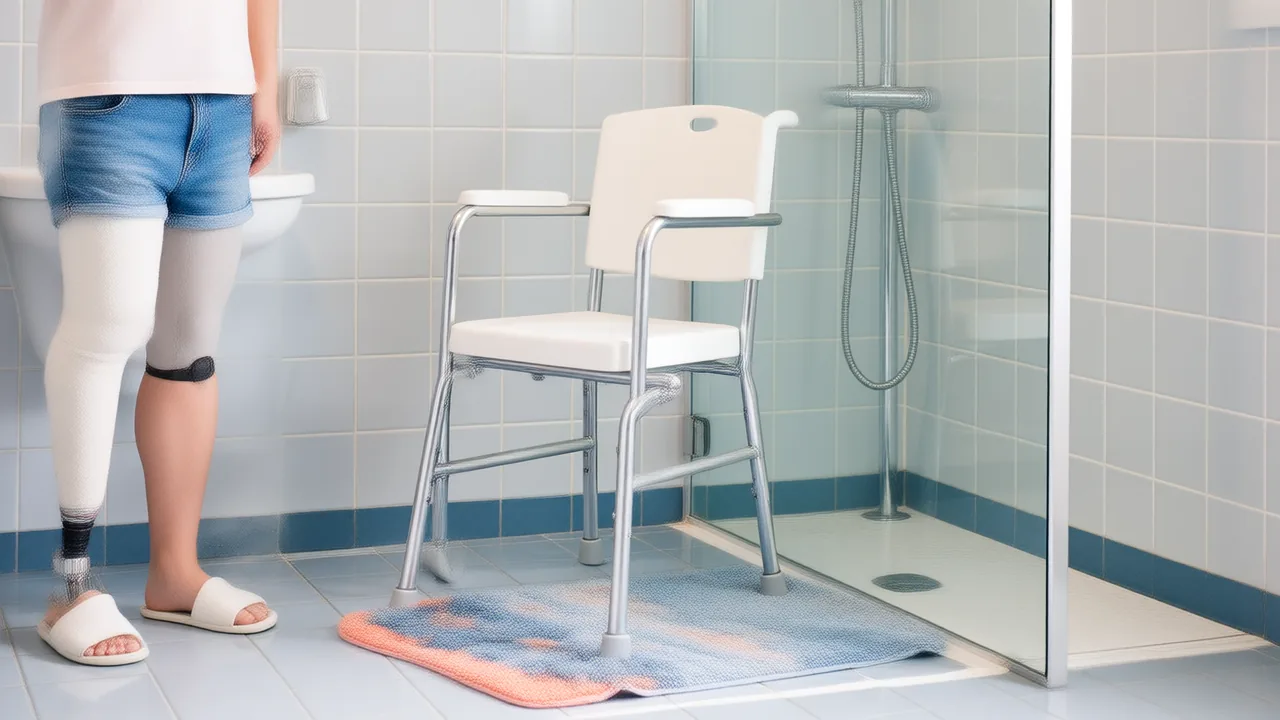
Short answer: Can you shower with a prosthetic leg? Usually not with your everyday one. Most daily legs are not built to be soaked, a wet liner and socket are hard on skin, and a prosthetic foot on a wet floor slips easily. Most people take the leg off and shower seated or with grab bars. Some use a shower leg made for water. If your leg gets wet, dry it and tell your prosthetist.
This guide is for new amputees working out the bathroom for the first time, and for anyone thinking about a dedicated shower leg. It covers why the leg usually stays outside, how to set up a safer shower without it, what a shower leg is, and what to do if your everyday leg gets wet. For the rest of daily life with a prosthesis, see our guide to living with a prosthetic leg.
Why most people shower without their prosthetic leg
There are three reasons, and any one of them would be enough.
- The parts. Everyday legs can include metal fittings, foam, a foot shell, hydraulic units or electronics and a battery. Many of those are not designed to be soaked. Your prosthetist and the manuals for your knee and foot are the only reliable guide to what yours can handle.
- Your skin. The shower is where you wash your residual limb, and that skin needs to be completely dry before it goes back into a liner. The Amputee Coalition’s skin care guide suggests that most people do better washing at night, so the skin has time to dry fully before the prosthesis goes on in the morning.
- The floor. A shower is slippery for everyone. The Amputee Coalition’s bathroom guide cites Consumer Product Safety Commission figures of more than 110,000 accidents a year in bathtubs and showers alone. A prosthetic foot has no feeling and little grip on wet tile.
So the everyday leg comes off, gets set somewhere dry, and waits for you on the other side of the curtain.
Showering with a prosthetic leg off: a safer setup
A few changes make showering on one leg much less of a balancing act. The Amputee Coalition’s bathroom guide recommends grab bars to support you getting into and out of the tub, and a rubber mat anchored with suction cups or nonslip adhesive strips on the tub floor.
- Grab bars fixed into the wall studs by someone who knows how. A towel rail or soap dish is not a grab bar.
- A shower chair or tub transfer bench, so you can sit to wash and transfer in and out without stepping over the tub wall on one leg.
- A handheld shower head, so you can rinse sitting down.
- Everything within reach: soap, towel, clean clothes, and your crutches or wheelchair parked where you can get to them wet.
- A dry spot for the leg, out of the splash zone, standing where it will not tip.
If you are not sure how to transfer safely, ask your physical or occupational therapist to practice it with you. That is exactly what they are for, and one session can save a fall. If you have a higher body weight, check the weight rating on any chair, bench or bar before you trust it; our guide to the bariatric prosthetic leg covers other ways weight affects equipment choices.
What a shower leg is
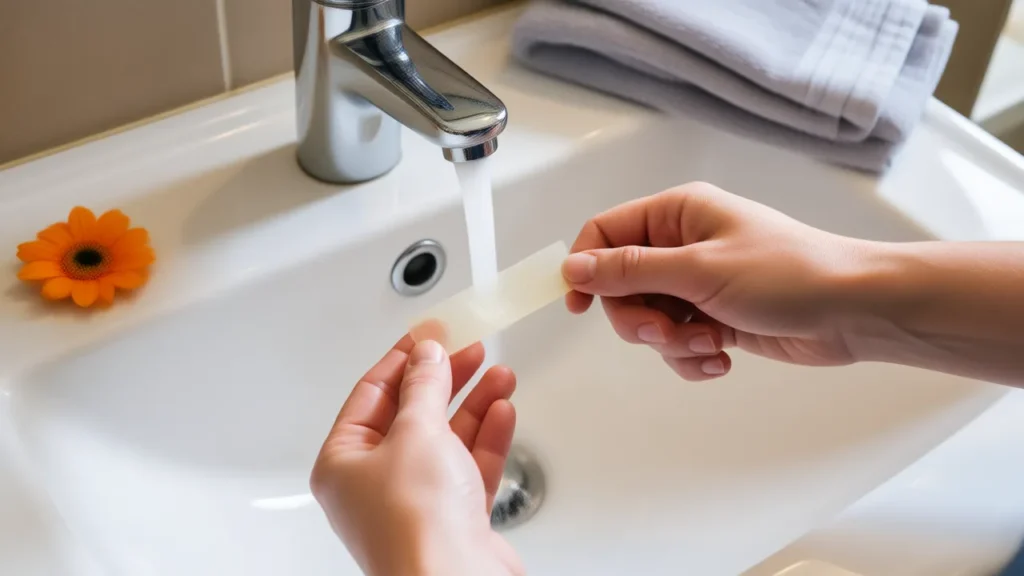
A shower leg is a second, simpler prosthesis built to get wet. It falls in what the 2024 VA/DoD rehabilitation guideline patient summary calls activity-specific prostheses, and showering is one of the examples it gives. They are usually made from parts meant to tolerate water, often without electronics, and are designed for standing in the shower rather than for walking all day.
A shower leg can make sense if:
- standing to shower matters to you and sitting is not practical
- balancing on one leg is hard, or you have limb loss on both sides
- you shower away from home a lot: at the gym, the pool or the beach
- you want a leg for water more generally; if so, say so early, because it changes what your prosthetist plans
Ask your prosthetist whether one fits your needs, and ask your insurer before assuming a second leg is covered. If your plan will not pay, the prosthetist may know of other options.
If your everyday leg gets wet
A splash on the outside of a pylon is usually no drama. A soaking, a spill into the socket, or water around a knee or foot is worth handling right away.
- Take the leg off and remove the liner and any socks.
- Dry your skin completely and check it for red or soft, wrinkled areas.
- Dry the liner the way its maker says. Ottobock, for example, says not to put its liners on a heater or in the sun to dry.
- Dry the inside of the socket with a clean towel and let it air out.
- Do not put a damp liner back on. If you have a spare, use it.
- Check the manual for any electronic knee or foot, and call your prosthetist before using it again if it got wet.
Tell your prosthetist about any soaking, especially with pool or sea water, even if everything seems fine. Our guide to prosthetic leg maintenance (coming soon) covers the checks they may do. Beach and pool days bring their own questions; your prosthetic leg in summer covers heat, sand and sweat.
Washing your residual limb and liner in the routine
The shower is also where the most important prosthetic care happens. The Amputee Coalition’s skin care guide says to wash the residual limb with a non-soap cleanser, dry it completely with a soft towel, and not to shave it, because short hairs can become ingrown and infected. WillowWood’s patient instructions for its liners add that the limb should be clean, dry and free of soap residue before you put a liner on, with no lotion or powder on the limb or liner.
Liner care is where the brands disagree, so follow your own liner’s instructions. Ottobock says to clean its liners after every use, inside out under lukewarm water, and never in a washing machine or dryer. WillowWood says to clean its liners daily and disinfect them weekly with alcohol on a cloth. If you do not know which you have, ask your prosthetist.
Coming in from the yard covered in mud is a reason to clean the leg, not to shower in it. Gardening with a prosthetic leg (coming soon) has tips for keeping dirt out of the socket in the first place.
When to call your prosthetist or doctor
Call your prosthetist if your leg got soaked, a knee or foot behaves differently after getting wet, you see rust or hear new squeaks, a battery or charger acts strangely, or the liner stays sticky, stiff or smells even after cleaning.
Call your doctor if you get a rash, itching or peeling skin that does not settle, or skin that stays soft and white after drying. Stop wearing the leg and call your doctor for an open sore, a blister, redness that spreads, warmth, drainage, fever, new severe pain or numbness. And if you fall in the shower, get checked even if you feel fine.
A shower-day checklist
- Grab bars, nonslip mat, chair or bench, and a handheld shower head in place.
- Leg off and parked somewhere dry, crutches or wheelchair within reach.
- Wash the residual limb, rinse off every trace of cleanser, dry it completely.
- Clean the liner by its maker’s rules and let it dry away from heat and sun.
- Put the leg back on only when skin and liner are fully dry, then whatever goes on the outside: jeans, a printed cover or nothing at all.
Sources
- Amputee Coalition — Skin Care 101
- Amputee Coalition — Activities of Daily Living: Bathroom Edition
- VA/DoD Clinical Practice Guideline (2024) — Rehabilitation of Individuals with Lower Limb Amputation: Patient Summary
- WillowWood — Patient Instructions: Alpha Liners
- Ottobock — Liners
From the Loud Limb shop: printed crew socks and funny amputee shirts & hoodies.
Published by Loud Limb, a shop for printed prosthetic leg covers, socks and clothing.