
Short answer: Adaptive sports for amputees cover almost everything: running, cycling, swimming, skiing, climbing, golf, lifting, sled hockey, sitting volleyball, wheelchair basketball and more. You can play on your everyday leg, on an activity-specific leg, or with no prosthesis at all. Start with your doctor’s OK, find a local program, and ask your prosthetist what your sport needs.
This guide is for amputees who want to play, train or compete, whether you were an athlete before your amputation, were born with a limb difference, or have never owned a pair of cleats. It covers which sports are open to you, how to find a program near you, what kind of leg each sport calls for, how people pay for sports gear, and how to start without wrecking your skin or your fit.
Each section points to a deeper guide, from workouts at home to running blades, so treat this page as the map.
Can you play sports with a prosthetic leg?
Yes, and the more useful question is how. There are three basic ways amputees play, and plenty of people use all three depending on the sport and the day.
- On your everyday leg. Golf, bowling, archery, walking, hiking, many gym workouts and a lot of recreational sport happen on the same leg you walk around on.
- On an activity-specific leg. Some sports put loads on a prosthesis that an everyday leg is not built for. Running blades are the famous example, but there are also legs and feet made for swimming, skiing and other activities. The Amputee Coalition’s First Step guide describes activity-specific feet designed for activities such as swimming, running and skiing.
- With no prosthesis. Swimming, sled hockey, sitting volleyball, wheelchair basketball, wheelchair tennis, hand cycling and crutch-based soccer are played without a leg on. For some people that is the whole appeal: no socket, no sweat, no fit to manage.
Which route fits depends on your amputation level, your balance and strength, your skin, and your goals, which is why the first conversation is with your rehab team rather than a coach. If you want to compete at a high level, your sport’s classification rules also shape what you play on. Our look at whether running blades are an advantage (coming soon) covers the debate at the elite end.
Adaptive sports for amputees: what is open to you
This is not a complete list. It is a starting point for the sports that come up most, with how amputees usually play them and what to ask about.
| Sport | How amputees usually play it | Ask about |
|---|---|---|
| Running and track | On a running blade, or on an everyday leg for short or casual runs | Whether your level and strength suit a blade; how you will pay for one |
| Cycling | Upright bike with or without a prosthesis, recumbent, or hand cycle | Pedal and cleat setup; whether a leg that bends differently helps |
| Swimming | Usually without the leg, or with a water-ready leg for getting to the pool | Pool access, getting in and out, and medical clearance |
| Skiing and snowboarding | Standing with a prosthesis, three-track with outriggers, or a sit-ski | Adaptive ski schools and equipment rental |
| Sled hockey | Seated on a sled, pushing and shooting with two short sticks | A local team with loaner sleds |
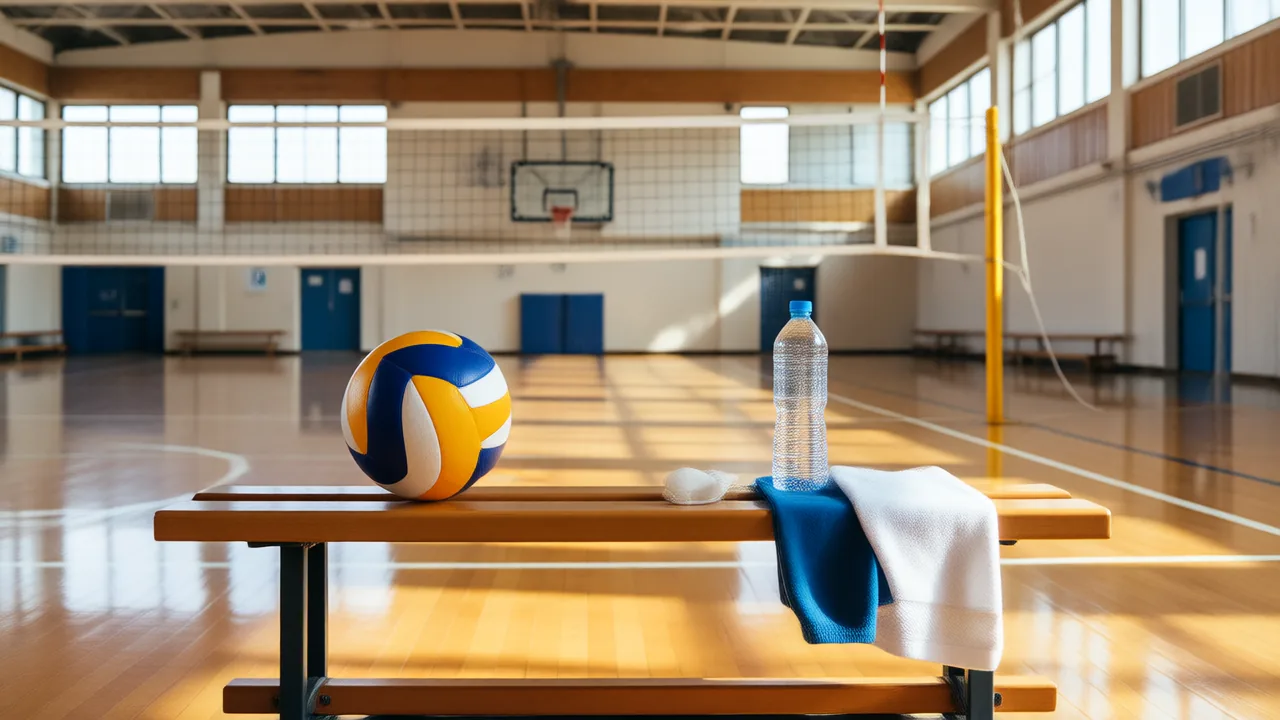
| Sitting volleyball | Seated on the floor, with a lower net | Clubs and open gyms near you |
| Wheelchair basketball and tennis | In a sports wheelchair, no prosthesis | Whether the program has chairs to borrow |
| Amputee soccer | Outfield players on forearm crutches, no prosthesis | Teams in your region |
| Golf | On an everyday leg, sometimes with a rotation adapter | How your leg handles the twisting of a swing |
| Climbing | With a climbing-specific foot, an everyday leg, or no leg | Adaptive climbing nights at local gyms |
| Strength sports and powerlifting | Standing, seated or on a bench, depending on the lift | Which lifts to adapt and how |
| Yoga and martial arts | With or without the leg, often changing mid-session | An instructor willing to adapt poses and stances |
The honest answer to “which sport should I try?” is whichever one you would do if nobody was watching. The adaptation part can be worked out. The wanting-to-go part cannot.
How to find adaptive sports programs near you
The fastest path into most sports is a program that already has the equipment, the coaches and the other athletes. The biggest national network in the US is Move United. On its mission and impact page, it says it has worked in adaptive sports since 1956 and offers more than 70 adaptive sports year-round through more than 245 member organizations across the country. Its member directory is a good first search.
Other places worth checking:
- Your rehab hospital or clinic. Many run or know of adaptive sports days, and your physical therapist often knows which local programs welcome beginners.
- The VA, if you are a veteran. Ask your amputation care team about adaptive sports events and clinics.
- Sport-specific clubs. Ski resorts, climbing gyms, sailing clubs and running groups increasingly have adaptive nights or partner programs.
- Your prosthetist’s waiting room. Other amputees are the best local directory there is.
When you call, ask three things: whether they have beginner sessions, whether they have equipment you can try before buying anything, and whether anyone there has a similar amputation level to yours.
At your first visit, look past the sport itself. A good program for amputees has somewhere to sit while you take your leg off or put it back on, a place to leave the leg where it will not be stepped on, a way into the pool or onto the field that does not depend on you hopping across a wet floor, and coaches who ask what you need instead of guessing. If a program cannot manage those basics, try the next one on your list. There usually is a next one.
Choosing a prosthetic leg for sports
Your everyday leg is built for comfort over long hours of walking and standing. That is a different job from sprinting, jumping, cutting side to side or spending an afternoon in a lake, and a leg built for one job can be uncomfortable or unreliable at another. That is why sport-specific legs and feet exist.
Running blades and sprint legs
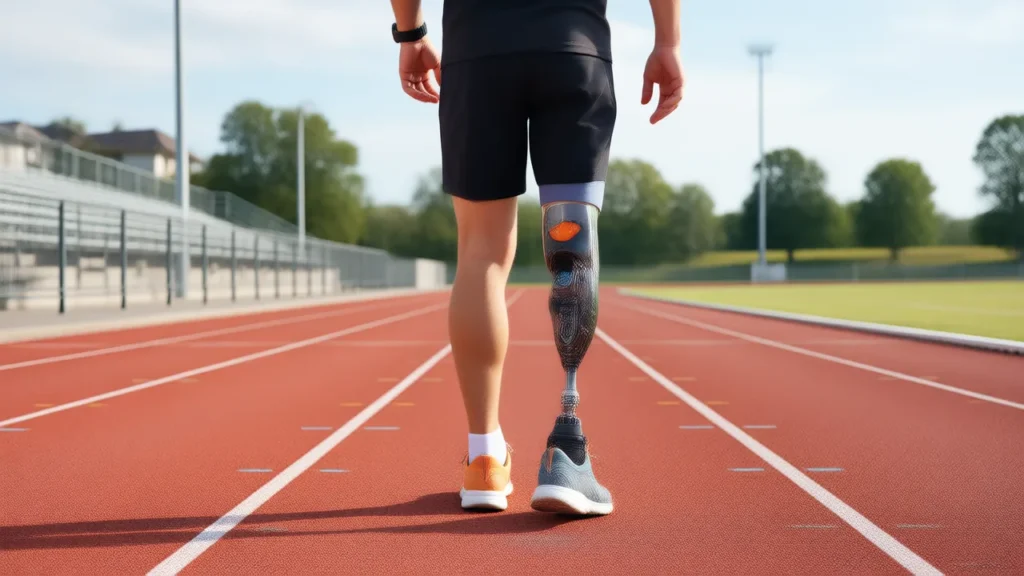
A running-specific prosthesis is the curved carbon-fiber foot most people picture when they think of amputee athletes. It has no heel and is set up for running rather than walking. Our guide to the running blade prosthetic (coming soon) explains how they work, who they suit and what fitting involves. If you want to start running before you have one, our guide to running with a prosthetic leg (coming soon) covers what is realistic on an everyday leg and how to build up.
Water and other activity-specific legs
According to the First Step guide, most people take their prosthesis off before swimming, and if using a prosthesis in water matters to you, that is something to raise with your prosthetist. The same guide says to get medical clearance from your doctor before getting into the water.
Above-knee and below-knee athletes
Where your amputation is changes the menu. With a below-knee amputation you keep your own knee, which makes running, jumping and quick direction changes easier to learn on a prosthesis. With an above-knee amputation, the leg has to supply a knee, and not every knee is set up for running or high impact. That does not rule sports out. It means more of them are worth trying seated or without the leg, and it makes the conversation with your prosthetist about components more important. Bilateral amputees face a different set of trade-offs again, so ask for advice specific to your levels rather than borrowing someone else’s plan.
Adapting the leg you have
Sometimes the answer is a tweak, not a second leg: a different foot (see the different types of prosthetic feet), a rotation adapter for golf, a change of suspension for a high-sweat sport. Tell your prosthetist exactly what you want to do, how often, and for how long. “I want to play pickup basketball twice a week” gets a far more useful answer than “I want to be more active.”
Paying for sports prostheses and gear
This is where a lot of people get stuck. The Amputee Coalition’s financial assistance page says running prosthetics are generally not covered by insurance because they are considered “not medically necessary.” Coverage rules differ by plan and by state, so ask your insurer directly, in writing if you can, before you assume either way.
Grants fill some of the gap. The Challenged Athletes Foundation’s grants page says its grants cover adaptive sports equipment, prosthetics, coaching and more. Its main annual program covers equipment for US-based applicants and sports expenses for applicants anywhere, and it also offers grants for sport-specific lower-limb prostheses. The page lists enrollment for its 2026 grants as opening September 28, 2026, so check it for the current deadline.
A few cheaper ways to find out whether you love a sport before spending on it:
- Borrow program equipment for your first few sessions.
- Ask the program or other athletes about used gear.
- Try the no-prosthesis version of the sport first, where there is one.
From weekend player to competitor
You do not have to compete to get the benefits of sport, but plenty of people end up wanting to. The usual path runs from a local program to regional events and, for some, national competition.
- Races and events. Many road races, triathlons and cycling events have adaptive or para divisions. Read the event rules and contact the race director before you register, so start areas, transitions and any aid you need are sorted in advance.
- Classification. Para sport groups athletes into classes by the type and degree of their impairment, so that results depend on training and skill. Each sport has its own rules, and they decide what counts as fair equipment, so learn them before you buy a competition leg.
- Coaching. A coach who has worked with amputee athletes can save you a season of trial and error. Ask your program who they recommend.
Train off the field: strength, cardio and mobility
Sports go better on a body that is ready for them. The CDC’s activity guidance for adults with disabilities says adults who are able should aim for at least 150 minutes a week of moderate aerobic activity, for example 30 minutes on 5 days, plus muscle-strengthening activities for all major muscle groups on at least 2 days a week. It also says some activity is better than none, and to ask a health care professional or physical activity specialist what types and amounts suit you.
Our training guides break that down:
- A balanced amputee workout for the week, with strength, cardio and flexibility in one plan.
- Weight training for leg amputees, including how to adapt squats, lunges and deadlifts.
- Cardio options for when running is not on the menu yet, from rowing to hand cycling.
- Core exercises for amputees, which matter more than usual for balance and for sports that twist.
- Amputee yoga (coming soon) for mobility, balance and a slower day.
Starting safely, and when to call your prosthetist or doctor
Sport asks more of your residual limb than walking does: more sweat, more impact, more rubbing and faster changes in limb volume. A few habits keep a new sport from turning into a week off your leg.
- Get cleared first. Talk to your doctor before starting a new sport, especially if you have heart, circulation or diabetes concerns, and to your physical therapist about which movements to build up to.
- Build up slowly. Short sessions at first, then longer ones. Your skin needs time to adapt to new loads, just like your muscles.
- Check your skin after every session. Look for redness that does not fade, blisters or rubbed spots.
- Carry what you need to manage fit. Extra socks, a towel and whatever your prosthetist has told you to use when sweat or volume changes.
Call your prosthetist if the socket starts to feel loose, tight or different during activity, if the leg makes new noises, or if you are adding socks more often than usual. Stop and call your doctor if you notice an open wound, spreading redness, warmth or swelling, a fever, new severe pain or numbness. Those are not things to play through.
Your first session: a checklist
- Your doctor’s OK and a quick talk with your physical therapist.
- A call to your prosthetist about what the sport will ask of your leg.
- One program picked, and a beginner session booked.
- Water, a towel, spare socks, and a change of liner if your prosthetist has given you one for sport. Printed crew socks in your team colors are optional but encouraged.
- A plan to go back a second time. The first session is the awkward one.
If your everyday below-knee leg is coming along to cheer, a printed cover is an easy way to wear the team colors on the sideline.
Sources
- Amputee Coalition — First Step: A Guide for Adapting to Limb Loss (2025)
- Move United — Our Mission & Impact
- Amputee Coalition — Financial Assistance for Prosthetic Services
- Challenged Athletes Foundation — CAF Grants
- CDC — Chronic Conditions & Disabilities Activity (Physical Activity Basics)
From the Loud Limb shop: printed athletic shorts.
Published by Loud Limb, a shop for printed prosthetic leg covers, socks and clothing.