
Short answer: Most everyday prosthetic legs are not waterproof. Some parts shrug off a splash, but electronics, metal locks, foam shells and the socket-and-liner space around your skin do not like getting soaked. If you want to shower, swim or wade with a leg on, the usual answer is a waterproof prosthetic leg built for it: a dedicated water or shower leg your prosthetist designs for wet use.
This page is for anyone wondering whether their leg can get wet, and for people deciding whether a second leg for water is worth chasing. It covers which parts tolerate water, what a water leg is, how to handle the shower, and exactly what to do after an everyday leg gets soaked. How to actually swim with limb loss is a sports topic and lives elsewhere. For the feet that make each kind of leg possible, see our guide to prosthetic foot types.
Are prosthetic legs waterproof? A part-by-part look
A leg is a stack of parts, and each one reacts to water differently. Your leg’s exact tolerance is in each maker’s instructions, and your prosthetist knows which parts you have. In general terms:
| Part | How it tends to handle water | What to watch |
|---|---|---|
| Socket | The shell itself is usually fine with a splash | Water trapped between skin, liner and socket softens skin and breeds bacteria |
| Liner and socks | Liners can be washed, per their maker; fabric socks soak through | A wet sock changes fit; a wet liner must be dried the maker’s way |
| Suspension (pin lock, valve, sleeve) | Varies by design | Metal locks and valves can stick or corrode if water or grit gets in |
| Pylon and adapters | Structural metal or carbon, often tolerant of a splash | Screws and joints can rust if left wet |
| Foot and foot shell | The foot may cope; a foam shell can hold water like a sponge | Water sitting inside the shell and shoe for hours |
| Microprocessor or powered knee or ankle | Has electronics and a battery, with the maker’s specific water limits | Never assume; check the manual and ask before any exposure |
So the honest answer to “can a prosthetic leg get wet?” is: a little rain, usually yes; a shower, pool or lake, not unless the leg was built for it.
Why water is a bigger deal than it looks
The risk is not only to the hardware. Water that gets inside the socket stays against skin that is already enclosed, warm and carrying your weight. Damp, softened skin rubbing inside a socket is how blisters and sores start, and a wet liner or sock also changes how the socket fits.
Then there are the surroundings. Pool decks, boat ramps and shower floors are slippery, and hot concrete or sharp shells on a beach are hazards you will not sense through a prosthetic foot. Our explainer on what you can and cannot feel through a prosthetic leg (coming soon) goes into why checking with your hand or eyes matters.
Water legs and shower legs: what a dedicated leg is
A water leg is a second prosthesis built to get wet. The 2024 VA/DoD rehabilitation guideline patient summary lists activity-specific legs, for things like showering or running, as one of the standard prosthesis options, alongside daily-use and cosmetic legs. The Amputee Coalition’s First Step guide adds that activity-specific feet are designed for activities such as swimming, running and skiing, and says plainly: if using a prosthesis in water is a priority, tell your prosthetist.
What makes a water leg different is its materials and design, which your prosthetist chooses. In general:
- Parts that tolerate fresh water, and a design that lets water drain and the leg dry out.
- A foot with a grippy sole for wet floors, and no foam shell to soak up water.
- A simpler suspension than your daily leg, chosen so it holds when wet.
- No electronics, or only parts the maker rates for water.
A water leg is a specialist, not an all-rounder: it is usually not the leg you want for a full day of walking, and it is not built for high-impact landings, which our guide to jumping with a prosthetic leg covers. Every component also has a maker’s weight limit; if you are near the top of the usual range, read our guide to prosthetic legs for higher body weights before you plan a second leg. And if you have two above-knee amputations, short knee-less legs are another kind of second leg; our guide to stubbies explains them.
Showering with or without a prosthetic leg
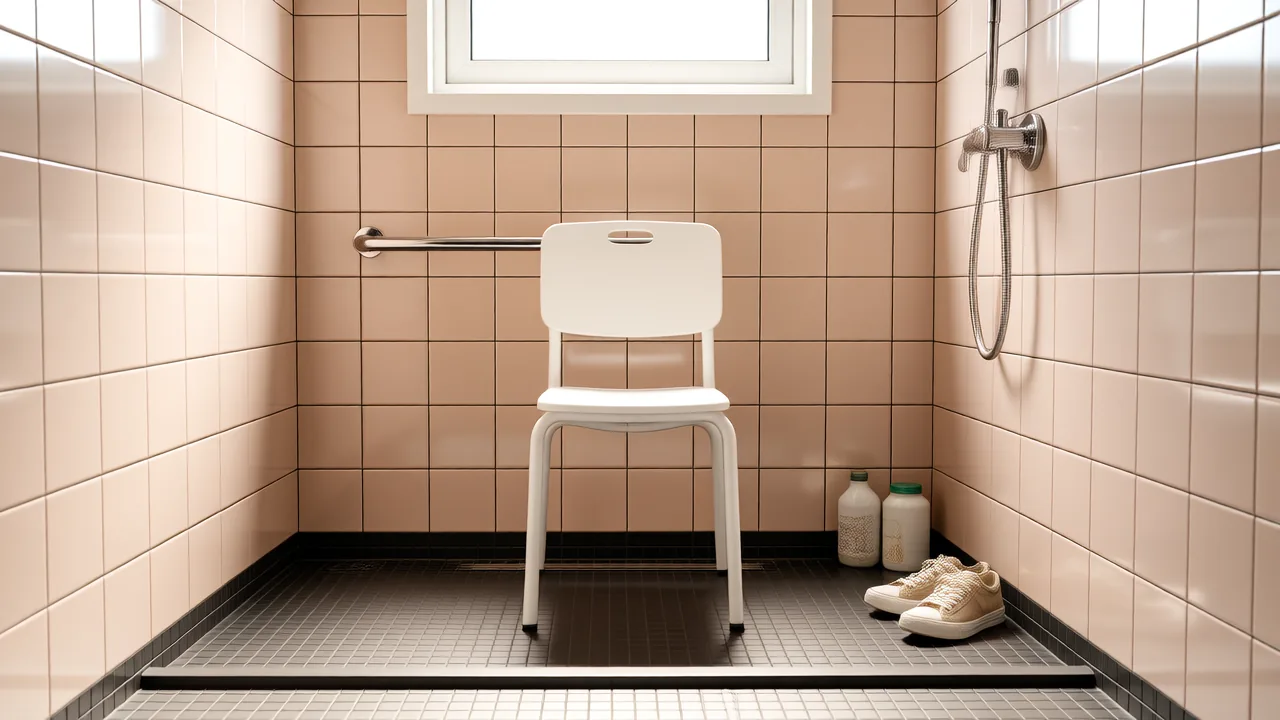
The usual routine is to take the everyday leg off to shower, and that is the default to plan around. The bathroom is one of the riskiest rooms in the house: the Amputee Coalition cites the Consumer Product Safety Commission’s report of more than 110,000 accidents a year in bathtubs and showers. It recommends grab bars for getting in and out of the tub and a suction-cup rubber mat or nonslip strips on the tub floor.
- A shower chair or tub transfer bench lets you shower seated with the leg off.
- Keep crutches or a walker where you can reach them when you step out.
- Dry your skin completely before the liner goes back on.
A shower leg makes sense if standing in the shower matters to you, or if getting out of the tub safely without a leg is hard. Talk it through with your prosthetist and physical therapist, who can weigh your balance and your bathroom setup.
What to do after your everyday leg gets wet
Caught in a downpour, stepped into a puddle deeper than it looked, or got splashed at the lake? Do this as soon as you safely can:
- Sit down and take the leg off. Do not keep walking on a soaked socket.
- Dry your skin completely with a soft towel and check it for redness or rubbed spots.
- Take off socks and liner. Swap wet socks for dry ones. Dry the liner the way its maker says. Ottobock’s liner guidance, for example, says to turn the liner inside out, dry the inside with a lint-free towel, and never dry it on a heater or in the sun. Care rules differ by manufacturer, so follow your own liner’s instructions.
- Get water out of the rest. Take the shoe off and, if you can, the foot shell, and let the socket, shell and foot air-dry. Do not use heat on any part unless your prosthetist says it is safe.
- Treat electronics as off-limits. If a microprocessor or powered part got wet, follow its maker’s instructions before you charge or use it, and call your prosthetist.
- Ask about salt, chlorine and sand. Pool and sea water, and grit in a lock, can each need their own cleanup. Your prosthetist can tell you what your parts need.
Afterward, listen to the leg. New clicks, squeaks, a pin that sticks or a foot that feels different all deserve a visit. Our guide to prosthetic leg repair (coming soon) covers what a prosthetist can fix and how quickly.
Paying for a second leg for water
Coverage for activity-specific legs is uneven. The American Orthotic & Prosthetic Association tracks state bills that would require insurance to cover activity-specific orthotic and prosthetic devices, and notes that one enacted state law defines those devices as running blade-type devices and limits them to K3 or K4 users. So a water leg may or may not be covered where you live, or under your plan. Ask your prosthetist to check with your insurer before anything is built, and get the answer in writing.
When to call your prosthetist or doctor
Call your prosthetist if a part got soaked and now clicks, squeaks, sticks, looks rusty or feels different; if a microprocessor part got wet at all; or if the socket fit has changed since it dried.
Stop wearing the leg and call your doctor if the skin of your residual limb shows an open sore, a blister, redness that spreads or does not fade, warmth, swelling or drainage, or you have a fever. If you have a healing wound or recent surgery, get medical clearance before getting into any water.
Before you go near water: a short checklist
- Do I know what my maker says about water for each part, especially any electronics?
- Is my skin fully healed, and has my doctor cleared me for water?
- Do I have a towel, dry socks and a dry place to sit and take the leg off?
- Can I reach crutches or a mobility aid when the leg comes off?
- If water is a big part of my life, has the prosthetist heard that, and have we talked about a water leg?
Sources
- VA/DoD Clinical Practice Guideline (2024) — Rehabilitation of Individuals with Lower Limb Amputation: Patient Summary
- Amputee Coalition — First Step: A Guide for Adapting to Limb Loss (2025)
- Amputee Coalition — Activities of Daily Living: Bathroom Edition
- Ottobock — Liners (care guidance)
- American Orthotic & Prosthetic Association — State Issues
From the Loud Limb shop: printed crew socks and prosthetic leg covers in loud prints. Our covers go on the outside of a below-knee prosthesis; measure yours first with the size guide.
Published by Loud Limb. This guide is general information drawn from the sources listed above, not medical advice. Loud Limb sells printed prosthetic leg covers and clothing and is not a clinic: ask your doctor, surgeon or prosthetist about your own care.
Leave a Reply