
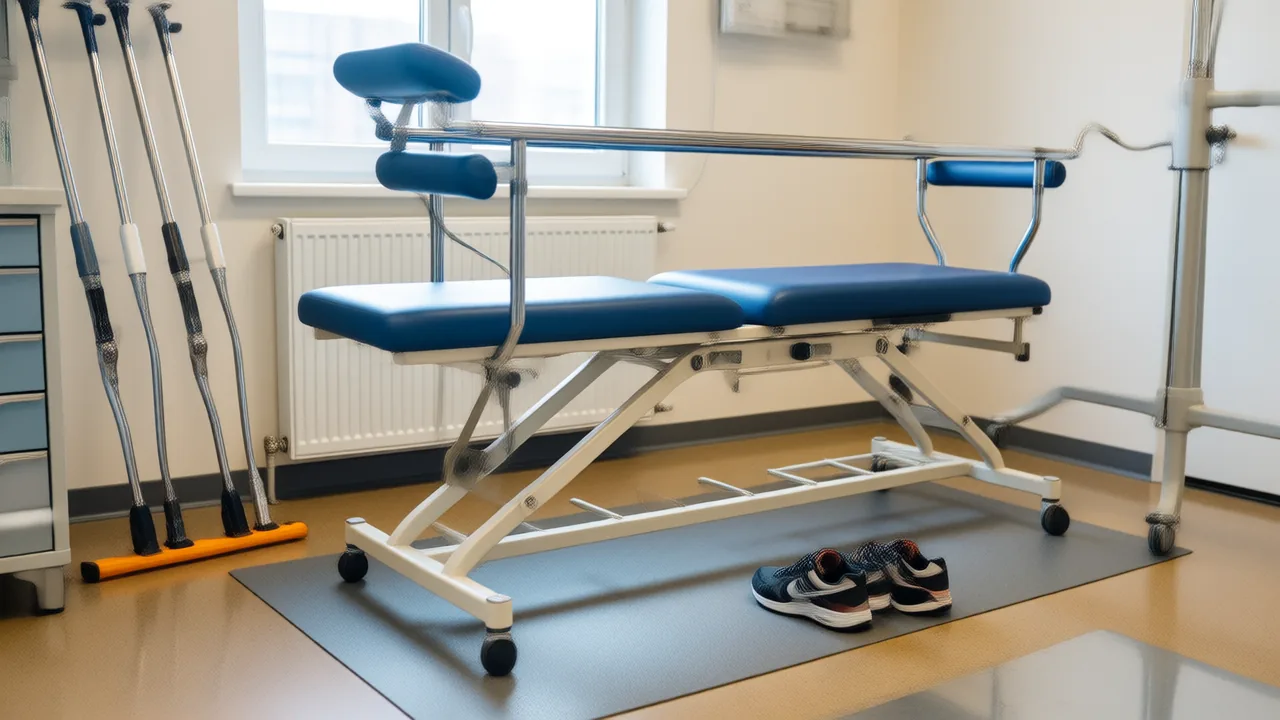
Short answer: A SACH foot, short for solid ankle cushion heel, is the simplest prosthetic foot. It has no ankle joint: a rigid inner keel sits inside a foot-shaped foam shell, with a softer wedge in the heel that squashes when you land, standing in for ankle movement. It is light, durable and low-maintenance, and suits steady walking on level ground, but it gives back little energy.
This guide is for anyone who has seen “SACH” on a prescription or a parts list and wants to know what it means for their walking. It covers how the foot is built, what happens in each step, who it tends to suit, and where it runs out of road. For the full range of feet, see our guide to prosthetic foot types.
What a SACH foot is
The name describes the design. Solid ankle means there is no hinge where your ankle would be; the foot is one piece. Cushion heel means the heel is made of a softer, compressible material than the rest of the foot. Inside is a stiff core called the keel, which gives the foot its shape and lets you stand on it. Around it is a foam shell shaped like a foot, so it fits in a shoe.
Cleveland Clinic describes the SACH foot as the simplest type of prosthetic foot and often the first type used. The Amputee Coalition sorts prosthetic feet into SACH, elastic keel, single-axis, multi-axis, dynamic-response and microprocessor feet, and puts SACH and elastic keel feet together as the two most basic types.
No moving parts means very little to adjust, lubricate or break. That is the whole appeal, and also the whole limitation.
How the solid ankle cushion heel works in a step
A real ankle does a lot of quiet work. When your heel lands, the ankle lets the front of the foot lower to the floor under control. As your body passes over, it lets the shin tip forward. At the end of the step, the calf muscles push you off. A SACH foot fakes the first part with foam, and gets through the rest with shape.
- Heel strike. The cushion heel compresses. That squash lets the foot drop toward the floor, a bit like an ankle bending, and softens the impact.
- Midstance. The foot is flat and the keel is rigid, so it feels stable and predictable under you.
- Rollover. Your weight rolls forward over the keel and onto the toe section, which is shaped to bend so you can roll through.
- Push-off. There is little spring here. The foot gives back much less energy than a flexible or carbon foot, so your hip and thigh do more of the work.
Heel softness matters. A heel that is too soft feels like sinking; one that is too firm jolts you and pushes your knee forward. Your prosthetist picks the heel stiffness to match your weight and how you walk, and can change it if the landing feels wrong.
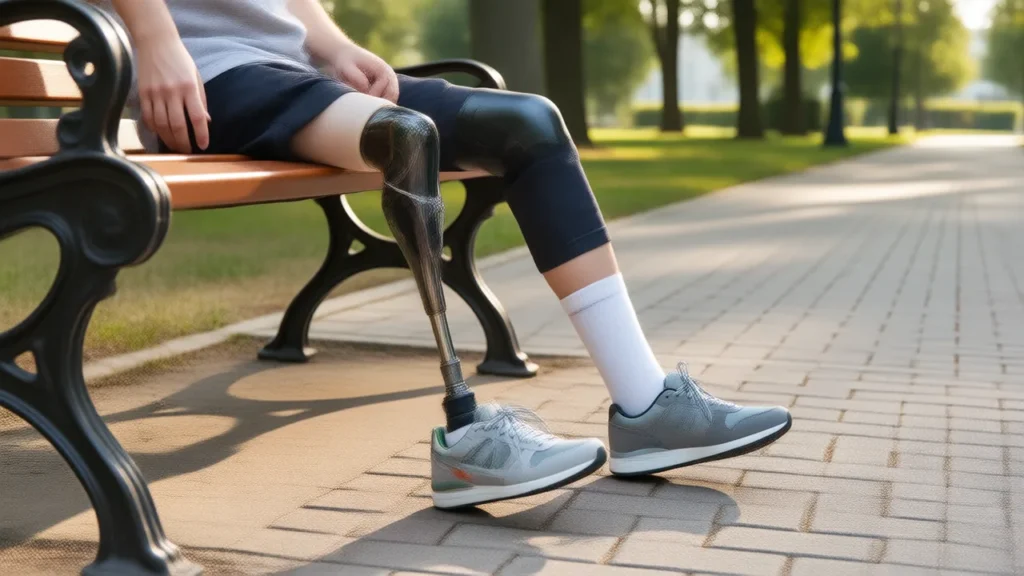
Who a SACH prosthesis tends to suit
Medicare’s lower limb prosthesis policy (LCD L33787) bases which components are medically necessary on your potential functional ability, rated from Level 0 to Level 4. Level 1 describes someone who can use a prosthesis for transfers or for walking on level surfaces at a fixed pace. Level 2 adds getting over low barriers like curbs, stairs and uneven ground. A simple, stable foot like SACH is a natural fit for that kind of walking. Other insurers use their own criteria, so ask yours.
It also tends to show up in a few specific places:
- First or temporary legs, where simplicity and stability matter more than performance, as Cleveland Clinic notes.
- Stubbies. These short training legs for people with limb loss on both sides use rocker bottoms or backward-turned SACH feet to help prevent falls, according to the Amputee Coalition.
- People who value low maintenance above everything else, or who want a stable foot for mostly indoor and short-distance walking.
For above-knee users walking at that level, a simple foot is often paired with a stable knee that resists bending under load. Our guide to the stance control knee (coming soon) explains how that combination works.
Where a SACH foot falls short for active walkers
If you walk at different speeds, head outdoors a lot or want to be on your feet all day, the SACH foot’s simplicity starts to cost you.
- Little energy return. The Amputee Coalition notes that SACH and elastic keel feet cushion but return less energy than dynamic-response feet. More of each step’s effort comes from you.
- Uneven ground. With no ankle motion, the foot cannot tilt to match a slope or a lumpy trail, so the unevenness travels up into the socket.
- Ramps and hills. Walking down a slope with a rigid ankle can feel like the foot is pushing your knee forward.
- Fixed heel height. The foot is built for one heel height of shoe, and changing it throws off the alignment.
| Foot | Ankle motion | Energy return | Often chosen for |
|---|---|---|---|
| SACH | None; the heel cushions | Low | Steady walking on level ground, first legs |
| Single-axis | Up and down | Low | Getting the foot flat fast for stability |
| Multiaxial | Several directions | Varies | Uneven ground |
| Dynamic-response | Flex in the keel | Higher | Active walkers, varied speeds |
| Microprocessor | Adjusted by the foot itself | Varies | Slopes, stairs, specific needs |
If the SACH foot is holding you back, the next steps are often a single-axis foot (coming soon), a multiaxial foot for rough ground, or a flexible dynamic-response foot. At the specialized end sits the microprocessor foot (coming soon). Changing feet can mean updating the documentation of your functional level.
Shoes and care with a SACH foot
- Keep heel heights consistent. Pick shoes with the heel height your leg was aligned for. If you love a shoe that is higher or flatter, ask your prosthetist before wearing it all day.
- Boots take planning. A rigid ankle and a tall boot shaft can fight each other. Our guide to boots with a prosthetic leg covers getting them on and choosing a pair.
- Watch the heel. Foam compresses and wears over time. If the heel has flattened, cracked or started to feel different, the foot may need replacing.
When to call your prosthetist or doctor
Call your prosthetist if the landing feels harder or softer than it used to, your knee is pushed forward or back at heel strike, the foot rolls to one side, the leg feels a different length, or the foam shell is cracked. These are fit, alignment or wear problems, and adjusting them is the prosthetist’s job.
Call your doctor for new pain in your back, hips or other leg. Stop wearing the leg and call your doctor if you find an open sore, a blister, redness that spreads or stays, warmth, drainage, fever, new severe pain or numbness.
Questions to ask about your foot
- Why a SACH foot for me, and is it meant to be temporary?
- What functional level is my documentation based on?
- What would I need to show to justify a more flexible foot later?
- Which heel height is my leg aligned for?
A SACH foot is not a lesser foot. It is a simple one, and for the right walker, simple is exactly the point.
Sources
- Cleveland Clinic — Prosthetic Foot: What It Is, Who Needs It & How It’s Used
- Amputee Coalition — Prosthetic Feet
- CMS Medicare Coverage Database — LCD Lower Limb Prostheses (L33787)
- Amputee Coalition — Foreshortened Prostheses (Stubbies)
From the Loud Limb shop: printed crew socks and prosthetic leg covers in loud prints. Our covers go on the outside of a below-knee prosthesis; measure yours first with the size guide.
Published by Loud Limb. This guide is general information drawn from the sources listed above, not medical advice. Loud Limb sells printed prosthetic leg covers and clothing and is not a clinic: ask your doctor, surgeon or prosthetist about your own care.