
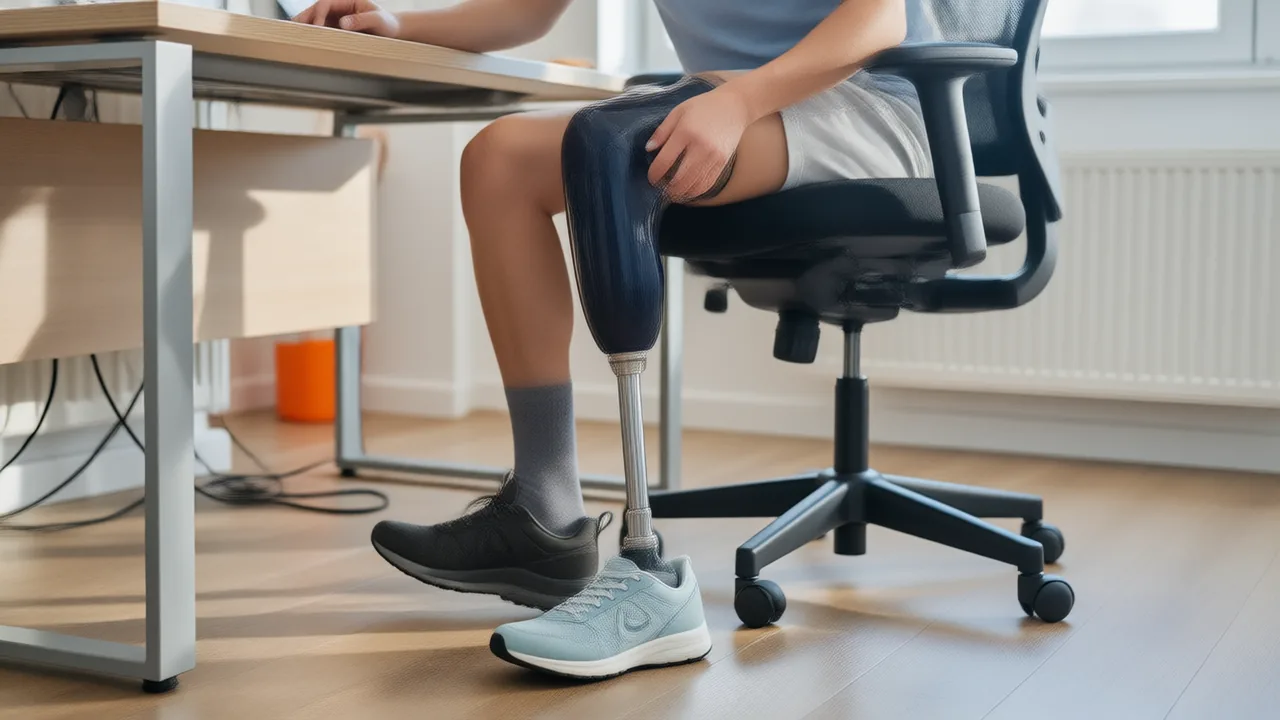
Short answer: An adjustable prosthetic socket is a socket you can tighten or loosen while wearing it, usually with a dial, straps or movable panels. It lets you match the socket to your residual limb as its volume changes during the day, instead of relying only on adding or removing socks. It can help people with big daily swings, but it doesn’t fix a socket that’s the wrong shape.
This guide is for people whose socket feels great at 8 a.m. and loose by 3 p.m., and who have heard about sockets with a dial. It covers how adjustable sockets work, how they compare with sock ply, who tends to be a good fit, and the limits worth knowing before you ask for one. It’s one piece of the bigger topic of getting your prosthetic socket to fit.
What an adjustable prosthetic socket is
A conventional socket is a rigid shell molded around a cast or scan of your limb. Its inside shape is fixed. When your limb shrinks or swells, the socket doesn’t change, so you change what’s inside it, usually by adding or removing prosthetic socks.
An adjustable socket builds some of that adjustment into the socket itself. Designs vary, but the common approaches are:
- Dial systems. A dial on the outside of the socket winds a thin cable that pulls panels or sections of the socket inward.
- Straps or buckles. Straps tighten flexible parts of the socket, a bit like a ski boot.
- Movable panels or struts. Some sockets are built from separate pieces that can be moved closer together or farther apart.
Some adjust only in small, set steps. Others can be changed in seconds, sitting at your desk. Your prosthetist will know which designs they can fit and which suit your amputation level.
How a prosthetic socket with a dial works
Dial versions are the easiest to picture. Turning the dial winds a cable, the cable pulls on one or more flexible sections, and those sections press in closer to your limb. Turning it the other way, or pressing a release, lets them out. The adjustment is usually focused on specific areas rather than tightening the whole socket evenly, which is why the placement of the panels matters.
A few practical points:
- You still wear a liner. An adjustable socket changes the shell, not what’s against your skin. If you’re not sure how liners fit into this, see our guide to prosthetic gel liners (coming soon).
- You may still use socks. Your prosthetist may have you use the dial for small daily changes and socks for bigger ones.
- More is not better. Your prosthetist should show you the range that’s right for you, and what “too tight” feels like.
Why your limb changes volume during the day
The whole reason adjustable sockets exist is that residual limbs don’t hold still. WillowWood’s patient instructions put it plainly: it is completely normal for the volume of your limb to change during the day, and when it shrinks, the socket can slip and the limb can move inside it.
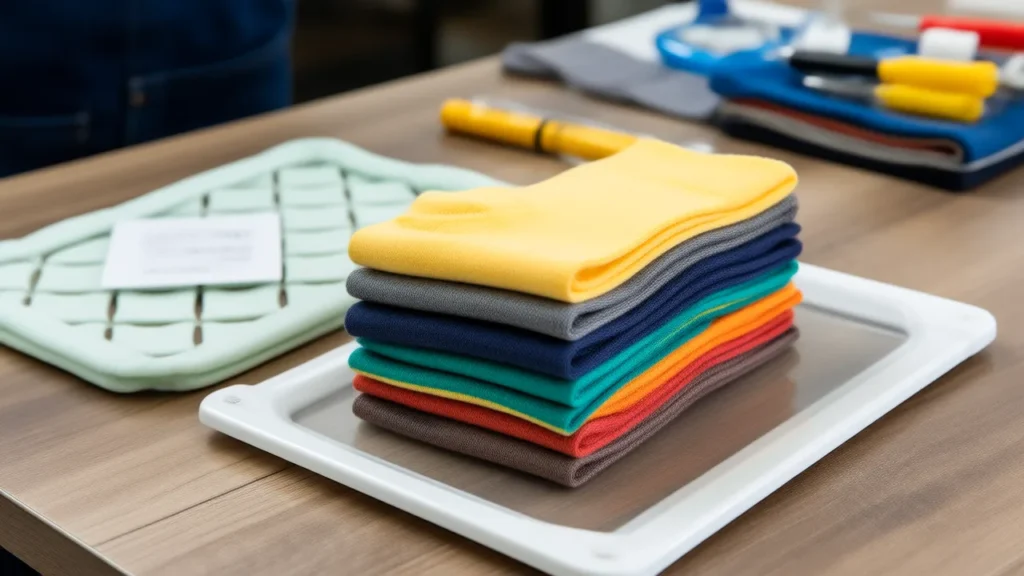
The usual tool for that is socks. A 2014 study of below-knee prosthesis users in Prosthetics and Orthotics International found that people added or removed socks to manage volume, and that average sock ply rose over the day, from 4.8 to 5.5. The same participants wore their prostheses about 14 to 15 hours a day, which is a long time to spend in a socket that fits well only part of it.
Socks have their own quirks. A 2016 study found that prosthetic socks averaged 75% of their original thickness after a month of normal use, so a worn 3-ply sock could end up thicker than a worn 5-ply. Our guides to sock ply (coming soon) and to residual limb volume changes go deeper on both.
Adjustable socket vs. adding socks
| Adding or removing socks | Adjustable socket | |
|---|---|---|
| How you adjust | Take the leg off, add or remove a sock, put it back on | Turn a dial or tighten a strap, often without taking the leg off |
| Where it changes fit | All around the limb | Mainly where the panels are |
| What you carry | Spare socks in several plies | Nothing extra, though socks may still be part of your plan |
| What can go wrong | Socks thin out, bunch or wrinkle | Over-tightening; more moving parts to wear or break |
| Cost and coverage | Socks are simple and inexpensive to replace | A more complex device; coverage varies by insurer |
For a plain-English refresher on what socks and liners each do, see stump socks vs. prosthetic socks vs. liners.
Who may benefit from an adjustable socket
Nobody can promise an adjustable socket will work better for you than a well-made conventional one. Situations where it can be worth asking about one:
- Anyone whose volume swings a lot during the day, and who finds themselves changing socks several times.
- Newer amputees whose limbs are still settling, though your prosthetist may prefer a temporary socket during that phase.
- Active users who want the socket snug during activity and a little looser while sitting.
- People who find socks hard to manage because of hand strength, reach or balance.
If you’re mainly after a sport leg, the socket questions are different; our guide to the running blade prosthetic (coming soon) covers those. And if you’re weighing adjustable sockets against other designs, the main prosthetic socket types puts them side by side.
Limits and trade-offs
- It can’t fix a bad shape. The socket is the custom heart of the leg. If it presses in the wrong places, a dial won’t move those places.
- It isn’t a suspension fix. The VA/DoD residual limb management tool lists insufficient suspension, a socket that is too loose, or a too-compliant locking liner as possible causes of pistoning. Tightening a dial addresses only one of those.
- Over-tightening is possible. Cranking the dial to feel locked in can concentrate pressure on skin.
- More parts, more maintenance. Cables, dials and straps can wear out and need repair.
- The evidence is thin. Even for suspension systems, a systematic review in Clinical Biomechanics found no clinical evidence for one “standard” system for every below-knee amputee. Ask your prosthetist what outcomes they’ve seen with adjustable designs in people like you.
- Coverage varies. Ask your prosthetist to check with your insurer before you set your heart on one.
When to call your prosthetist
Call your prosthetist if you can’t get the socket comfortable anywhere in its range, you’re using the dial at its limit every day, the leg still slips or pistons when tightened, a dial or cable stops holding, or you hear new clicks. These usually mean the socket needs adjusting or replacing, not more turns.
Take the leg off and call your doctor if you see an open sore, a blister, redness that spreads or stays, or skin breakdown where a panel presses, or if you have numbness, new severe pain or a fever. Don’t loosen and carry on over broken skin.
Questions to ask before you get one
- Is my volume change big enough that an adjustable socket would help, or would a better-fitting conventional socket do the job?
- Which designs can you fit, and where would the adjustment act on the limb?
- Will I still use socks, and how many plies?
- What’s the right range for me, and how will I know it’s too tight?
- What happens if the dial or cable breaks, and how fast can it be fixed?
- Will my insurance cover it, and what documentation is needed?
Sources
- WillowWood (manufacturer patient instructions) — Alpha Liners
- Prosthetics and Orthotics International (2014) — Self-reported prosthetic sock use among persons with transtibial amputation
- Prosthetics and Orthotics International (2016) — Amputee socks: Sock thickness changes with normal use
- VA/DoD Lower Limb Amputation CPG clinical support tool (2025) — Residual Limb Management in Lower Limb Amputation
- Clinical Biomechanics (2014) — Transtibial prosthesis suspension systems: systematic review of literature
From the Loud Limb shop: funny amputee shirts & hoodies and prosthetic leg covers in loud prints. Our covers go on the outside of a below-knee prosthesis; measure yours first with the size guide.
Published by Loud Limb. This guide is general information drawn from the sources listed above, not medical advice. Loud Limb sells printed prosthetic leg covers and clothing and is not a clinic: ask your doctor, surgeon or prosthetist about your own care.