
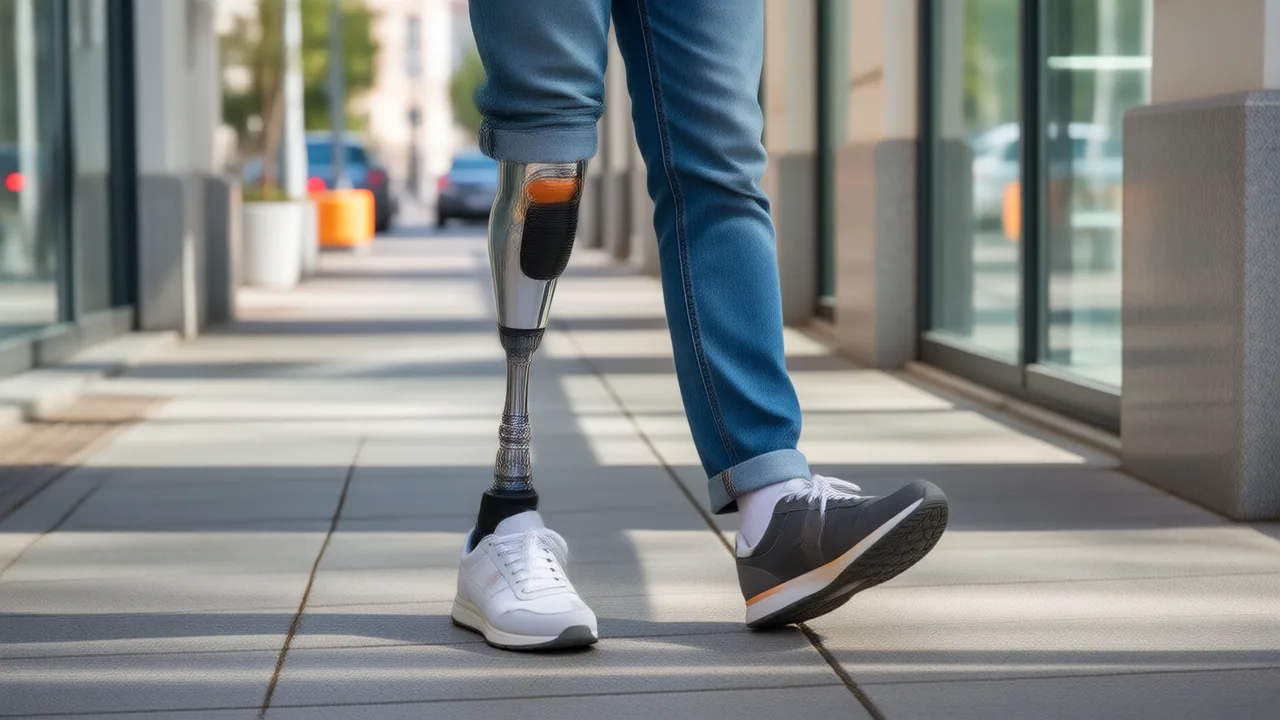
Short answer: The best pants for prosthetic legs have a straight, bootcut or relaxed leg with enough room to pass the foot through and clear the socket, some stretch in the fabric, a hem measured with your prosthetic shoe on, and sturdy cloth that won’t wear through at the socket rim. Side zips or magnetic closures help if you adjust or remove your leg during the day.
This is for anyone who has stood in a fitting room with one foot stuck halfway down a pant leg: below-knee and above-knee users, men and women, plus the partners who do the laundry and see where pants give up first. It covers cuts, fabrics, jeans, adaptive options and the alterations a tailor can make to pants you already own. It’s part of our wider guide to adaptive clothing for amputees.
Where pants and prosthetic legs clash
Almost every pants problem happens at one of four spots, and knowing which one is yours saves a lot of returns.
- The leg opening. A prosthetic foot doesn’t point its toes or wiggle through a narrow cuff. If the ankle of the pant is narrower than the foot and shoe, you either dress before putting the shoe on or you fight it.
- The socket. The socket is wider and harder than the leg it replaces, with a rim at the top. Tight pants show its outline and rub against that edge.
- The knee. Below the knee, you need room for your own knee plus anything worn over it. Above the knee, the prosthetic knee needs room to bend when you sit without the fabric bunching or pulling the leg.
- The hardware. Pins, valves, clamps and adapters can snag fabric from the inside. That’s where holes tend to start.
Your suspension changes the picture too. Cleveland Clinic lists straps or belts, suction liners, pin-locking liners, electric vacuum pumps and neoprene sleeves as ways a prosthesis stays on. A sleeve that rolls up over the knee adds a layer of bulk at the thigh, and a waist belt sits right where your waistband does. Try pants on over the whole setup you actually wear, not just the leg.
From the Loud Limb shop: printed athletic shorts and amputee tees & hoodies.
Cuts that work over a socket and knee
Leg shape matters more than brand. In rough order of how easily they go on over a prosthesis:
| Cut | How it works with a prosthesis | Watch for |
|---|---|---|
| Relaxed or loose fit | Plenty of room at the socket and knee; foot passes through easily | Extra fabric can catch on components when you sit |
| Bootcut | Fitted at the thigh, opens below the knee, so the socket and shoe clear it | A fitted thigh can be snug over a suspension sleeve |
| Straight leg | Same width from knee to hem; a reliable everyday choice | Check the opening against your shoe, not your bare foot |
| Wide leg | Hides the socket outline completely and drapes well | Long hems can drag under a prosthetic foot on stairs |
| Slim or tapered | Can work if the fabric stretches well | A narrow ankle and a snug calf are the usual sticking points |
| Skinny | Possible only in very stretchy fabric | Shows the socket shape and is the hardest to get on |
Men’s pants for a prosthetic leg
Men’s sizing mostly runs by waist and inseam, and the leg shape comes from the fit name: “athletic”, “relaxed” and “straight” usually give more room below the knee than “slim”. Chinos and work pants in a straight or relaxed fit are a solid everyday base. For anything tailored, such as a dress trouser or a suit, see our guide to wearing a suit with a prosthetic leg, which covers break, drape and hemming for both legs.
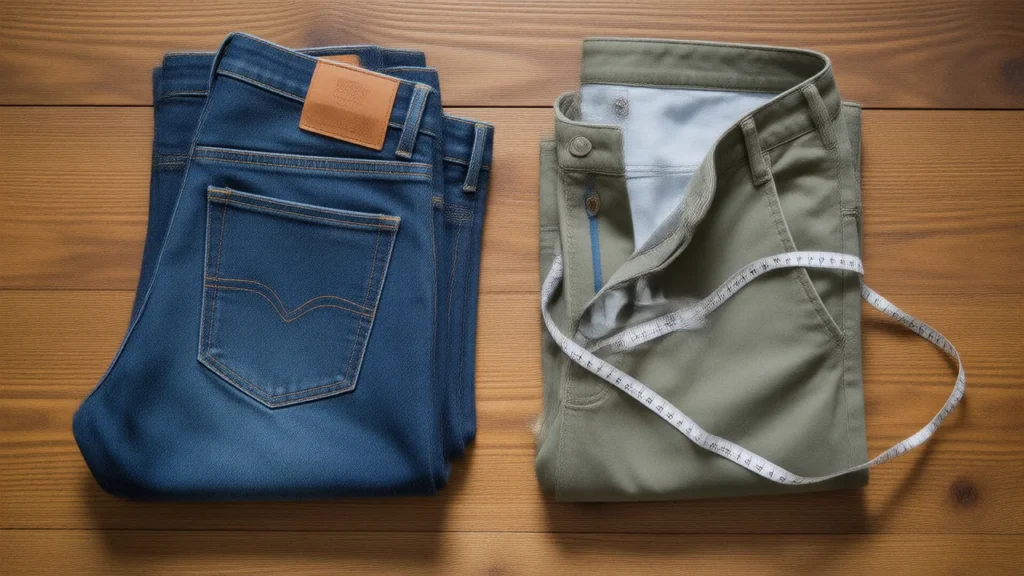
Fabrics: stretch, durability and snag resistance
The same cut can be easy or miserable depending on what it’s made of.
- Stretch helps. A little spandex or elastane in cotton or denim makes it easier to pass a foot through and lets the fabric move over the socket instead of pulling against it.
- Tight weaves last longer. The inside of the pant leg rubs on the socket edge and hardware all day. Loose knits and thin fabrics tend to pill, snag or wear through there first.
- Smooth beats textured. Fabrics with loops, slubs or open weaves are more likely to catch on a pin or adapter.
- Lined pants slide. A smooth lining, common in dress pants and some outdoor pants, glides over a prosthesis more easily than bare cotton.
- Heat is real. A socket already holds heat, so heavy fabrics in summer stack on top of that. Lighter weaves or switching to shorts may be the more honest answer on hot days.
If one pant leg keeps developing holes in the same spot, look at the leg as well as the pants. A worn or sharp edge on a component is worth showing your prosthetist rather than sanding or taping yourself.
Jeans with a prosthetic leg
Jeans are the everyday pants that are hardest to get right. Rigid all-cotton denim barely stretches, so it catches on the foot, outlines the socket and wears through fast at the rim. What helps:
- Pick stretch denim in a straight, bootcut or relaxed fit. Save rigid denim for looser cuts.
- Check the leg opening against your shoe. If you can’t get the pant over the prosthetic foot with its shoe on, you’ll be taking the shoe off every time you dress.
- Hem with shoes on. Stand in the shoes you’ll wear, prosthesis on, and have both legs hemmed to the same visible length. A prosthetic foot and its shoe can sit at a slightly different angle from your other foot, so a hem that breaks nicely on one side may sit differently on the other.
- Put the prosthetic side in first. Sitting down, feed the prosthetic leg into the pant leg before your other foot. It’s the harder side, and doing it first means you’re not balancing on one foot to finish.
- Expect some wear. Inner-leg and knee wear is normal over a socket. A tailor can add a patch on the inside before a hole starts.
Some people also take the prosthesis off, put the pant leg over it, then put it back on. Whether that’s practical depends on your suspension and how easily you don and doff, so it’s worth asking your prosthetist or occupational therapist to walk you through the safest dressing routine for your setup.
Adaptive pants: side zips, snaps and magnets
Adaptive pants are built around the way you actually get dressed. The Amputee Coalition’s adaptive clothing page describes features like magnetic closures instead of buttons or zippers and flat hems that are less likely to snag, and says adaptive clothing should benefit the wearer physically and psychologically. For prosthesis users, the features that matter most are:
- Side zips or snaps running up the outer leg. You can open the pant leg to reach the socket, a valve, a pin release or a dial without taking your pants off. They also make dressing easier for above-knee users who put the leg on after the pants.
- Magnetic or easy-grip fly closures for people with limited hand function or who dress seated.
- Seated cuts with a higher back rise, useful if you spend part of the day in a wheelchair.
- Flat seams and hems that press less against skin and catch less on components.
Adaptive pants are a genuinely useful category, but you don’t need them to dress well. If a regular pair fits, a tailor can often add the one feature you’re missing.
Altering pants you already own
A good tailor or alterations shop can turn a pair you love into a pair that works. Go wearing your prosthesis and the shoes you’ll pair the pants with. Common changes:
- Add a side zip along the outside seam of the prosthetic leg, from the hem to above the knee or socket.
- Let out or add a gusset at the calf or knee so the leg clears the socket.
- Reinforce the inside with a patch of sturdy fabric where the socket rim and hardware rub.
- Hem both legs to the same visible length with shoes on.
- Swap the closure for magnets, snaps or hook-and-loop if buttons are a struggle.
Veterans have one more option. The VA clothing allowance is an annual payment for veterans with a service-connected disability whose prosthetic or orthopedic device damages their clothes. VA says you apply with VA Form 10-8678 through the prosthetic representative at your local VA medical center, and it holds applications until an August 1 closing date. Check the VA page for the current rules on your own claim.
Beyond pants: making the leg part of the outfit
Not every look needs to hide the leg. Cropped pants, rolled cuffs and joggers pushed up all put a below-knee prosthesis on show, and if you like it that way, a printed cover over a below-knee leg or a loud pair of crew socks turns the gap between hem and shoe into the best part of the outfit. For more styling ideas, see prosthetic leg cover ideas.
For the other shapes in your closet, we have separate guides to wearing leggings with a prosthesis (coming soon) and dresses and skirts with a prosthetic leg. If your job or hobbies put you on the floor a lot, kneeling with a prosthetic leg (coming soon) covers knee pads and how pants hold up to it.
Your pants shopping checklist
- Wear your prosthesis, suspension and everyday shoes to try pants on.
- Check the leg opening passes over the prosthetic foot with its shoe on.
- Sit down in them. Look for pulling at the knee and bunching behind it.
- Look for stretch, a tight weave and a smooth inside.
- Budget for a hem, and consider a side zip or inner patch on favorites.
- If fabric keeps snagging in one place, show that spot on the leg to your prosthetist.
Sources
- Amputee Coalition — Adaptive Clothing Resources
- Cleveland Clinic — Prosthetic Leg: What It Is, Who Needs It & How It’s Used
- U.S. Department of Veterans Affairs — VA Clothing Allowance
Published by Loud Limb, a shop for printed prosthetic leg covers, socks and clothing.