
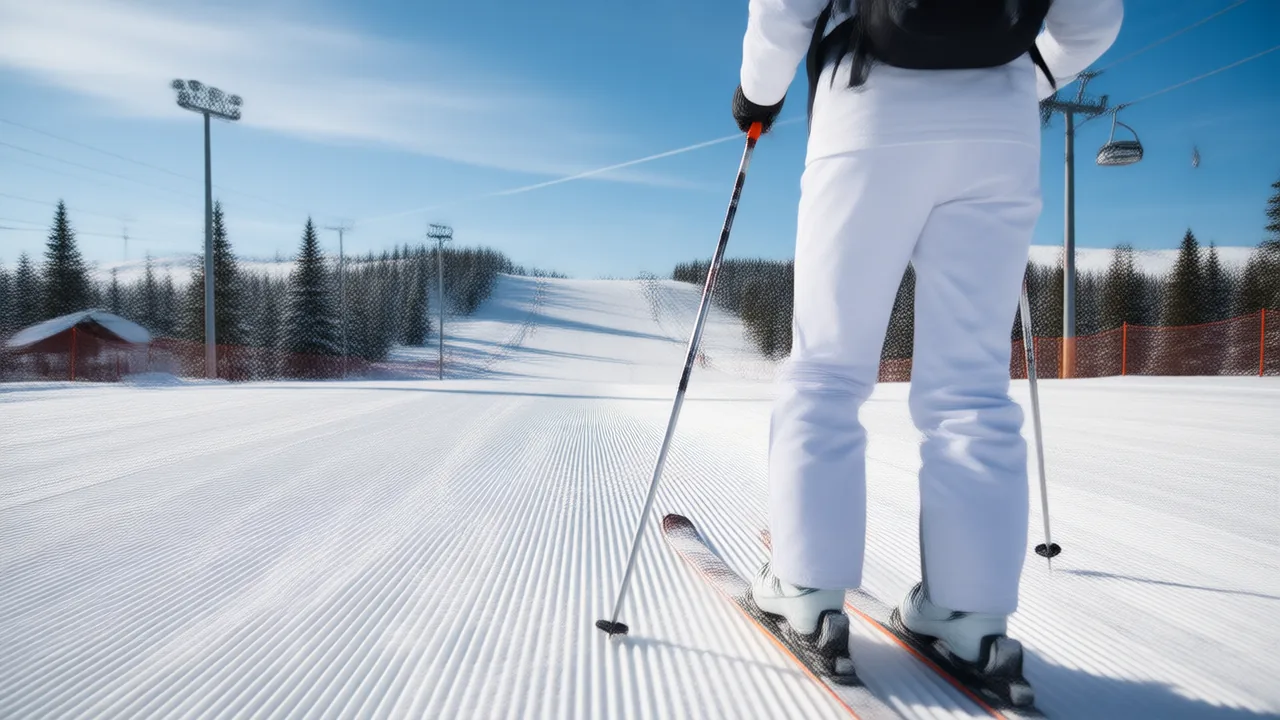
Short answer: Yes, you can ski with a leg amputation, standing or sitting. Skiing with a prosthetic leg usually means two skis with your everyday leg or a ski-specific setup. Skiing without one usually means three-track: one ski plus two outriggers, forearm crutches with short skis on the ends. The easiest start is a lesson with an adaptive ski program that supplies equipment.
This guide is for people with leg amputations or limb difference who want to try skiing, get back to it, or help a family member get started. It covers the main adaptive skiing methods, how prosthetic ski setups work, how to find a program, paying for gear, and how to look after your skin and your other leg in the cold.
Skiing is one of many options covered in our guide to adaptive sports for amputees. If snow is not your thing, it has plenty more.
Can you ski with a prosthetic leg? The main options
There is no single “amputee way” to ski. Which method suits you depends on your amputation level, strength, balance, fitness and goals, and many people try more than one before settling. Here is the landscape:
| Method | What it involves | Often considered for |
|---|---|---|
| Two-track on a prosthesis | Two skis, with the prosthesis in a ski boot or a ski-specific setup | People with good control of their prosthesis, often below-knee |
| Three-track | One ski on the sound leg, plus two outriggers; no prosthesis on the slope | People who ski without a prosthesis, at any amputation level |
| Four-track | Two skis plus two outriggers for extra support | People who need more balance help while standing |
| Sit-ski | A seat mounted on one or two skis, steered from a seated position | People who prefer or need to ski seated |
Before your first day, talk to your physical therapist about balance and strength, and to your prosthetist if you plan to ski on your leg. They know things about your body and your components that no instructor can see from the chairlift.
Three-track skiing: one ski, two outriggers
In three-track skiing, you ski on your sound leg with one full-size ski. In each hand you hold an outrigger, a forearm crutch with a short ski tip on the end. The name comes from the three tracks left in the snow: one from the ski and one from each outrigger.
The outriggers help with balance, turning and stopping, and some let you flip the tip up so they work as crutches in the lift line and on flat ground. Because the prosthesis stays at the lodge or in the car, there are no sockets, ski boots or knee angles to worry about.
What to expect:
- Your sound leg does all the work. Thigh and hip strength and endurance matter a lot. Plan short runs and plenty of breaks at first.
- Your arms and shoulders work hard too, especially while you learn to use the outriggers for balance.
- Lessons make a big difference. Adaptive instructors teach outrigger technique, getting on and off the lift, and how to fall and get up safely.
- Protect the residual limb. Ask your prosthetist or physical therapist how best to pad and keep it warm under your ski pants, since it will not be inside a socket.
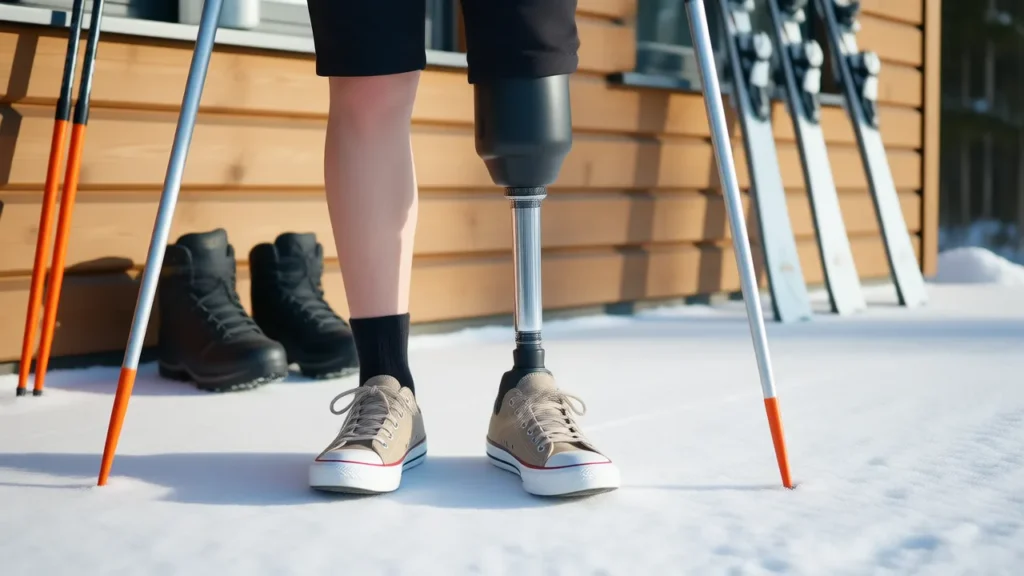
Skiing on a prosthesis: everyday leg or ski leg
Skiing two-track on a prosthesis looks the most like conventional skiing, and it asks the most of your setup. Ski boots hold the ankle and push the shin forward into a flexed position. A prosthetic foot and socket built for walking on flat ground may not be set up for that.
There are generally two routes, and your prosthetist is the person to choose between them:
- Adjusting your everyday leg. Some setups can be tuned for a ski day, for example by changing alignment or foot position. Only your prosthetist should make those changes, and they should be reversed the same way.
- A ski-specific leg or foot. The Amputee Coalition’s First Step guide notes that activity-specific feet are designed for particular activities, and it names skiing among them, alongside swimming and running.
Questions to bring to your prosthetist:
- Can my current socket and suspension handle the forward lean and twisting of skiing?
- Does my foot or knee work with a ski boot, and at what angle?
- Would a ski-specific component be worth it for how often I plan to ski?
- What should I watch for on my skin after the first day?
If you have a microprocessor knee or any powered component, ask specifically whether it is rated for skiing, snow and cold, and check its manual. Do not assume.
Four-track and sit-skis: other adaptive skiing options
Four-track skiing uses two skis and two outriggers. It suits people who can stand on both legs, with or without a prosthesis, but want more support for balance than poles give.
Sit-skis put you in a molded seat mounted on skis. A mono-ski has one ski under the seat and is steered with short outriggers; a bi-ski has two, which gives a wider base. Sit-skiing is a full sport in its own right, not a consolation prize, and it can be a great way to get on snow early in rehab or on days when the prosthesis is not cooperating.
Ask whether your program lets you try more than one method. The right one at the start may not be the right one once your strength and skills grow.
Finding adaptive ski programs and lessons
You do not need to buy anything before you try. Adaptive ski programs often provide the specialized equipment, along with instructors trained in the methods above.
A good place to start looking is Move United, a national adaptive sports network working since 1956. It reports more than 70 adaptive sports offered through 245-plus member organizations across the country. Check whether a member near you, or near a mountain you plan to visit, runs a ski program.
When you call a program, ask:
- Which methods they teach, and whether they have outriggers and sit-skis to borrow.
- Whether instructors have taught people with your amputation level.
- How lift loading and unloading works for adaptive skiers.
- What to wear, and where you can store a prosthesis during the day.
If you get the competition bug, Para alpine skiing is part of the Paralympic Movement. The International Paralympic Committee lists limb deficiency among its seven eligible impairment types, and athletes must meet a sport’s Minimum Impairment Criteria to get a sport class.
Paying for ski gear and a ski leg
Coverage for sport-specific prostheses and adaptive equipment varies a lot, so ask your insurer before assuming anything. Grants help fill the gap. The Challenged Athletes Foundation offers grants for adaptive sports equipment, prosthetics and coaching, and it has a program for sport-specific Össur prostheses. Its 2026 grant enrollment opened on September 28, 2026, so check the current deadlines on its site.
If you already have a ski leg you no longer use, it may help someone else get on the snow; see our guide on how to donate a used prosthetic leg.
Cold, skin and your other leg: when to call your clinician
Skiing puts your skin through cold, sweat and pressure all at once. The residual limb sweats inside a socket even on a cold day, and damp skin gets cold fast when you stop moving.
Cold matters for your sound foot and your hands too. Cleveland Clinic explains that frostbite is skin damage from freezing temperatures below 32°F, most common on fingers, toes, nose and ears. Conditions like peripheral vascular disease and diabetes raise the risk. If your amputation was related to diabetes or circulation, talk to your doctor before a ski trip about protecting your remaining foot, and check it every evening.
Call your prosthetist if the socket rubs, the leg slips in the boot, or you see new pressure marks after a ski day. Stop skiing and get medical help for numbness that does not go away when you warm up, skin that stays white, gray or blistered, an open sore, spreading redness, or new severe pain, especially after a fall.
Your first adaptive ski day checklist
- Clearance from your doctor and a chat with your physical therapist.
- A prosthetist visit if you plan to ski on your leg.
- A booked lesson with an adaptive program that supplies equipment.
- Warm, moisture-wicking layers, good gloves, and a helmet.
- Spare prosthetic socks, a small towel, and a plan for where your leg lives during the day.
- A dry pair of crew socks for the drive home.
Hooked on the outdoors? Our guides to rock climbing (coming soon), kayaking (coming soon), surfing (coming soon) and hunting with a prosthetic leg cover the rest of the year.
Sources
- Amputee Coalition — First Step: A Guide for Adapting to Limb Loss (2025)
- Move United — Our Mission & Impact
- Challenged Athletes Foundation — CAF Grants
- International Paralympic Committee — Classification
- Cleveland Clinic — Frostbite: Signs & Symptoms, Stages, Treatment & Prevention
From the Loud Limb shop: printed athletic shorts and prosthetic leg covers in loud prints. Our covers go on the outside of a below-knee prosthesis; measure yours first with the size guide.
Published by Loud Limb, a shop for printed prosthetic leg covers, socks and clothing.
Leave a Reply