
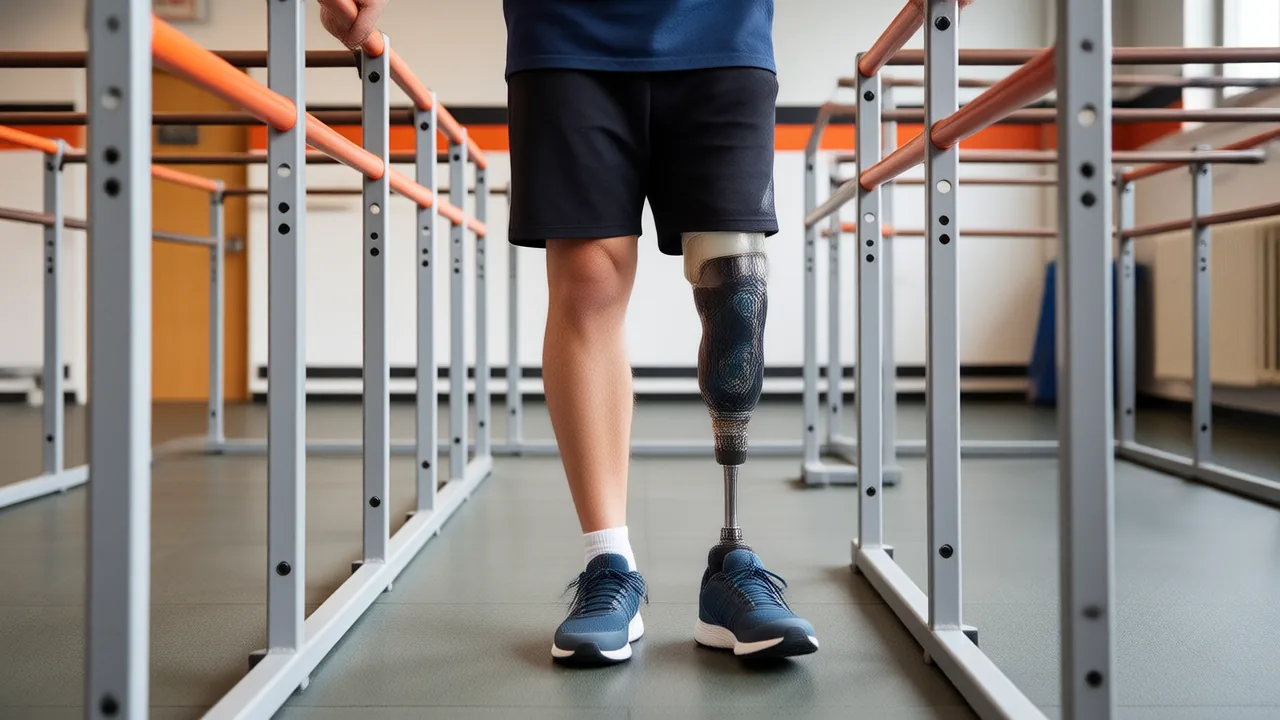
Short answer: Months, not weeks, and there is no fixed number. The Amputee Coalition says prosthetic fitting usually begins two to six months after surgery, once the incision heals and swelling goes down. Then comes gait training. Walking without thinking about every step usually takes longer still, especially above the knee, and depends on your health, fit and practice.
This guide is for new amputees, people facing a planned amputation, and the families counting the weeks with them. It covers the usual sequence, how long it takes to walk with a prosthetic leg at each level, what speeds it up or slows it down, and the milestones to look for. For the whole rehab process in detail, see our guide to learning to walk again after amputation.
How long does it take to walk with a prosthetic leg? The usual sequence
There are really three finish lines, and people often mean different ones when they ask. First steps in the parallel bars can come soon after your first fitting. Walking independently around the house and the neighborhood takes months of training. Feeling so used to the leg that you stop thinking about it takes longer, and for some people much longer.
Here is the typical order of events for a below-knee amputation, using the Amputee Coalition’s below-knee guide and its new-amputee FAQ:
| Stage | What happens | Typical timing, per the Amputee Coalition |
|---|---|---|
| Early healing | Wound care; a shrinker sock to start shaping the limb | Shrinker may be fitted within the first week |
| Stitches out | Sutures or staples removed | A few weeks after surgery |
| Temporary leg (some people) | An early prosthesis while the limb is still changing | Right after surgery or within two to three weeks |
| First fitting | Your first prosthesis is fitted | About 8 to 12 weeks in the below-knee timeline; two to six months in general |
| Gait training | Physical therapy to walk and handle daily life on the leg | Weekly visits for several months |
After that, the limb usually keeps shrinking, so socket changes and eventually a definitive leg follow once it settles. Your prosthetist decides when.
Amputation level: below the knee vs above it
The level of amputation is the biggest single factor. With a below-knee amputation, you keep your own knee, so the prosthesis replaces a shin, ankle and foot that you steer with a joint you have used all your life. With an above-knee amputation, you also have to learn to control a prosthetic knee through the socket, mostly with your hip.
The Amputee Coalition’s above-knee guide says rehab and timelines after an above-knee amputation are highly individualized, and that hip contractures, a loss of motion at the hip, can be a problem. Preventing them is a big part of early rehab, because a hip that will not straighten makes walking on any prosthesis harder.
Effort matters too. A 2021 systematic review and meta-analysis found the smallest increase in the energy it takes to walk, about 12%, in below-knee amputation not caused by vascular disease, and the largest, about 102%, in above-knee amputation caused by vascular disease. More effort per step means more training to build the stamina. Our guide to the energy cost of walking with a prosthesis goes into why.
Your health and the reason for the amputation
That same review shows how much the cause matters: vascular amputations cost more energy than non-vascular ones at the same level. People whose amputation followed diabetes or poor circulation can have slower wound healing, and may be managing heart, kidney or eyesight problems at the same time. Each of those can pause training.
People whose amputation followed an injury may be fitter going in, but may also be healing other injuries. Your strength, balance and fitness before surgery, your weight, and your mood all play a part. None of this is a verdict. It is a reason to ask your rehab team for a timeline that fits you, not a number from someone else’s story.
If your amputation is planned, you have a head start available. Ask your surgeon whether you can see a physical therapist before the operation to work on strength in your arms, core and other leg, and to practice transfers you will need afterward. Ask to meet a prosthetist, too, so the first fitting is not also the first time you hear the words socket and liner. Arriving at rehab stronger, and knowing the plan, takes some of the unknowns out of the months that follow.
Rehab, fit and practice: the parts you can push
- Keep your joints moving. The below-knee guide notes that the most common contracture after a below-knee amputation is a knee that stays bent and cannot fully straighten. Do the positioning and stretches your physical therapist gives you from day one, even before you have a leg.
- Use the shrinker as instructed. It controls swelling and shapes the limb, which is what gets you ready for a fitting.
- Turn up to therapy. The guide expects weekly visits for several months. Your therapist shows you how; the practice between sessions is where it sticks.
- Build wearing time gradually, exactly as your prosthetist says, and check your skin every time the leg comes off.
- Report fit problems early. Your limb keeps changing in the first months. A socket that pinches or slips slows everything down, and fixing it is part of the process, not a setback.
Life can reset parts of the clock later. Big changes in weight, illness or pregnancy change limb volume and balance; our guide to pregnancy with a prosthetic leg covers that one.
Milestones in learning to walk on a prosthetic leg
Progress is easier to see as a ladder than as a date. Most people climb roughly in this order, at their own speed:
- Standing and shifting your weight onto the leg in the parallel bars.
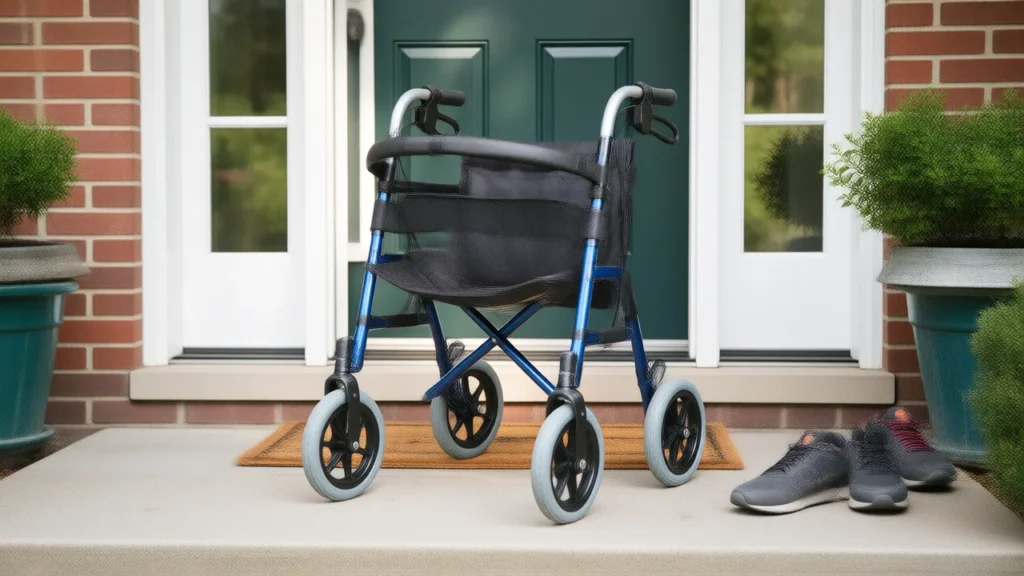
- Walking in the bars, then with a walker or crutches.
- Walking with a cane, then without an aid indoors.
- Getting up from the floor, a skill worth learning before you need it.
- Outdoors: grass, gravel, slopes, curbs and stairs.
- Busy places and trickier tasks, like riding an escalator with a prosthetic leg.
- Stamina: walking farther and standing for long periods at work or in lines.
Some people skip rungs, some stay on one for a while, and some decide that a prosthesis for short distances plus a wheelchair for longer ones is the combination that works. All of those are legitimate outcomes.
Falls, confidence and getting used to the leg
Getting used to a prosthetic leg is partly about trust. In a 2001 study of 435 lower-limb amputees living in the community, 52.4% had fallen in the past year and 49.2% reported a fear of falling. Having had the amputation for four or more years was linked with fewer falls, which fits what the rest of this page says: experience takes time to build.
Fear of falling can make people walk less, which slows progress. Practice falling safely and getting up with your therapist, and read our guide on preventing falls with a prosthetic leg (coming soon).
When to call your prosthetist, therapist or doctor
Call your prosthetist if the socket pinches, slips, or needs far more socks than usual, the leg feels a different length, or the knee or foot behaves unpredictably. Fit problems are the most common reason progress stalls, and they are fixable.
Call your physical therapist if you have plateaued for weeks, feel unsteady, or have new pain in your back, hips or other leg.
Stop wearing the leg and call your doctor for an open sore, a blister, redness that spreads or stays, warmth, drainage, fever, new severe pain or numbness. And get checked after any fall, even one that seemed harmless.
How to keep your timeline moving
- Ask your rehab team for a timeline for you, and what would change it.
- Do your stretches and positioning daily to keep the knee and hip straight.
- Wear the shrinker as instructed until your prosthetist says otherwise.
- Go to every therapy session, and practice what you learned between them.
- Report fit problems the week they start, not at the next appointment.
- Measure progress by the milestone ladder, not the calendar.
Sources
- Amputee Coalition — Prosthetic FAQs for the New Amputee
- Amputee Coalition — Beginning Your New Journey: Below-Knee Amputation (2025)
- Amputee Coalition — Beginning Your New Journey: Above-Knee Amputation (2025)
- Prosthetics and Orthotics International (2021) — General estimates of the energy cost of walking in people with different levels and causes of lower-limb amputation
- Archives of Physical Medicine and Rehabilitation (Miller et al., 2001) — The prevalence and risk factors of falling and fear of falling among lower extremity amputees
From the Loud Limb shop: printed athletic shorts and printed crew socks.
Published by Loud Limb. This guide is general information drawn from the sources listed above, not medical advice. Loud Limb sells printed prosthetic leg covers and clothing and is not a clinic: ask your doctor, surgeon or prosthetist about your own care.