
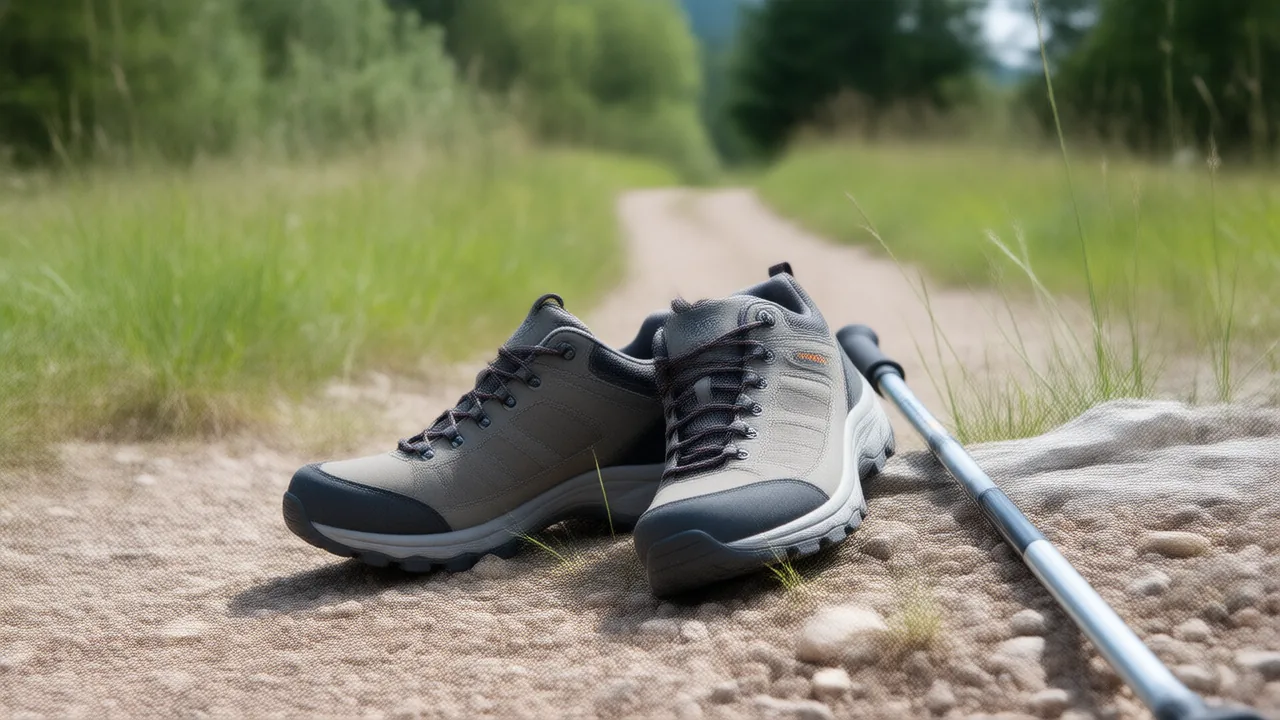
Short answer: A multiaxial prosthetic foot is a foot-and-ankle unit that can move in more than one direction: toes up and down like a normal step, plus some side-to-side tilt and a little twist. That extra motion lets the foot settle flat on slopes, grass, gravel and cambered sidewalks instead of rocking on its edge. It tends to suit people who walk on varied ground and can control a more mobile ankle.
This guide is for below-knee and above-knee users whose prosthetist has mentioned a multiaxial foot, and for anyone wondering why their current foot hates the neighbor’s lawn. It explains what “multiaxial” means, how it compares with simpler feet, who it tends to fit, and what to ask before you try one.
It is one option among many. For the full lineup, from the most basic cushioned heel to computer-controlled ankles, see our guide to the main kinds of prosthetic feet.
What “multiaxial” actually means
Your own ankle and foot move in three planes. Prosthetists describe a foot by how many of those it can copy:
- Up and down (front to back). The toes lift and point as you roll from heel to toe. Almost every prosthetic foot allows some of this, even if only by compressing a cushion.
- Side to side. The sole tilts inward or outward, so it can lie flat on a sideways slope or a rock.
- Rotation. A small twist around the leg’s long axis, which softens the turning forces when you change direction.
A multiaxial foot (also written multi-axis) allows motion in all three, usually through rubber bumpers, a flexible ankle joint, or a split or flexible sole. The Amputee Coalition lists multi-axis feet as their own functional category, alongside SACH, elastic keel, single-axis, dynamic-response and microprocessor feet.
Multiaxial is a description of motion, not a single product. Some multiaxial feet are simple and sturdy. Others pair multiaxial motion with a carbon-fiber keel that stores and returns energy, the kind Cleveland Clinic calls dynamic-response or energy-storage-and-return feet. Ask your prosthetist which kind of multiaxial foot they mean.
How a multiaxial foot handles uneven ground
A rigid foot on uneven ground behaves like a board on a rock. It touches at one point and tips, and all that tipping travels up into the socket and your residual limb. You feel it as twisting, pressure spots, or the sense that the leg is about to roll.
A multiaxial foot absorbs some of that at the ankle instead. On a sideways slope, the sole tilts to meet the ground. On a stone or a tree root, it gives a little. When you turn, the rotation takes some of the twist that would otherwise land on your skin inside the socket. The goal is a foot that stays planted and a socket that stays quiet.
Where that tends to matter:
- Grass, gravel, dirt paths and beaches
- Cambered sidewalks and driveways that slope toward the street
- Farm, yard, construction and warehouse work
- Hiking, golf and anything else with turning and uneven footing
The foot does not do the walking for you. Technique still matters on rough terrain, and your physical therapist is the person to practice it with, before you need it on a real trail.
Multiaxial vs single-axis and SACH feet
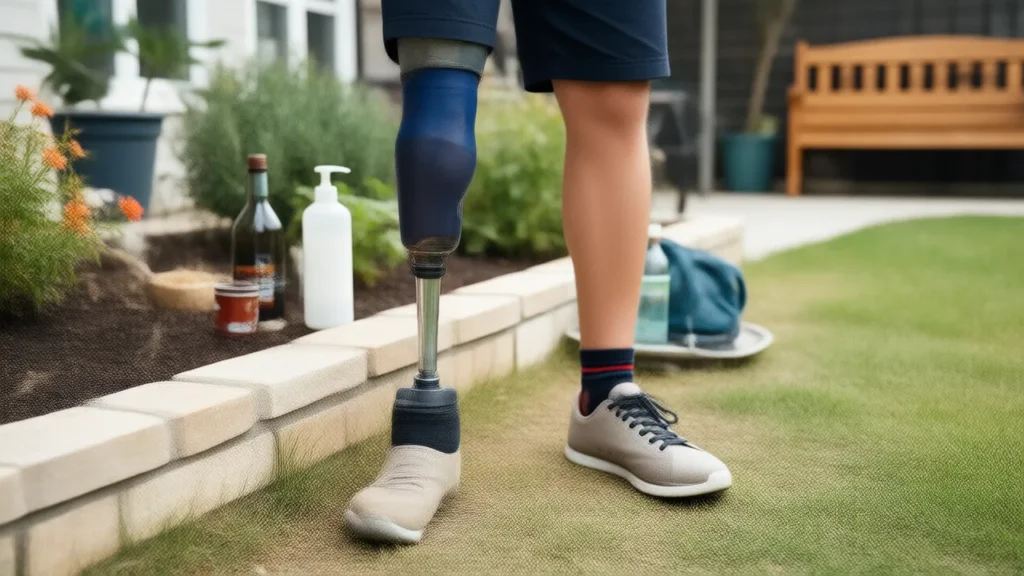
The three simplest designs are easiest to understand side by side. The Cleveland Clinic describes the SACH foot as the simplest prosthetic foot and often the first one a person uses.
| Foot | How it moves | What it’s good at | Trade-off |
|---|---|---|---|
| SACH (solid ankle, cushioned heel) | No ankle joint; the heel cushion compresses | Simple, light, very little to maintain | Little adaptation to slopes or rough ground |
| Single-axis | A hinge lets the foot move toes up and down only | Gets the foot flat quickly after heel strike, which feels steady | No side-to-side give |
| Multiaxial | Up and down, side to side and some rotation | Adapts to uneven, sloped and turning surfaces | More moving parts to wear and more motion to control |
For the details of each, read our guides to the SACH foot and the single-axis prosthetic foot (coming soon). If your main problem is ramps and hills rather than lumpy ground, ask about a hydraulic ankle (coming soon), which uses fluid resistance to let the ankle angle adjust to a slope. Some feet combine several of these features.
Who a multi-axis prosthetic foot tends to suit
No foot is best in general. The Amputee Coalition lists the factors that drive the choice: amputation level, age, weight, foot size, activity level, goals and job needs. A multiaxial foot tends to come up when “uneven ground” appears somewhere in that list.
In the US, your functional level also shapes what gets prescribed and paid for. Medicare’s lower limb prostheses policy (LCD L33787) rates potential function from Level 0 to Level 4. It describes Level 2 as someone who can walk and get over low-level barriers such as curbs, stairs or uneven surfaces, and Level 3 as someone who can walk at variable speeds. CMS guidance for providers adds that a Level 3 patient can walk independently on terrain that varies in texture and level, such as grass, gravel or uneven concrete. That is multiaxial territory.
Medicare ties specific foot components to those levels, and private insurers use their own rules. Ask your prosthetist which level your documentation supports and which feet that level covers under your plan. The rating is based on your potential, so tell your team what ground you actually walk on: the gravel lot at work counts.
Things to weigh before you switch
A multiaxial foot is not an automatic upgrade. Talk these through with your prosthetist and physical therapist:
- Stability on flat floors. More ankle motion means more motion for you to control. Some people love the give; others feel less steady standing still or on smooth floors.
- Weight and height. Extra mechanism can add weight and needs room under the socket. A very long residual limb may leave little space for it.
- Maintenance. Bumpers and joints wear. Ask what needs checking, how often, and whether a worn part is a quick swap.
- Your body. If balance, vision or sensation in your other foot is limited, a steadier foot may serve you better. That is a clinical call, not a failure.
Above-knee users have one more thing to weigh: the foot works together with the knee and the socket. A foot that gives more at the ankle changes how the knee behaves as you roll over it, so the whole leg is aligned as a system. Our guides to how prosthetic knees differ (coming soon) and to the quadrilateral socket (coming soon) cover the other two pieces.
When to call your prosthetist
A new foot changes your alignment, and small changes can show up as big feelings. Call your prosthetist if the foot squeaks, clunks or feels loose; if it rolls further than it did when new, which can mean a worn bumper; if you feel new twisting or pressure in the socket; or if your knee, hip or back starts aching after a switch. Those are fit and alignment jobs, and they’re usually quick fixes.
Stop wearing the leg and call your doctor if you find a blister, an open sore or a wound, redness that spreads or doesn’t fade, warmth or drainage, or you have a fever, new severe pain or numbness. Don’t pad over skin problems; they get worse with every step.
Before you try one: five questions to ask
- Which multiaxial foot are you considering, and is it a basic design or one with an energy-returning keel?
- What will it change about my walking on flat ground, not just on rough ground?
- Can I trial it before it’s finalized, including outside on grass and slopes?
- What maintenance does it need, and what does wear feel like?
- Does my functional level and my plan cover it, and what documentation do you need from my doctor?
Then test it where you actually live: your driveway, your yard, your route to the bus. That is the ground the foot has to work on.
Sources
- Amputee Coalition — Prosthetic Feet
- Cleveland Clinic — Prosthetic Foot: What It Is, Who Needs It & How It’s Used
- CMS Medicare Coverage Database — LCD Lower Limb Prostheses (L33787)
- CMS Medicare Learning Network — Lower Limb Prostheses
From the Loud Limb shop: printed crew socks and prosthetic leg covers in loud prints. Our covers go on the outside of a below-knee prosthesis; measure yours first with the size guide.
Published by Loud Limb. This guide is general information drawn from the sources listed above, not medical advice. Loud Limb sells printed prosthetic leg covers and clothing and is not a clinic: ask your doctor, surgeon or prosthetist about your own care.