
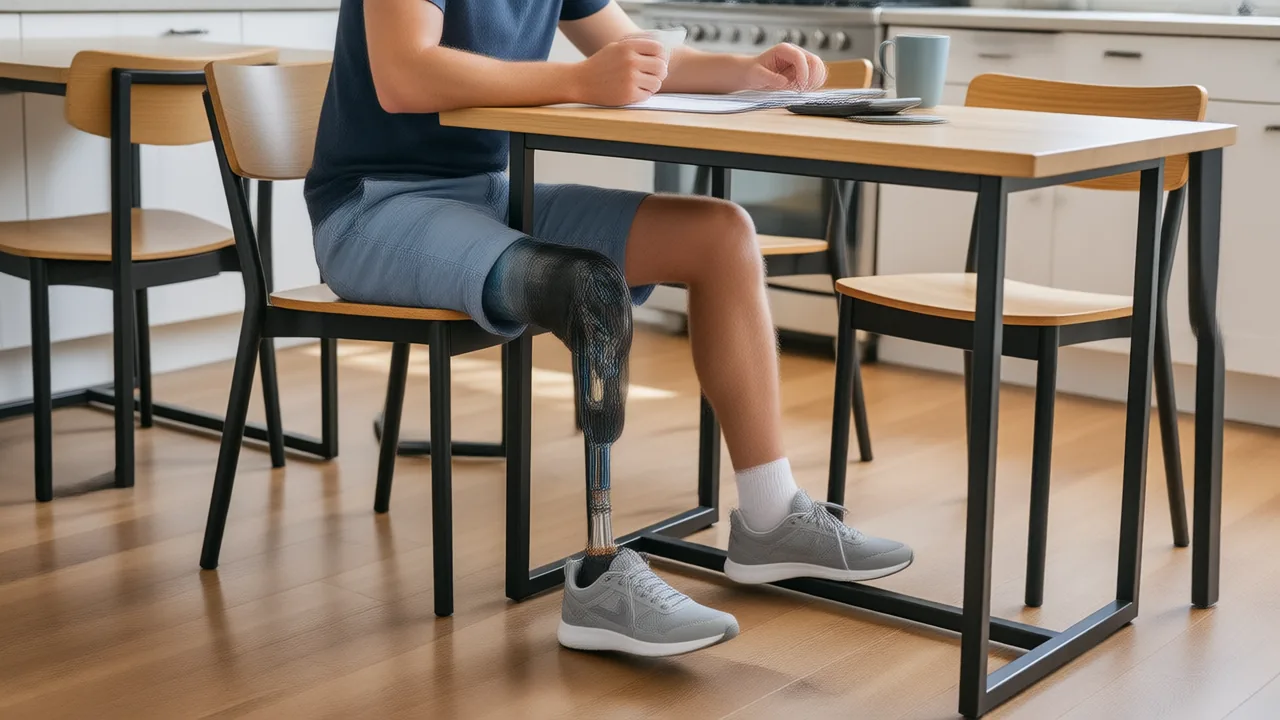
Short answer: There is no single below knee prosthetic leg cost. Each leg is custom-built and billed part by part: the socket, liner, suspension, pylon and foot, plus the prosthetist’s casting, fittings and adjustments. The foot and suspension you are prescribed move the price most. What you personally pay depends mostly on your insurance, so the number that matters is an itemized estimate from your prosthetist.
This guide is for new below-knee amputees, families and anyone comparing quotes. We do not print a dollar range, because none of the sources we trust publishes one we can stand behind, and an old number from a forum is worse than no number. Instead, this page explains what goes into the price, what makes it swing, how coverage works, and how to get your own figure. For the bigger picture across every kind of limb, see our guide to the cost of prosthetics.
Why BKA prosthetic cost has no sticker price
A below-knee (transtibial) prosthesis is not a product on a shelf. It is a socket molded to one person’s limb, joined to components chosen for that person’s body and goals. Two people with the same amputation level can walk out with very different legs, and very different bills.
The bill is built from codes. Prosthetic parts and services are billed item by item, each with its own billing code, so the socket, the liner, the lock and the foot all appear as separate lines. That is why the only honest estimate is an itemized one from the clinic that will build your leg, checked against your insurance.
If you are pricing an arm rather than a leg, the parts and the coding are different; our guide to prosthetic arm cost (coming soon) covers that.
What’s included in a below-knee prosthesis
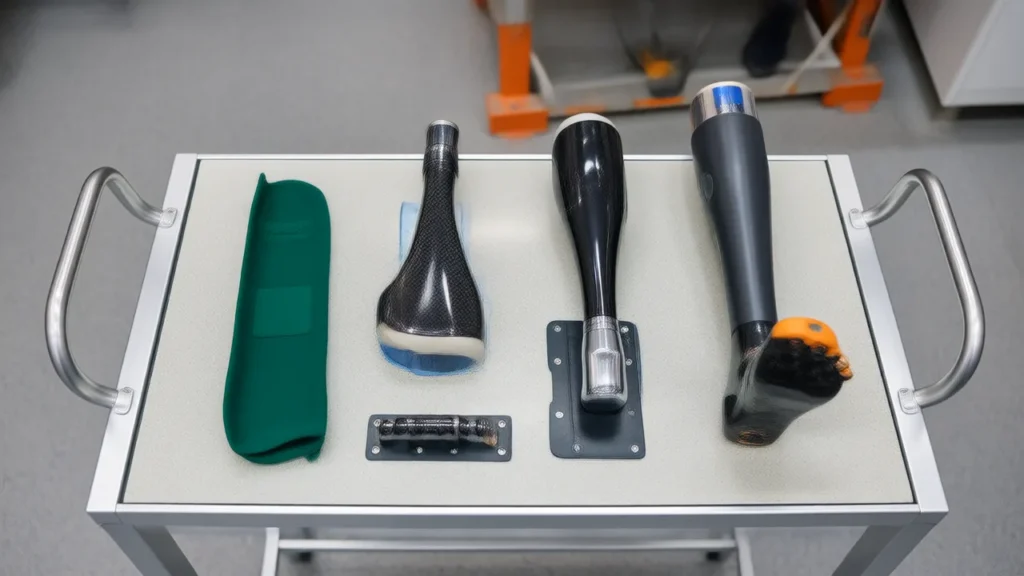
A quote for a definitive below-knee leg usually bundles some or all of these. Ask which ones yours covers.
- Evaluation and casting or scanning of your residual limb.
- Test (check) sockets, the clear trial sockets used to get the fit right before the final one is made.
- The definitive socket, its materials and any inner flexible socket.
- Liners, often more than one, since they wear out and you need a spare.
- Suspension: a pin lock, suction valve, sleeve or vacuum system.
- Pylon and adapters that connect socket to foot and set alignment.
- The foot, which ranges from a simple cushioned foot to carbon-fiber or microprocessor designs. Our guide to prosthetic foot price (coming soon) covers the spread.
- Finishing, such as a shaped cosmetic cover, if prescribed.
- Fitting, alignment and follow-up visits in the first months.
Some things are usually billed separately: prosthetic socks, shrinkers, replacement liners, and repairs after the warranty period. Ask up front so the second bill is not a surprise.
What makes transtibial costs vary
| Factor | Why it changes the price |
|---|---|
| The foot | A basic cushioned foot, a flexible carbon foot and a microprocessor ankle are very different devices. |
| Suspension | A sleeve or pin lock is simpler than an electric vacuum pump. |
| Socket design and materials | Carbon, laminates, flexible inner sockets and adjustable designs add work and materials. |
| Number of test sockets | A limb that is hard to fit may need several before the final socket. |
| Temporary vs definitive leg | Many people get a preparatory leg first, then a definitive one once the limb settles: two legs, not one. |
| Functional level | Your documented level shapes which components insurers treat as necessary. |
| Second, activity-specific legs | A running or shower leg is a separate device with its own bill. |
Functional level deserves a closer look. Under Medicare’s lower limb prostheses policy (LCD L33787), which components count as medically necessary is based on your potential functional ability, rated from Level 0 to Level 4, from transfers and walking on level ground at a fixed pace up to high-impact activity. Your prosthetist and doctor document it, so tell them honestly what you did before and what you want to do next.
A below-knee leg is also the less complex of the two major levels, because you keep your own knee. An above-knee leg adds a prosthetic knee, which can be a large share of the total; see above-knee artificial leg price and microprocessor knee cost (coming soon) for that side.
What you’ll actually pay with insurance
Medicare
Medicare.gov says Part B covers prosthetic devices when a doctor or other health care provider orders them. After you have paid the yearly Part B amount that comes before coverage starts, you pay 20% of the Medicare-approved amount. Medicare only pays for a prosthetic device from a supplier that participates in Medicare, so confirm that before anything is ordered. Medicare Advantage plans cover the same benefits but set their own networks and approval rules.
Private and Marketplace plans
The Amputee Coalition’s open enrollment guide notes that many states did not explicitly include prosthetic devices in their Affordable Care Act essential health benefits, though nearly every state appears to have some level of coverage. Plans can cap the number of devices, limit dollars per year or require prior approval. Some states have prosthetic parity laws that set a floor; our guide to state prosthetic parity laws (coming soon) explains what those do. The same guide notes Marketplace open enrollment typically runs from November 1 to January 15, which is the time to compare plans on prosthetic coverage if you know a new leg is coming.
Veterans and Medicaid
Eligible veterans can get prosthetic care through the VA’s Amputation System of Care. Medicaid coverage varies by state, so ask your state program what it covers and which suppliers it uses.
How often the cost comes back
A leg is not a one-time purchase. The Amputee Coalition’s FAQ for new amputees says a prosthesis can last anywhere from several months to several years, depending on age, activity level and growth. In the first year, your limb usually shrinks and changes shape, so new sockets are common. After that, sockets, liners and feet wear out on their own schedules, and children need new legs as they grow.
When you budget, think in years, not in one invoice. Beyond the leg itself, the smaller costs that add up include:
- Prosthetic socks in several thicknesses, since you adjust fit with them through the day.
- Shrinkers between fittings, while the limb is still settling.
- Replacement liners, which wear out with daily use, plus a spare.
- Skin care supplies, such as the gentle cleanser your prosthetist recommends.
- Shoes with the heel height your leg is aligned for.
- Getting to appointments: travel, parking and time off work for fittings and adjustments, which cluster in the first year.
Ask which of these your plan pays for. Plans may limit how many socks and liners they cover in a year, and knowing the limit helps you plan replacements.
If insurance won’t cover enough
- Appeal. Denials are often about documentation. Ask your prosthetist and doctor what was missing and resubmit.
- Call for help. The Amputee Coalition’s financial assistance page lists its Resource Center at 888-267-5669, option 1, for funding questions, and Limbs for Life, which assists lower-limb amputees, at 888-235-5462.
- Vocational rehabilitation. The same page says state vocational rehab agencies usually require showing how the device helps you get or keep a job.
- Running legs. The Amputee Coalition notes running prosthetics are generally not covered by insurance because they are considered not medically necessary. Grants from adaptive sports charities are one route.
- Payment plans. Ask the clinic whether it offers one before you assume you cannot afford the leg you need.
How to get your real number
Take these questions to your prosthetist’s front desk and to your insurer:
- Can I have an itemized estimate, with the billing code for each part and service?
- Which visits, test sockets and adjustments does that include, and for how long?
- Are you in network, or a Medicare-participating supplier?
- Does my plan need prior authorization, and who submits it?
- What is my share after my plan pays, and what is my yearly out-of-pocket maximum?
- What will liners, socks and repairs cost me over the next year?
Write the answers down, with names and dates. When the bill arrives, that page is worth more than any price range on the internet.
Sources
- Medicare.gov (CMS) — Prosthetic Coverage
- CMS Medicare Coverage Database — LCD Lower Limb Prostheses (L33787)
- Amputee Coalition — Open Enrollment for Health Insurance Coverage
- Amputee Coalition — Financial Assistance for Prosthetic Services
- Amputee Coalition — Prosthetic FAQs for the New Amputee
From the Loud Limb shop: gift ideas for amputees and funny amputee shirts & hoodies.
Published by Loud Limb, a shop for printed prosthetic leg covers, socks and clothing.