
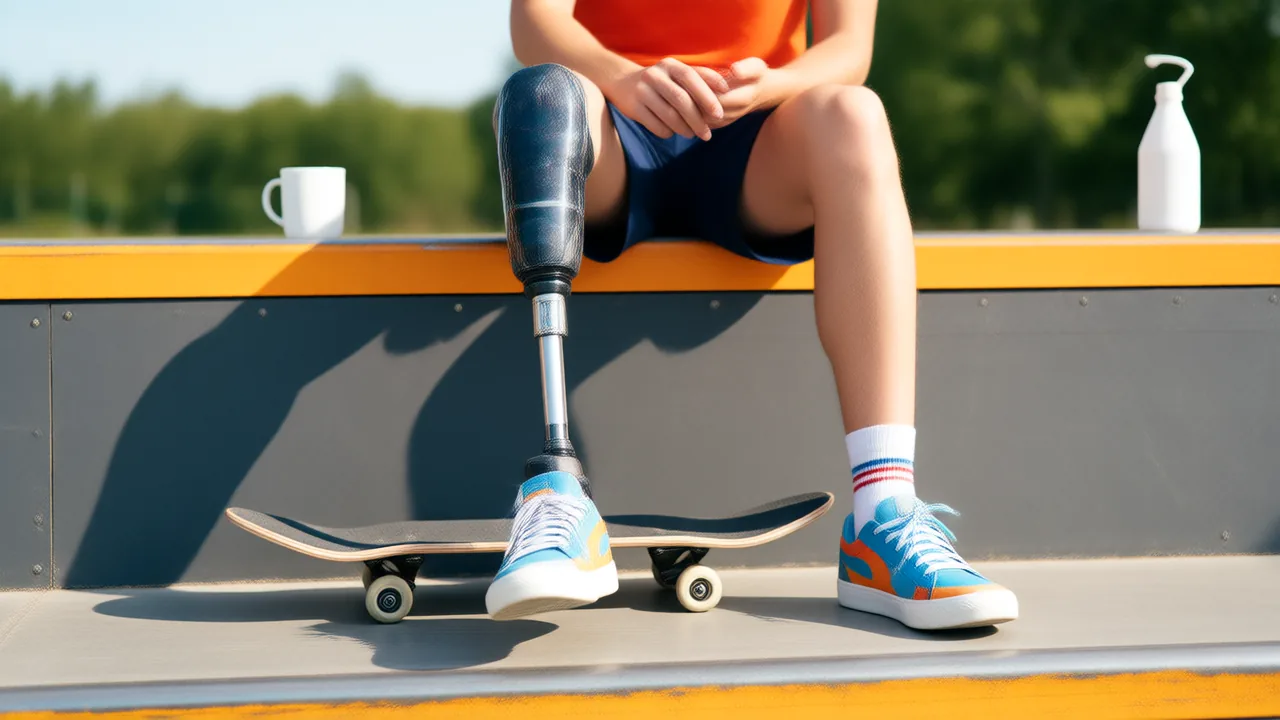
Short answer: Cool prosthetic leg designs come from six routes: a printed cover pulled over the outside of a below-knee leg, art sealed into a custom socket, paint or wraps on the parts you can safely decorate, a shaped foam or realistic cover, tattoos on your own skin, and outfits or costumes built around the leg. Covers and outfits change in seconds. Socket art and tattoos stay.
This is the starting point for anyone who wants their leg to look like it belongs to them: new amputees staring at a beige socket and a bare metal tube, long-time users who are bored of the same look, and parents helping a kid choose a design. It covers each route, how permanent it is, who has to be involved, and where to find the step-by-step version.
One rule runs through all of it. The socket, and every part that holds the leg in alignment, is your prosthetist’s call. Decorate the outside freely. Change anything that could affect fit, weight or alignment only after they say yes.
Why prosthetic leg design is more than decoration
People have cared how artificial limbs look for as long as artificial limbs have existed. A history of early prosthetics in the ANZ Journal of Surgery notes that prostheses were developed for function, for cosmetic appearance and for a psycho-spiritual sense of wholeness. That third reason is what this whole topic is about. A leg you like looking at is a leg you are more likely to show, talk about and live in.
How you feel about your body also shows up in how you move through the world. A review of psychosocial adjustment to lower-limb amputation links social discomfort and body-image anxiety with more activity restriction, and links better adjustment with things like social support and satisfaction with the prosthesis. A design is not therapy, and nobody owes the world a flashy leg. But how your leg looks is one of the few parts of limb loss where you get to make every call.
There is no correct style. Some people want a leg that passes for a natural limb in photos. Others want neon, cartoons, carbon fiber on full display, or a different look for every day of the week. The VA/DoD patient summary on lower limb amputation rehab lists prosthesis options ranging from none or cosmetic to daily-use and activity-specific legs. That is a handy reminder of the order of operations: what the leg is for comes first, and the look is built on top of it.
Cool prosthetic leg designs at a glance: six routes compared
Most looks you have seen online are one of these six, or two of them stacked together. The biggest differences are how permanent each one is and whose hands it needs.
| Route | What it is | How permanent | Who does it | Good to know |
|---|---|---|---|---|
| Printed stretch cover | A fabric tube pulled over the outside of a below-knee leg | Swap it any time | You | Below-knee only; sized by measuring your leg |
| Socket art | Fabric, prints or color built into the socket when it is made | Lasts as long as that socket | Your prosthetist | Has to be planned before the socket is finished |
| Paint, wraps and decals | Color or artwork on outer surfaces | Can be redone | You, an artist, or your clinic | Stay off anything that touches skin, moves or sets alignment |
| Foam or realistic cover | A cover shaped like a leg, from simple foam to a skin-matched finish | Replaced as it wears or as your leg changes | Your prosthetist or a specialist | Ask how it affects weight and joint movement |
| Tattoos | Art on your own skin, often playing with the amputation | Permanent | You and a tattoo artist | Residual limb skin questions go to your doctor first |
| Costumes and outfits | Clothes, socks and props that make the leg part of the look | One night to every day | You | The easiest place to experiment |
If you are brand new to all this, start at the bottom of the table and work up. Outfits and covers let you find out what you like before you commit to anything that lasts.
Custom socket designs: art sealed into the leg
The socket is the one part of your leg made only for you. A review of lower-limb prosthetic rehabilitation, published in the Indian Journal of Plastic Surgery in 2019, calls it the customized part of the prosthesis and says it is crucial to how the whole leg performs. That is why socket art is the most permanent design choice you can make, and why it happens in the prosthetist’s lab, not at your kitchen table.
Some sockets are laminated, which means they are built up in layers, and a prosthetist may be able to lay a fabric, a print or a color into those layers while the socket is being made. Whether that is possible depends on the socket material and on your clinic, so ask early. Once the socket is finished, the design is locked in until the next one. Things worth bringing to that conversation:
- The fabric or image you want: a team jersey, a flag, a pattern, a kid’s drawing. Ask whether it can be used as-is or needs to be printed onto a specific material.
- Whether this is a test socket or your definitive one. Decorating a socket you will only wear for a short stretch is a lot of effort for a short run.
- Whether the design changes the cost or the timeline, and whether your insurer treats it any differently.
Our guide to custom prosthetic socket designs (coming soon) goes further into lamination options, what to ask, and how to plan a look that carries across socket replacements.
Prosthetic leg art you can do yourself: paint, wraps and decals
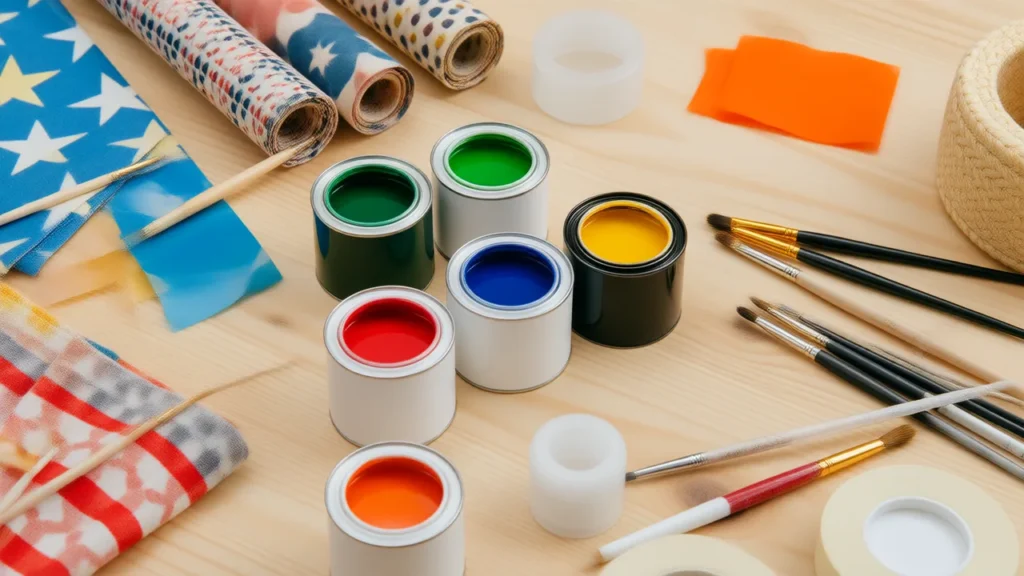
Paint is the most hands-on route and the one with the most freedom. People paint flames, galaxies, camo and team colors onto the outer surfaces. Vinyl wraps and decals do a similar job with less mess, and they come off more easily when you change your mind.
The step-by-step, including prep, materials and sealing, lives in our guide on how to paint a prosthetic leg. Whatever method you pick, these rules keep the leg working:
- Decorate the outside only. Never paint, coat or stick anything inside the socket, on the liner, or on any surface that touches your skin.
- Keep off moving parts, joints, adjustment screws and the clamps your prosthetist uses to set alignment.
- Ask your prosthetist before you sand, prime or coat the socket’s outer surface. Some products may not suit the socket material, and they can tell you which areas to leave alone.
- Ask whether decorating affects any warranty on your components.
- Work with the leg off, in a ventilated space, and let everything dry and set fully before you wear it.
Tattoo-style artwork is one of the most requested looks for the leg itself: old-school flash, sleeves, fine linework, even designs that wrap around the pylon. The prosthetic leg tattoo guide (coming soon) collects design ideas and the ways people get that art onto the leg without needles.
Covers: printed, foam and realistic
A cover changes the whole look without touching the parts that make the leg work, and it is the only route you can reverse in the time it takes to tie a shoe. There are three very different kinds.
Printed stretch covers
A printed stretch cover is a fabric tube that goes on the outside of a below-knee prosthesis, over everything else. It never goes inside the socket or under a suspension sleeve, it does not go over a knee joint, and it is not made for above-knee legs. Fit comes from measuring your leg, so read how to measure a prosthetic leg and check the size guide before you order. Loud Limb makes printed covers for below-knee legs, and our roundup of prosthetic leg cover ideas covers the wider world of styles, from sporty to formal to ridiculous.
Foam covers
A foam cover is shaped around the pylon so the leg has a fuller, leg-like outline, and it is often finished with a skin-tone stocking. It is fitted by your prosthetist, who can tell you what it adds in weight and, on an above-knee leg, how it affects the way the knee bends. Our prosthetic foam cover guide (coming soon) explains how they are shaped, finished and replaced.
Realistic legs
At the far end of the scale are finishes made to look like a natural limb, color-matched to your skin, sometimes with details like freckles, hair or veins. This is specialist work, so ask your prosthetist who makes them and whether your insurer considers them part of your care. Our look at the realistic prosthetic leg (coming soon) covers the options and the questions to ask.
Amputee tattoos: art on your own skin
Some of the best limb loss design is not on the leg at all. Amputee tattoos range from quiet memorial pieces to open jokes about the amputation itself: dotted “cut here” lines, zippers, stitches, or artwork that continues from your thigh onto the socket in the same style. Our amputee tattoo guide (coming soon) has ideas and the questions to ask a tattoo artist.
Your residual limb skin works harder than skin almost anywhere else. The Amputee Coalition’s Skin Care 101 explains that prosthetic sockets trap sweat and block air from circulating around the limb, creating conditions where bacteria can grow. A fresh tattoo is healing skin, so anywhere a liner or socket touches needs a medical conversation first:
- Ask your surgeon or doctor whether the skin and any incision are fully healed and ready.
- Ask your prosthetist how long you would need to stay out of the leg, and plan around that.
- Tell the tattoo artist about the amputation and where the liner or socket edge sits.
Costumes, fashion and everyday style
Clothes are where most people experiment first, because nothing is permanent and nobody has to sign off. Shorts, cropped pants and cuffed jeans show the leg off. A pair of printed crew socks is the simplest way to add color, and Loud Limb’s printed socks exist largely for that reason. Matching a cover to a shirt, a jersey or a pair of sneakers is how a lot of people make the leg look deliberate rather than accidental.
Halloween is the leg’s big night. Pirates are the classic, but there are far better costumes that only work because of the prosthesis, and our list of amputee Halloween costume ideas has plenty. If you are going the pirate route anyway, it is worth knowing what “peg leg” actually means (coming soon) and where the phrase comes from.
Shopping for someone else? Our gifts for amputees guide has ideas that do not require guessing anyone’s socket size.
When to talk to your prosthetist before you decorate
Design choices are yours. Fit, alignment and skin are a shared job with your clinic. Call your prosthetist before you go ahead if:
- Anything would touch, coat or be built into the socket.
- The design adds weight or bulk, like thick foam, heavy wraps or props attached to the leg.
- You want to take the leg apart, remove a cover they fitted, or reach any screw or clamp.
- A cover or wrap rubs, snags, shifts or changes how the leg feels when you walk. Take it off and tell them.
Skin problems are a separate call. If you notice a rash, redness that does not fade, a blister or an open spot on your residual limb, stop wearing the leg and contact your prosthetist and your doctor. Spreading redness, warmth, swelling, drainage or a fever means call your doctor the same day.
Where to start: a quick design plan
- Decide how permanent you want it. Covers and outfits for trying things out; socket art and tattoos once you know what you love.
- Check your level. Printed stretch covers are for below-knee legs. Above-knee users have paint, wraps, socket art and foam covers to play with.
- Measure before you buy anything that goes over the leg.
- Book the socket conversation early if you want art built in, ideally before your next socket is made.
- Try one thing this month. A new pair of socks counts.
Sources
- ANZ Journal of Surgery (2007) via PubMed — Paré and prosthetics: the early history of artificial limbs
- Disability and Rehabilitation (Horgan & MacLachlan, 2004) via PubMed — Psychosocial adjustment to lower-limb amputation: a review
- VA/DoD Clinical Practice Guideline (2024) — Rehabilitation of Individuals with Lower Limb Amputation: Patient Summary
- Indian Journal of Plastic Surgery (2019) via PubMed Central — Prosthetic Rehabilitation in the Lower Limb
- Amputee Coalition — Skin Care 101
From the Loud Limb shop: printed athletic shorts and funny amputee shirts & hoodies.
Published by Loud Limb, a shop for printed prosthetic leg covers, socks and clothing.