
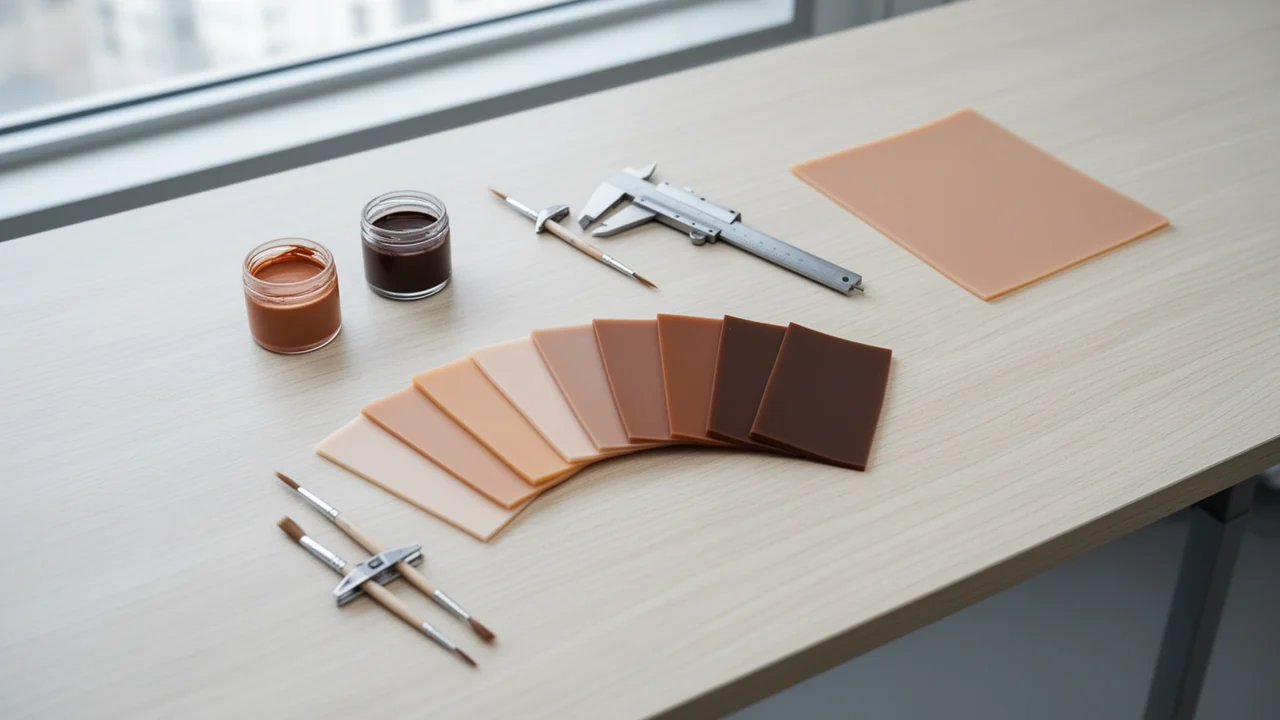
Short answer: A realistic prosthetic leg is a working prosthesis finished with a cosmetic cover, usually a custom silicone skin, shaped and painted to match your other leg: skin tone, freckles, veins, even toenails and hair. The best ones are hard to spot across a room. The trade-offs are extra weight, extra upkeep, slower access for adjustments, and cost: one foundation that funds custom silicone leg coverings puts them at $11,000 to $15,000, and your insurer may not pay for the lifelike part.
This guide is for amputees and families weighing a lifelike finish: ready-made versus custom skins, how a custom cosmesis is made, how color matching works, what it costs and what insurance pays for, how long a skin lasts, and the trade-offs worth knowing before you commit.
Realistic is one end of a wide spectrum. At the other end are bare carbon, bold paint and printed covers, all covered in our roundup of prosthetic leg designs that stand out. Neither end is the “right” one. Rehab guidance treats appearance as a legitimate need: the VA/DoD patient summary lists a cosmetic prosthesis among the recognized options, alongside daily-use and activity-specific legs.
What makes a prosthetic leg look realistic
Under every lifelike leg is an ordinary functional prosthesis: socket, pylon, foot and, above the knee, a knee unit. Realism is added in layers on top.
| Finish | What it is | How real it looks |
|---|---|---|
| Foam cover with a skin-tone stocking | Soft foam shaped to the other leg, covered by a nylon stocking | Right shape, flat color; fine under pants |
| Off-the-shelf silicone skin | A pre-made silicone sleeve in a range of standard tones | Better texture; color and shape are approximate |
| Custom silicone cosmesis | Sculpted from your other leg and hand-painted | The most lifelike, down to veins and freckles |
If a foam shape under pants is all you want, our guide to the foam cover option (coming soon) covers that route. The rest of this page is about silicone.
A naming note, since the word “silicone” turns up twice in prosthetics. A silicone skin goes on the outside of the leg for looks. A silicone liner (coming soon) goes on your skin, inside the socket, for cushioning and suspension. Different parts, different jobs.
Ready-to-wear or custom: three routes to a lifelike skin
Lifelike skins come in three broad kinds. They differ in how closely the skin copies your own leg, how long it takes to get, and how much you can choose.
| Route | How it is fitted to you | What you can choose | Good to know |
|---|---|---|---|
| Ready-to-wear silicone skin | Picked by side and foot shell size, then ordered, with no casting session | Skin tone, toe design and, from some makers, permanent nail polish | The quickest route. Shape and color are close to yours, not copied from you |
| Off-the-shelf polymer skin | Sized to your foot; Embreis says each pre-expanded eSkin size fits two foot sizes | 18 colors, standard or split toe | Built in layers with fibers, sold as water and stain resistant, cleaned with soap and water |
| Custom silicone cosmesis | Your other leg is color-matched at several spots, scanned or cast, and mirrored | Veins, freckles, surface hair, painted nails, even tattoos | The most lifelike route, and the slowest |
Custom skins come in levels too. Ottobock, for example, sells its custom leg covers in a “Classic” version made in two to three colors and a “Natural” version made in eight to ten. More colors means more hand painting, so ask which level a quote includes.
How a silicone prosthetic leg skin is made
Methods vary between makers, but a custom cosmesis usually follows the same arc:
- Reference. The maker captures your other leg by 3D scan, cast or detailed measurements and photos, then mirrors it so the new skin matches in shape. Some also take a quick impression of your other foot and mirror it for the toes and arch.
- Sculpting. A model is built over the dimensions of your prosthesis, with calf shape, ankle bones and knee contours added by hand. One lab sculpts in wax over a stone copy of the limb before anything is cast in silicone.
- Molding and pouring. Silicone is tinted to your base skin tone and poured or layered into a mold, so color runs through the material rather than sitting on top.
- Detail work. Veins, freckles, knuckle creases, toenails and sometimes individually placed hair are painted with silicone paints or set in by hand.
- Fitting. The skin is pulled over the prosthesis, often with a shaped foam or filler underneath, and checked side by side with your other leg.
Expect more than one appointment, and a wait. One maker says production can take a few weeks after the first session, and some labs ask you to come in person for the closest match of size and color, which can mean travel. A custom skin is a craft job, and the maker usually works alongside your prosthetist so the cosmetic layer does not interfere with alignment or suspension.
Color matching a realistic prosthetic leg
Color is where a skin succeeds or fails. Skin is not one color: it has a base tone, an undertone (warm, cool or olive), redder areas at the knee and shin, and variation from sun exposure.
- Match in daylight. Office lighting can shift how a sample looks. Ask to compare samples near a window.
- Think about your tan. If your skin darkens noticeably in summer, decide which season you want matched.
- Bring photos of your leg in different light, especially if the match is done remotely.
- Look from across a room, not just up close. That is the distance most people will see it from.
If you are still deciding what color your leg should be at all, our piece on choosing colors for a prosthetic leg covers the full palette, from skin tones to neon.
Realistic prosthetic foot options
Most prosthetic feet already come inside a foot shell, a molded cover shaped like a foot so it fits into a shoe. Shells range from basic shapes with no toes to detailed versions with separate toes and toenails. A custom silicone foot can go further, matching the shape of your other foot for sandals or bare feet.
Two practical points before you choose:
- Heel height matters. A foot is aligned for a certain heel height. Switching from sneakers to heels or flats can change how the leg feels, so ask your prosthetist what heel heights your foot allows.
- Toes can split. Separate silicone toes look great in sandals but can tear with flip-flop straps and hard wear. Ask the maker how repairs work.
How much does a realistic prosthetic leg cost?
Two prices are involved: the working leg underneath, and the realistic finish on top. Published ranges are wide, so treat these as a starting point for questions, not a quote.

| What you are paying for | Typical published range |
|---|---|
| Whole below-knee prosthetic leg | $5,000 to $50,000 |
| Whole above-knee prosthetic leg | $20,000 to $100,000 |
| Cosmetic cover, as one part of a leg | $500 to $5,000 |
| Fully custom silicone leg covering | $11,000 to $15,000 |
The first three ranges come from a New York prosthetics clinic’s 2026 price guide. The custom silicone figure comes from the Lauren Scruggs Kennedy Foundation, which funds custom coverings made by a specialist silicone lab.
What moves the price of the finish:
- Ready-to-wear or custom. A skin copied from your own leg takes sculpting, molding and hand painting.
- How much of the leg it covers. A foot shell is a smaller job than a skin from the toes to the knee or the hip.
- Detail level. Extra color layers, hair, tattoos and painted nails all add hand work.
- Fittings and travel. Custom work usually means more than one visit, sometimes to a lab in another city.
- Replacement. A new socket or foot can mean a new skin, so ask what a remake costs.
If cost is the blocker, look for help before you give up on the idea. The Lauren Scruggs Kennedy Foundation works with a silicone lab to provide custom coverings to girls and women it accepts, and the Amputee Coalition keeps a list of financial assistance options for prosthetic care.
Does insurance pay for a realistic cover?
It depends on the plan and on what the cover is for. Medicare’s policy article for lower limb prostheses is a clear example of how an insurer sorts covers:
- Standard covers (billing codes L5704 to L5707) count as complete products that give the leg shape, protection and waterproofing for normal daily use.
- Protective outer covering systems (L5962, L5964 and L5966) are separate add-ons for people who need extra protection in unusually harsh conditions. The policy says they are not for cosmetic or convenience reasons.
In Medicare’s terms, then, a basic shaped cover is part of a covered leg. A skin chosen for its looks is a different thing, and you may be asked to pay for that part yourself. Private plans and the VA set their own rules, so do not assume either way. Before work starts, ask your prosthetist which codes they plan to bill, whether your plan needs prior approval, and for a written estimate of your share.
Care for a silicone skin
Silicone skins are durable but not indestructible. Follow your maker’s instructions first, since materials differ. Common-sense habits help most skins last:

- Clean it every day. Ottobock’s care note for its custom silicone leg covers says daily cleaning with water and pH-neutral soap prevents permanent stains. Dry it afterward.
- Watch for dye transfer. New jeans and dark fabrics can stain light silicone. Pens and newsprint do the same.
- Keep it away from high heat and sharp edges, including car door frames and pet claws.
- Report tears early. A small split is easier to repair than a large one.
How long a skin lasts. The Lauren Scruggs Kennedy Foundation says a well-maintained custom silicone covering should last between 2 and 10 years. Wear, stains and changes in your leg or socket decide where in that range yours ends up.
Heat is worth thinking about too. A literature review found that more than 53% of people with amputation in the reviewed studies had heat or sweating discomfort inside their prosthesis. If that is already you, ask whether a full-length skin over the socket area will make it worse.
Trade-offs of a lifelike prosthetic leg skin
- Weight. Silicone adds pounds to the end of your leg, which you feel on every step and every stair.
- Access. Your prosthetist may need the skin off to adjust alignment or swap parts, which can make quick tweaks slower.
- Movement at the knee. On above-knee legs, a skin over the knee has to stretch as it bends, which can resist movement or wear faster at the crease.
- Lifespan. Silicone can yellow, stain or tear over time, and a new socket or foot may mean a new skin.
- Cost. A fully custom skin can cost more than a basic prosthetic leg, and insurers may treat the lifelike part as an extra. The cost and insurance sections above have the numbers and the questions to ask.
Realistic or loud: choosing what lets you get on with life
People have wanted prosthetic limbs to look right for a very long time. A history of artificial limbs notes that prostheses were developed for function, cosmetic appearance and a sense of wholeness. Wanting your leg to blend in is not vanity.
The useful test is practical: which finish makes you most comfortable going out and doing things? A review of adjustment after lower-limb amputation linked social discomfort and body-image anxiety to more activity restriction, and positive adjustment to satisfaction with the prosthesis, among other factors. For some people that means a skin nobody notices. For others it means clothing strategies from our guide on keeping a prosthetic leg low-key. For others it means stickers (coming soon) or a printed stretch cover on a below-knee leg, fitted by measurement. Plenty of people change their mind over the years, and all of these are reversible choices.
When to talk to your prosthetist
- Before ordering a skin, so it is planned around your alignment, suspension and any upcoming socket change.
- If the leg feels heavier or your gait changes after a skin is added. Your prosthetist can check alignment, and your physical therapist can help you adjust.
- If a new foot shell or heel height makes the leg feel off, or you notice new rubbing inside the socket.
- Stop wearing the leg and call your doctor for an open sore, spreading redness, fever, new severe pain or numbness on your residual limb.
Before you commit to a realistic finish
- Ask your prosthetist whether your socket and foot are stable enough to justify a custom skin now.
- Ask whether the quote is for a ready-to-wear or a custom skin, how many color layers it includes, and who handles repairs.
- Get the billing codes and a written estimate of your share before work starts.
- Ask to see finished examples in daylight, from across a room.
- Decide which season’s skin tone you want matched.
- Plan the care: soap, storage and what to do about stains.
Frequently asked questions
Can you get a prosthetic leg that looks real?
Yes. A custom silicone skin over a working prosthesis can copy the shape, skin tone, veins, freckles and toenails of your other leg closely enough that most people will not notice it across a room. Ready-to-wear skins look less exact but are quicker to get.
How much does a realistic prosthetic leg cost?
By one clinic’s 2026 guide, the leg itself runs about $5,000 to $50,000 below the knee and $20,000 to $100,000 above it. A fully custom silicone covering adds about $11,000 to $15,000, while simpler cosmetic covers start far lower. Insurance may pay for a basic cover but not for the lifelike upgrade.
Can you buy a realistic prosthetic leg cover ready-made?
Yes. Ready-to-wear silicone skins and off-the-shelf polymer skins come in set sizes and a range of skin tones, with choices such as split toes or painted nails. They are faster to get than a custom skin, but the shape and color are approximate.
How long does a silicone prosthetic leg skin last?
The Lauren Scruggs Kennedy Foundation says a well-maintained custom silicone covering should last 2 to 10 years. Daily cleaning, keeping it away from dyes and heat, and fixing small tears early all help. A new socket or foot can mean a new skin sooner.
Can you swim with a realistic prosthetic leg?
That depends far more on the prosthesis underneath than on the skin. Many sockets, knees and feet are not built for water, and a skin can trap water against them. If swimming matters to you, tell your prosthetist, who may suggest a separate activity-specific leg rather than getting your everyday leg wet.
Will a silicone skin make a prosthetic leg heavier?
Yes, some. Silicone adds weight at the far end of the leg, which you notice on stairs and long walks. How much depends on the thickness and how much of the leg it covers. Ask the maker about weight before you order, and tell your prosthetist if your walking changes afterward.
Does insurance pay for a realistic prosthetic leg cover?
It varies by plan. Medicare’s policy treats a standard cover as part of the leg and says its separate protective covers are not for cosmetic reasons, so the lifelike part may be yours to pay. Private plans and the VA have their own rules. Ask your prosthetist for the billing codes and a written estimate before work starts.
How do you clean a silicone prosthetic leg skin?
Follow the maker’s instructions first, since materials differ. Most skins do well with water, a mild or pH-neutral soap and a soft cloth, then drying. Keep them away from high heat, sharp edges and dyes from new jeans or ink, which can stain light silicone. Report tears early, while they are still small enough to repair.
Can a realistic skin go over an above-knee prosthesis?
It can, but the knee is the tricky part. The skin has to stretch every time the knee bends, which can add resistance and wear at the crease. Some makers use split or specially shaped designs at the knee. Ask your prosthetist and the cosmesis maker how they would handle your specific knee.
Sources
- VA/DoD — Clinical Practice Guideline for Rehabilitation of Individuals with Lower Limb Amputation: Patient Summary
- Journal of Rehabilitation Research and Development — Prevalence of heat and perspiration discomfort inside prostheses: literature review
- ANZ Journal of Surgery — Paré and prosthetics: the early history of artificial limbs
- Disability and Rehabilitation — Psychosocial adjustment to lower-limb amputation: a review
- Centers for Medicare & Medicaid Services — Lower Limb Prostheses Policy Article (A52496)
- Lauren Scruggs Kennedy Foundation — FAQs on custom silicone prosthetic coverings
- Orthotics Ltd. — How Much Does a Prosthetic Leg Cost? (2026)
- Amputee Coalition — Financial Assistance for Prosthetic Services
- Ottobock — Custom silicone covers for the lower limbs (88A20)
- Prosthetic Orthotic Designs — High Definition Silicone Covers
- A Step Ahead Prosthetics — Looking for Realistic Silicone Prosthetics?
- Embreis — eSkin Leg Cover
- Prosthetics in Motion — Prosthetic Silicone Skins
From the Loud Limb shop: printed athletic shorts and printed crew socks.
Published by Loud Limb, a shop for printed prosthetic leg covers, socks and clothing.
Leave a Reply