
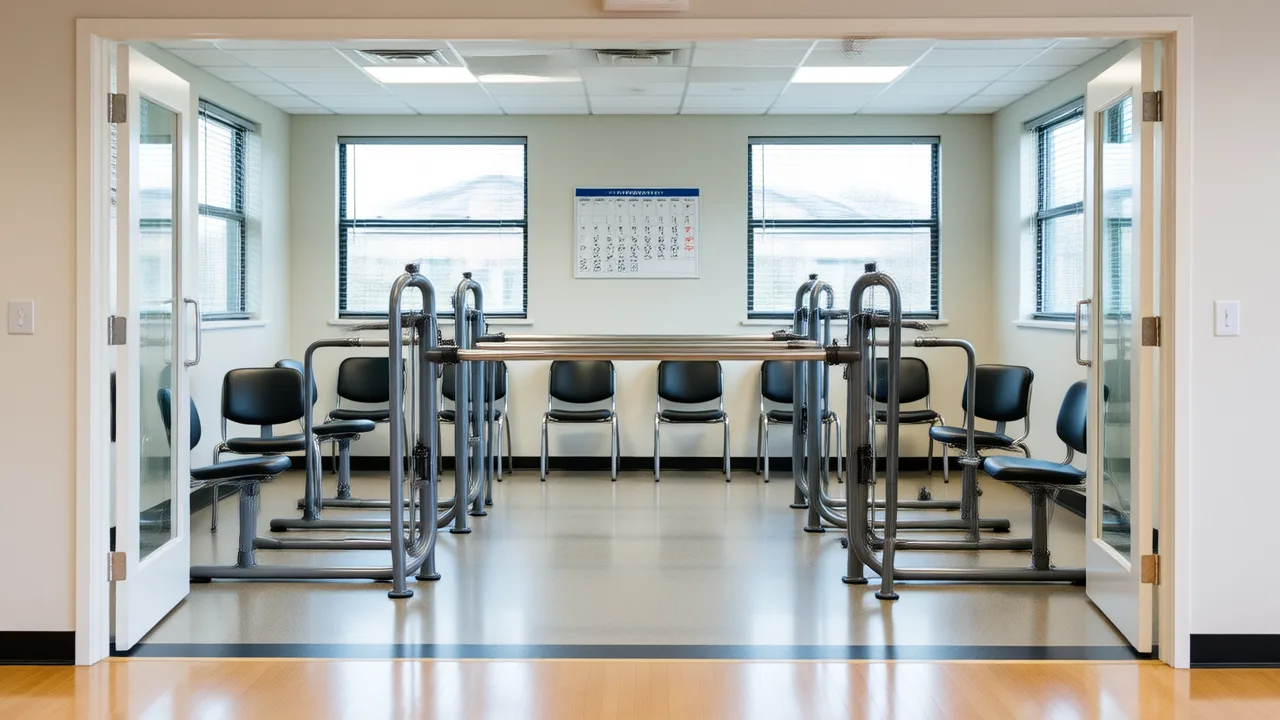
Short answer: Most people are fitted for their first prosthetic leg about two to six months after surgery, once the incision has healed and the swelling has gone down, according to the Amputee Coalition. Its below-knee guide puts the first fitting at about 8 to 12 weeks. Some people get a temporary leg within weeks. Your own timeline depends on healing, amputation level and health.
If you’re asking how long after amputation you can get a prosthetic leg, you’re probably in a hospital bed or a rehab gym, or you love someone who is. This guide walks through each step between surgery and that first fitting: healing, shaping the limb, the evaluation, the preparatory leg and the definitive one. It also covers what speeds things up or slows them down. For the full recovery picture beyond the prosthesis, see our amputation recovery timeline.
How long after amputation can you get a prosthetic leg? The typical ranges
These are typical timings from published patient guides. Treat them as a rough map, not a deadline.
| Milestone | Typical timing |
|---|---|
| Temporary prosthesis, for some people | Right after amputation or within two to three weeks of surgery (Amputee Coalition) |
| Shrinker to start shaping the limb | May be fitted within the first week (Amputee Coalition below-knee guide) |
| Stitches or staples removed | A few weeks after surgery (below-knee guide) |
| First prosthetic fitting, below the knee | About 8 to 12 weeks (below-knee guide) |
| First prosthetic fitting, in general | Usually two to six months after surgery (Amputee Coalition) |
| Above the knee | Highly individualized (Amputee Coalition above-knee guide) |
Notice the gap between “8 to 12 weeks” and “two to six months.” That spread is real. It reflects how differently people heal, not a mistake in either guide.
Healing comes first
Nothing gets fitted until the incision is closed and sturdy enough to take pressure inside a socket. How long that takes varies with your health, the reason for the amputation, and whether complications show up along the way. Our guide to how long an amputation takes to heal covers that stage in detail.
A few things during this stage shape everything after it:
- Smoking. MedlinePlus notes that smoking can affect blood flow and slow healing. Our guide to smoking and amputation (coming soon) covers why quitting matters now.
- Food. Your body is rebuilding tissue. Our guide to nutrition after amputation (coming soon) covers what to ask your care team about.
- Clots. Your team will also watch for complications after surgery. Learn the warning signs in our guide to blood clots after amputation (coming soon).
Shaping the limb and getting it ready
While the incision heals, your team works on the shape and strength of what will go into the socket. Swelling has to go down first; a limb that’s still changing size quickly can’t hold a socket fit for long. That’s why compression starts early, with elastic wrapping or a shrinker, and stays on as your team directs.
Physical therapy runs in parallel. The Amputee Coalition’s below-knee guide says to expect weekly physical therapy visits for several months, and notes that the most common contracture after below-knee amputation is a knee that stays bent and cannot fully straighten. Its above-knee guide flags hip contractures. A joint that won’t straighten makes fitting and walking harder, which is why your PT is so keen on those stretches.
The prosthetic evaluation
Before a leg is built, your rehab team decides with you whether a prosthesis will help and what kind. The VA/DoD rehabilitation guideline’s patient summary describes rehab as including deciding whether a prosthesis helps, then learning to walk and do daily activities with it. It lists options ranging from no prosthesis to daily-use, activity-specific, mechanical, microprocessor and powered legs.
Expect to talk with a rehabilitation doctor, your physical therapist and a prosthetist. They’ll consider your strength, balance, skin, other health conditions and your goals. The doctor writes the prescription, and your insurer usually has to approve it. That paperwork can add days or weeks, so ask early who is sending what and when.
Your first prosthesis is usually a preparatory one
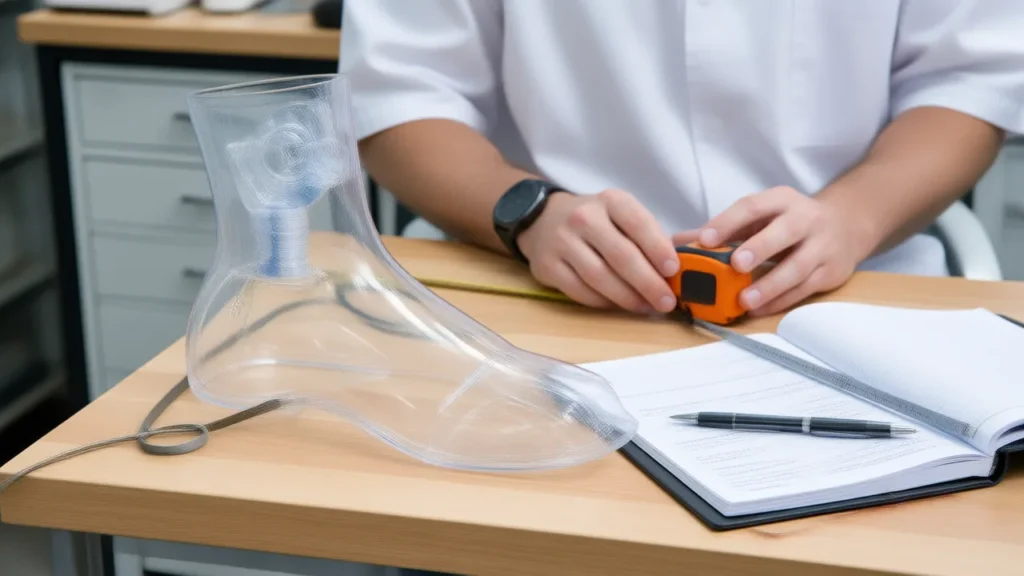
The first leg you walk on is often called a preparatory or temporary prosthesis. The prosthetist takes a cast or scan of your limb, may try a clear test socket to check pressure points, then builds the leg and fits it. Gait training with your PT starts from there.
Don’t expect to wear it all day at first. Your prosthetist and physical therapist will give you a wearing schedule that builds up gradually, and teach you to check your skin every time the leg comes off. Mention red marks, soreness or unusual tiredness at your next visit. Blisters, open skin and pain that makes you limp can’t wait; those get a call the same day.
A new residual limb keeps shrinking for a while after you start wearing a prosthesis. Early on, you’ll add prosthetic socks to keep the socket snug, and the socket itself may be adjusted or replaced as your limb changes. That isn’t a failed fitting. It’s how the process works.
When you get the definitive leg
The definitive prosthesis is built once your limb’s size and shape have settled and your team has a clear picture of how you walk and what you want to do. There’s no fixed date for that. It depends on how quickly your limb stabilizes, and some people need several socket changes first. The Amputee Coalition notes that a prosthesis can last from several months to several years depending on age, activity level and growth, so “definitive” means the next long-term leg, not the last one.
What speeds up or slows down the timeline
- Amputation level. The Amputee Coalition’s above-knee guide calls rehabilitation and timelines after above-knee amputation highly individualized, so the below-knee ranges above may not apply.
- Wound healing. Delayed healing, infection or a reopening incision pushes everything back.
- Circulation and diabetes. Conditions that affect blood flow can slow healing.
- Contractures. A knee or hip that won’t straighten has to be worked on before a socket fits well.
- Your overall health and strength going into surgery and during recovery.
- Insurance and scheduling, which can add weeks even when your body is ready.
Children born with a limb difference follow a different path: timing is tied to development, like pulling up to stand, rather than to healing. Our guide to a toddler’s first prosthetic leg covers that route.
When to call your surgeon or care team
Call the same day, and don’t wait for your next appointment, if you notice spreading redness, warmth, swelling that gets worse, drainage or an opening in the incision, fever, new severe pain or numbness. If you’re already walking in a preparatory leg, stop wearing it and call your care team if you find a blister or open sore, then call your prosthetist about the fit once your doctor has seen it.
Questions to ask your team this week
- What has to happen before I’m ready for a fitting, and how will we know?
- Who will build the leg, and when is the first evaluation?
- Has the prescription been sent to my insurer, and who follows up?
- Which exercises matter most right now to keep my joints straight and strong?
- Will I have a preparatory leg first, and how often will the socket be checked?
Sources
- Amputee Coalition — Prosthetic FAQs for the New Amputee
- Amputee Coalition — Beginning Your New Journey: Below-Knee Amputation (2025)
- Amputee Coalition — Beginning Your New Journey: Above-Knee Amputation (2025)
- VA/DoD Clinical Practice Guideline (2024) — Rehabilitation of Individuals with Lower Limb Amputation: Patient Summary
- MedlinePlus (NIH National Library of Medicine) — Foot amputation: discharge
Published by Loud Limb. This guide is general information drawn from the sources listed above, not medical advice. Loud Limb sells printed prosthetic leg covers and clothing and is not a clinic: ask your doctor, surgeon or prosthetist about your own care.